How to Sew with Organza and Crisp Sheers
Sew crisp, transparent organza cleanly: enclose every raw edge so nothing shows through, use a fine needle and a dry cool iron, and stop the sheer being pulled into the machine.
Established sewing references reviewed for fine needle and thread choice, enclosed seams for transparency, controlling a crisp sheer at the needle, and dry cool pressing of organza and similar sheers; no universal settings are prescribed and are confirmed on a scrap of the specific fabric.
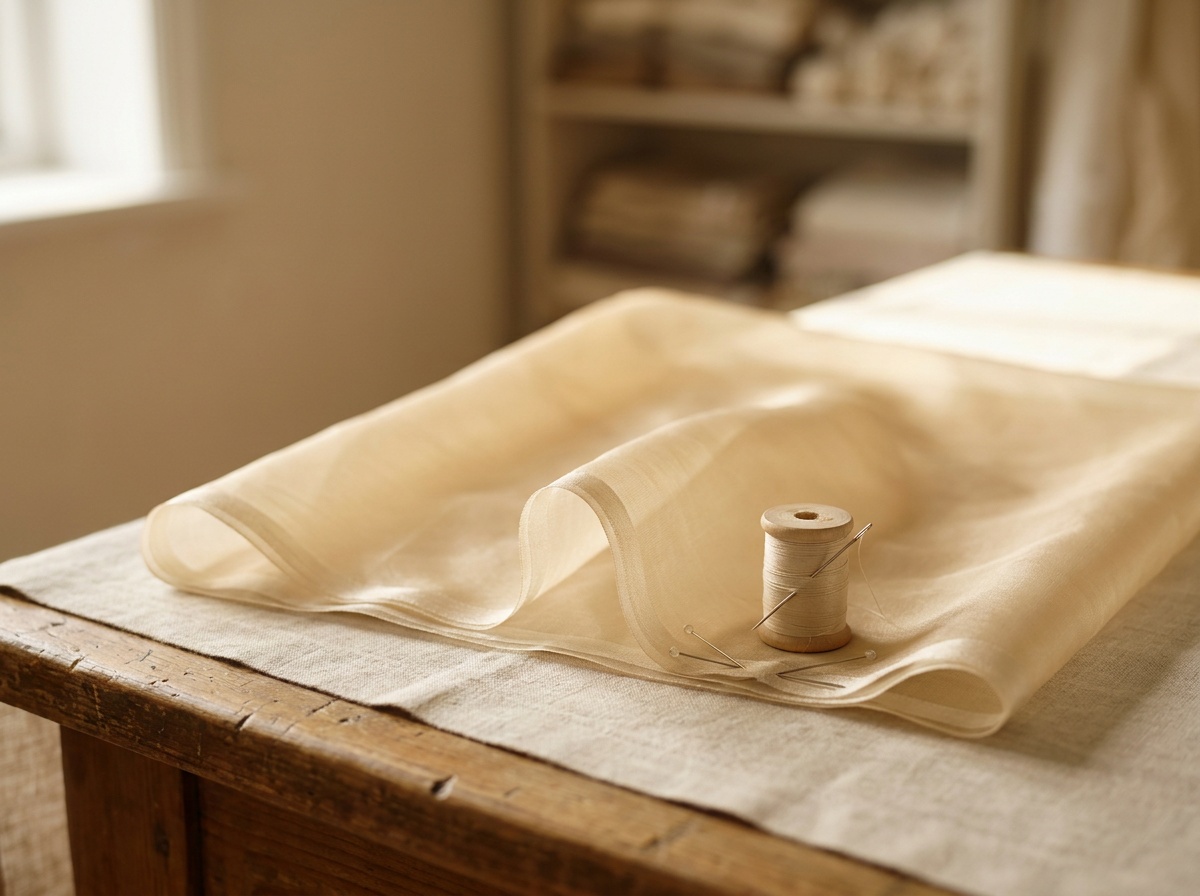
Organza is crisp, transparent, and springy, so its two challenges are that every raw edge and seam allowance shows through, and the fine cloth gets pushed into the needle plate. Enclose all raw edges with French seams or a double-stitched-and-trimmed seam so nothing frays or shadows. Use a fresh fine needle (60/8 to 70/10) and fine thread, set a short straight stitch around 2 mm, do not backstitch (it shows and distorts), and hold the thread tails at the start so the machine does not eat the fabric. Press with a dry, cool iron, since steam and heat mark organza, and test on a scrap first. Because it is crisp, organza is more stable to handle than soft sheers like chiffon.
Organza is a crisp sheer, which makes it easier to handle than a soft, slithery sheer, but its transparency is unforgiving: anything left inside a seam is visible from the outside. The craft is clean, enclosed seams and gentle pressing.
Enclose every edge
On an opaque fabric a raw or zigzagged seam allowance is hidden inside the garment. On organza it shows straight through, so every seam must enclose its own raw edges. A French seam is the first choice: it wraps the raw edge inside a clean, narrow seam that looks tidy from both sides. A good alternative is a double-stitched seam: sew the seam, sew a second line (or a narrow zigzag) close beside it, and trim the allowance right up to the second stitching. Keep all allowances as narrow as possible so they do not cast a shadow, and test the seam on a scrap first.
For the full set of enclosed and bound options see the seam finishes visual guide.
Needle, thread, and stitch
| Needle | A fresh, sharp needle in a small size, roughly 60/8 to 70/10. A blunt or large needle leaves holes in the fine, springy weave. |
| Thread | Fine polyester or silk thread matched closely to the colour, so the stitching does not sit heavy on a transparent ground. |
| Stitch length | A short straight stitch, around 2 mm, so the fine seam holds without gaping. |
| No backstitch | Do not backstitch to secure ends, since it shows through and distorts the sheer, and the fabric catches in the feed dogs. Leave tails and tie or stitch in place minimally. |
At the start of a seam, hold both thread tails behind the foot and keep light tension on them for the first few stitches so the crisp sheer is not pushed into the needle-plate hole. Sew slowly and hold the fabric gently in front of and behind the foot to stop it puckering. Soft sheers like chiffon slip more, and the guide to sewing with chiffon covers that softer case; the silk organza cloth profile sets out what to verify in a given piece.
Press dry and cool
Organza marks easily, and steam is the main culprit, spotting and puckering the crisp surface. Use a dry iron on a low setting, press seams open gently, and lift and lower rather than dragging. Organza also makes an excellent press cloth for other fabrics precisely because it takes heat poorly itself while letting you see what you are pressing, but on the organza garment keep the iron cool and test on a scrap first.
Sources and decision boundaries
The seam, needle, stitch, and pressing methods here follow established references such as Threads Magazine on organza, Sew Direct on sewing sheer fabrics, and WonderFil on sewing lightweight and sheer fabrics. Exact needle, stitch, and heat settings depend on the specific fabric and its fibre and are confirmed on a scrap, which this guide does not replace.
What is the best seam for transparent organza?
An enclosed seam, because raw edges show through. A French seam wraps the raw edge inside a clean narrow seam that looks tidy from both sides. A double-stitched seam, sewn twice close together and trimmed to the second line, is a good alternative. Keep allowances narrow so they do not shadow, and test on a scrap.
Why does organza pucker or get pulled into the machine?
The fine, springy cloth is pushed into the needle-plate hole and the feed can pucker it. Hold both thread tails behind the foot with light tension for the first few stitches, sew slowly, and hold the fabric gently in front of and behind the foot. A straight-stitch needle plate helps if you have one.
Can I backstitch on organza?
Better not to. Backstitching shows through the transparent fabric and distorts it, and the sheer catches in the feed dogs. Leave thread tails and tie them off or stitch minimally in place instead.
How do I press organza without marking it?
Use a dry iron on a low setting, not steam, which spots and puckers the crisp surface. Press seams open gently, lifting and lowering rather than dragging, and test heat on a scrap first. Organza is heat-sensitive, so keep the iron cool.