How to Choose a Clothing Repair Service
Find the right kind of clothing repair help, define the result before work starts, approve changes, and check the finished item without treating a directory listing as a guarantee.
Current government, local-authority, community-network, commercial-directory, consumer-warranty, and professional-conservation sources reviewed for repair discovery, listing inclusion, service scope, estimate, authorization, documentation, custody, and escalation boundaries; no repair method, provider quality, price, turnaround, warranty result, safety release, conservation treatment, or finished-item outcome is prescribed.
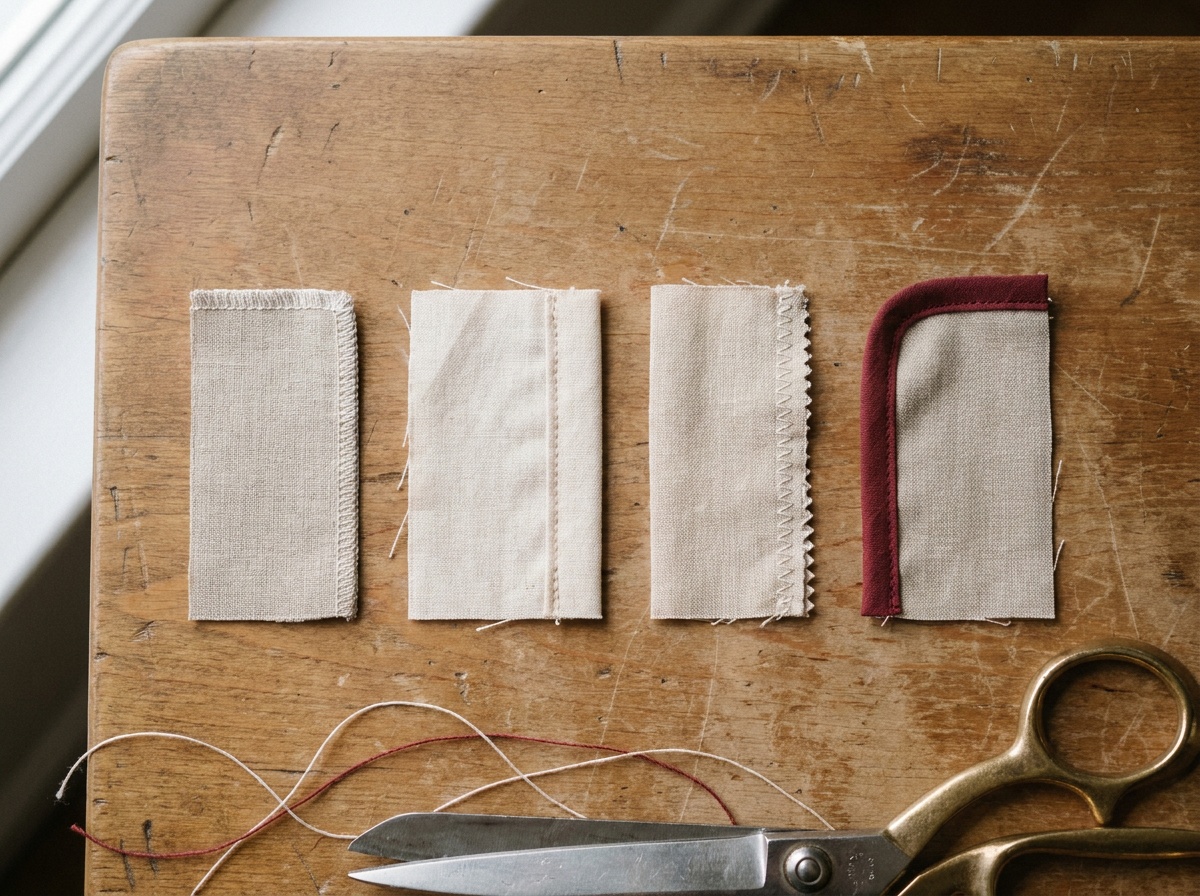
Name the job before searching: repair damage, alter fit, restore appearance, conserve a significant object, or get help at a community event. Photograph the item and its labels, describe the failure and the result you want, then ask a candidate to state the method, materials, visible change, price basis, timing, custody, and what happens if more damage appears. Approve the written scope before work begins. At pickup, compare the item with the intake record and test only the functions that can be checked safely. A directory listing helps you find a lead; it does not approve the repairer or the result.
First decide whether ordinary clothing repair is the right lane
Everyday repair, alteration, warranty service, technical-product service, and conservation are different jobs. Stop before choosing a local tailor when the item is covered by a current warranty or recall, has a safety or protective function, contains contamination or an unknown hazard, is structurally loaded, or has historic, cultural, sentimental, or collection significance that would make irreversible change consequential.
In the United States, the Federal Trade Commission recommends reading the written warranty, checking the claims process and covered repairs, and keeping the warranty and receipt (FTC warranty guidance). The exact law and remedy depend on jurisdiction and product. This guide does not decide warranty rights. It prompts you to check the responsible manufacturer, seller, recall authority, insurer, or qualified professional before authorizing work that could affect a claim or product function.
For a significant textile, costume, uniform, quilt, or heirloom, ordinary repair can erase evidence or create damage that is hard to reverse. The American Institute for Conservation says a conservator should examine the object before proposing treatment and should document the proposed work, expected result, estimated cost, material changes, and completed treatment (AIC hiring guidance). That is a conservation workflow, not a promise that every family garment needs a conservator.
| Everyday repair | Restore a failed seam, closure, hem, patch, lining, pocket, or local area so the item can return to its agreed use. Define function and acceptable appearance. |
| Alteration | Change dimensions, shape, length, balance, or fit. This can affect adjacent seams, proportions, movement, and future alteration capacity even when no damage exists. |
| Visible or decorative mending | Make the intervention intentionally visible. Agree the visual language, placement, materials, color, texture, and whether the result may change drape or comfort. |
| Specialist technical repair | Route waterproof, insulated, protective, load-bearing, uniform, medical, adaptive, or other consequential products to the manufacturer or an appropriately qualified service when function could be altered. |
| Conservation treatment | Preserve a significant object through examination, proposal, documentation, and controlled treatment. The goal may not be renewed wear. |
| Community repair event | Work with volunteers at a scheduled event. Item scope, tools, parts, expertise, time, and completion are local and may require your participation. |
Use a directory for discovery, then read its inclusion method
Repair directories use different evidence models. Repair My Stuff Ireland is a free business-registration directory supported by Irish local authorities, the Environmental Protection Agency, a waste-prevention network, and the repair industry. It exposes Clothes & Bags and repair-and-alteration categories, but it also says coverage is incomplete. Registration is not a workmanship assessment.
The Dutch Heel Nederland Repareert map mixes professional companies and volunteer organizations. Repair points can be submitted, the maintainers say the map is updated, and they warn that some information may be wrong. Its clothing filter helps discovery; it does not tell you which stitch, patch, alteration, or material a location can handle today.
The Port Macquarie-Hastings Council clothing directory publishes a narrower local list. It says entries must be local repair businesses or organizations, submissions are reviewed before publication, business details are self-supplied, and listings are updated annually. That is useful maintenance evidence, not project approval.
A commercial directory can mix listing tiers. We Are Repairs distinguishes basic UK listings from paid Featured and Premium repairers that it says pass its own verification process. The platform also sells membership. Record the tier and published method, but do not convert the platform's label into an independent Stitch Authority verdict.
Before contacting a result, record:
- Directory name, URL, maintainer, and check date
- Country, city, travel, postal, appointment, language, and accessibility limits
- Whether the listing was submitted by the business, added by a community, reviewed by a public body, or tied to paid membership
- Which services, materials, items, and locations the profile actually states
- Correction, complaint, and stale-record routes
- Facts that still require the provider's current confirmation
Describe the item before asking for a quote
“Fix my jacket” is not enough to compare providers. Photograph the whole item, both faces of the damaged area, nearby construction, labels, closures, matching components, and any earlier repair. Include a scale without hiding the damage. Record the item type, brand or maker if known, ownership, intended use, material claims, care label, finish, lining, insulation, membrane, coating, embellishment, and current condition.
Describe what happened without guessing the cause. “The pocket bag is detached for 85 mm along the side seam” is an observation. “The factory used weak thread” is a diagnosis that the evidence may not support. Note when the problem appeared, whether it changes during wear or care, what has already been tried, and whether loose parts are present.
State the desired result in separate dimensions:
- Function: close the opening, retain contents, restore a closure, prevent further release, or another declared job
- Fit and movement: preserve or intentionally change length, circumference, balance, stretch, articulation, or ease
- Appearance: conspicuous, blended, patterned, symmetric, original-looking, or no preference
- Material: original part reused, closest available match, visible contrast, owner-supplied component, or provider-selected alternative
- Care: preserve the current care route, accept a changed route, or require a specific aftercare instruction
- Evidence: intake photos, returned removed parts, material identification, method note, invoice, or specialist report
“Invisible repair” is an aspiration, not a measurable guarantee. Light, pile, print, yarn, fading, hole size, missing material, seam access, prior wear, and replacement availability can make a repair visible. Ask the repairer to describe the expected appearance and uncertainty after examining the actual item.
Ask for capability evidence that matches the job
A useful conversation is specific to the item. Ask whether the provider has handled the same material, construction, failure, or function, what equipment and replacement materials are available, and whether inspection is required before a firm scope. A portfolio can show style and experience, but it cannot prove how your item will respond.
Ask the provider to separate:
- What they observed
- What they think caused the failure
- What work they propose
- Which materials or parts they expect to add or remove
- What will remain visible or uncertain
- What could require a changed scope
- What they will not undertake
If cleaning, pressing, adhesive, heat, solvent, waterproofing, dye, replacement trim, or disassembly is involved, ask what can change and whether a local trial is possible. Do not request confidential recipes or trade secrets; request enough information to give informed approval and care for the item afterward.
Approve price, scope, and change authority before work starts
An estimate should identify the inspected item and proposed job. Record whether inspection, materials, shipping, insurance, tax, rush work, failed attempts, storage, or return shipping are separate charges. State whether the amount is fixed, estimated, conditional, or subject to a ceiling. Do not assume a directory or public repair incentive sets the complete price.
Define what happens if the repairer finds wider damage or cannot perform the agreed method. Useful choices include:
- Stop and contact the owner before any additional work
- Continue only within a named price or method boundary
- Return the item without further intervention
- Approve a pre-declared alternative
Record who can authorize a change and through which channel. A repairer should not have to guess whether preserving the original fabric matters more than appearance, or whether a contrasting patch is acceptable when no match exists.
For postal work, record the destination, packaging, tracking, declared value, insurance position, condition before shipment, receipt confirmation, return method, and responsibility for unclaimed or undeliverable items. Do not send a unique or significant textile until the custody and loss terms are acceptable.
Make the handoff reproducible
At intake, use an item identifier that stays with the garment and receipt. Count detachable parts. Note current marks, tears, missing pieces, odor, moisture, pests, soil, color change, and earlier repairs without exposing unnecessary personal information. The repairer may need to refuse or isolate an item that is wet, contaminated, infested, or unsafe to handle.
The handoff should include the approved scope, prohibited actions, material decisions, appearance target, price basis, due-date basis, contact path, and change-approval rule. Keep a copy. If the item has emotional or cultural significance, explain the handling or consultation boundary rather than assuming the provider will infer it.
Community events need the same preparation at smaller scale. Repair Café Aotearoa shows why location details matter: individual events publish different schedules, accepted items, parts advice, donation models, and exclusions. The global Repair Café clothing guidance confirms that garments and textile accessories are common repair items, but it does not guarantee textile volunteers or completion at every event. Contact the local organizer before traveling when the item, access need, or date matters.
Check the finished repair against the agreed job
Inspect before removing tags or discarding records. Compare the item with intake photographs and the approved scope. Check that detached parts and requested remnants were returned. Look at both faces, adjacent seams, lining, closures, edges, symmetry, bulk, puckering, color, hand, and any unintended damage.
Test only what can be checked safely and without hiding a problem. That may include opening and closing a zipper, loading a pocket lightly, moving through the intended range, checking hem level, or comparing dimensions with the intake record. A brief pickup check does not prove long-term wear, wash durability, waterproofness, protective performance, or conservation stability.
Ask for the method and materials actually used, any change from the proposal, the updated care instruction, warranty or correction route for the service, and conditions that should trigger review. Keep the receipt and record with the item. For conservation work, retain the treatment report and photographs as object history.
If the result differs from the agreement, document the item and specific mismatch before further wear, care, or third-party alteration. Contact the provider first with the agreed scope, evidence, and requested resolution. Use the applicable consumer-protection or professional-complaint route for the jurisdiction when needed. Avoid publishing accusations that go beyond the evidence.
FAQ
Does a listed repairer count as verified?
Only under the directory's stated inclusion method. A public-body list, business registration, community submission, paid membership, or platform check supports a different narrow claim. None automatically proves capability or outcome for your item.
Is an alteration the same as a repair?
No. A repair addresses damage or loss of function; an alteration intentionally changes dimensions, shape, fit, or proportion. One job can include both, but scope and acceptance should separate them.
Can a repair be guaranteed to look invisible?
Not from a directory entry or photograph alone. Matching depends on the original material, fading, texture, print, pile, missing area, access, replacement supply, and method. Ask for an examined-item expectation and approve visible alternatives explicitly.
Should I use a volunteer event or a paid service?
Choose by item consequence, local scope, available expertise, tools, parts, timing, documentation, and your ability to participate. A community event can be excellent for learning and straightforward repairs but is not guaranteed to accept or complete every job.
When does a textile need a conservator?
Consider conservation when the item's historic, cultural, collection, documentary, artistic, or sentimental significance makes irreversible change consequential, or when materials and prior treatments need specialist examination. Use a professional conservation directory and agree the treatment proposal and documentation.
Clothing-repair discovery, intake, approval, and closeout record
Move from a directory lead to a defined item, approved scope, controlled handoff, and evidence-based acceptance without treating listing presence as provider approval.
Nothing entered here is saved or sent.
Item, owner, and routing decision
Identify the exact item and decide whether ordinary repair is appropriate before contacting a provider.
Discovery route and provider lead
Record why the provider appears and what remains unproven.
Requested result and capability conversation
Define function, fit, appearance, material, care, and evidence separately.
Quote, authorization, and change control
Approve the examined-item scope and decide what happens when the item differs from the first description.
Condition and custody at handoff
Create a shared baseline before the item changes hands.
Closeout, acceptance, and future care
Compare with the approved job and preserve evidence for later wear or treatment.
Sources and decision boundaries
- Repair My Stuff Ireland supports free, local-authority and EPA-linked business discovery for clothes, bags, repair, and alterations; its business registration route and incomplete coverage do not establish workmanship or availability.
- Heel Nederland Repareert supports Netherlands-wide clothing discovery across professional and volunteer repair points, a public submission route, and a maintainer warning that details may be inaccurate.
- Port Macquarie-Hastings Council supports a reviewed local-business inclusion rule and annual update statement while making clear that business details are self-supplied and users should perform due diligence.
- We Are Repairs supports separate basic and paid verified listing tiers, commercial membership, clothing categories, and estimate routes; its platform criteria are not an independent Stitch Authority assessment.
- Repair Café Aotearoa and Repair Café International support event-level schedules, item scope, participation, parts, and volunteer-service boundaries rather than guaranteed commercial completion.
- The FTC warranty guide supports checking the written warranty, covered repairs, claims process, records, and jurisdiction-specific help; it does not decide a particular textile warranty or non-U.S. right.
- The American Institute for Conservation supports examination, proposal, cost, schedule, change consultation, documentation, and continued-care records for conservation work, not an ordinary alteration requirement.
This guide and record do not diagnose an item, approve a provider, prescribe a repair or conservation method, establish price or timing, determine legal rights, validate a warranty, release a safety or protective product, guarantee appearance or durability, assess cultural authority, or replace qualified repair, alteration, material, product, safety, conservation, consumer, insurance, accessibility, privacy, and legal advice. Directory inclusion is discovery evidence only. Approve work against the actual item, accountable source, stated consequence, and applicable jurisdiction.