How to Sew with Chiffon
Sew slippery, fraying chiffon cleanly: stabilise the fabric so it stops shifting, use a fine needle and French seams, and cut it without the layers sliding apart.
Established sewing references reviewed for stabilising and cutting slippery sheers, fine needle and thread choice, French seams, and hemming chiffon; no universal settings are prescribed and are confirmed on a scrap of the specific chiffon.
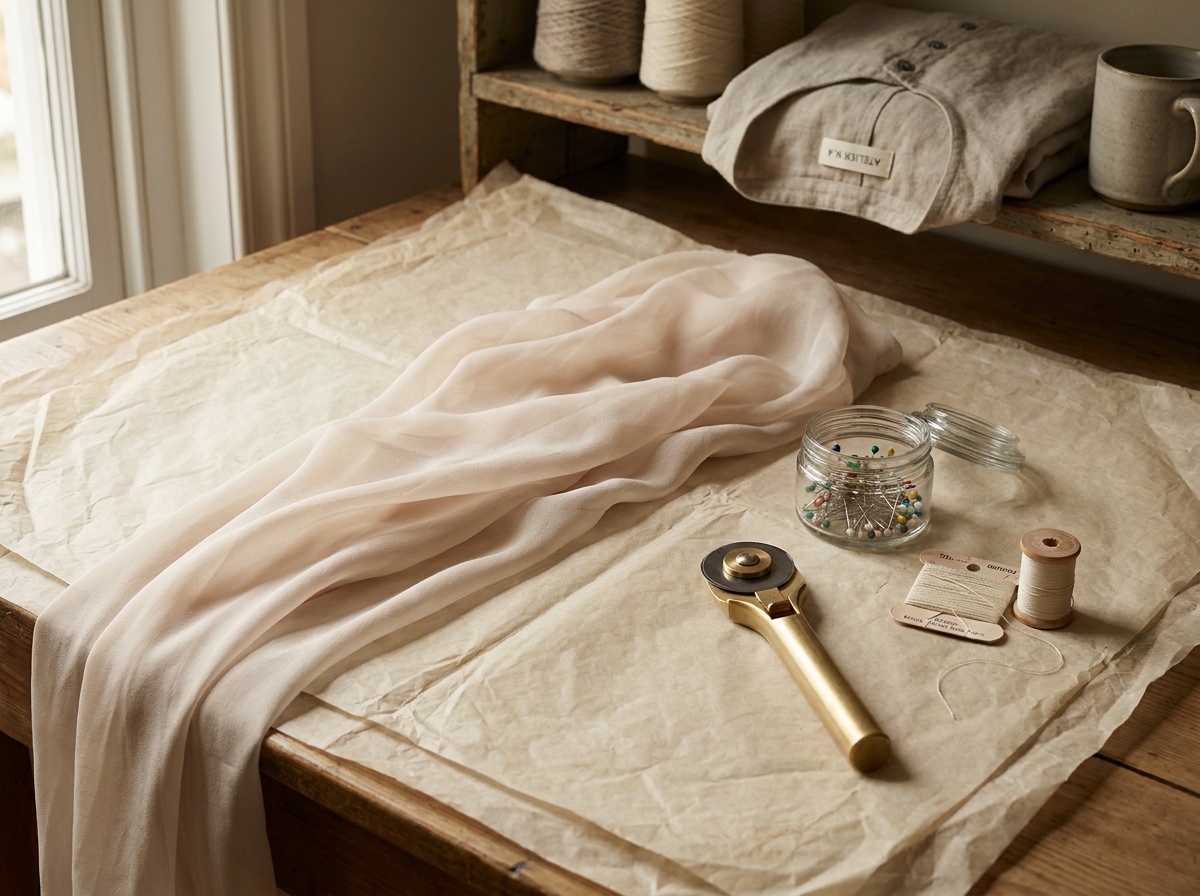
Chiffon is hard for one reason: it is light, slippery, and frays, so the layers slide apart while you cut and sew. Beat it by stabilising the fabric rather than fighting it. Cut a single layer on top of tissue paper or a cotton sheet so it cannot shift, weight the pattern rather than pinning in the body, and use a fresh fine microtex needle (60/8 to 70/10) with fine polyester or silk thread. Sew French seams so the raw edges are enclosed and cannot fray, hold a starting thread tail so the machine does not eat the fabric, and shorten the stitch. Finish with a narrow rolled or baby hem, and test everything on a scrap first.
Chiffon reads as an advanced fabric, but almost every problem comes from the same source: it is too light and slippery to stay put. Solve the shifting and the fraying and the rest is ordinary sewing.
Stabilise it before you cut
The single biggest improvement is to stop the fabric moving. Lay chiffon on a large piece of tissue paper, a smooth cotton sheet, or a rotary mat covered in tissue, and cut through the chiffon and the paper together so the layers cannot slip. Cut in a single layer where accuracy matters, rather than folded, and use pattern weights or fine pins placed only inside the seam allowance, since pins mark. A rotary cutter shears cleaner than shears, which lift and drag the cloth.
Needle, thread, and machine setup
| Needle | A fresh, sharp microtex needle in a small size, roughly 60/8 to 70/10. A blunt or oversized needle snags threads and leaves holes. Change to a new needle for a chiffon project. |
| Thread | Fine polyester or silk thread matched closely to the colour. Heavy thread weighs the seam down and shows; fine thread sinks in. |
| Stitch length | Shorten it, roughly 1.5 to 2 mm, so seams sit smoothly in the light cloth rather than puckering. |
| Straight-stitch plate | A single-hole straight-stitch needle plate (and matching foot) stops the fabric being pushed down into the wide zigzag hole. If you do not have one, start on tissue paper. |
At the start of every seam, hold both thread tails behind the foot and keep a light tension on them for the first few stitches. This stops the machine dragging the fabric down into the needle plate, which is the classic chiffon jam.
Sew French seams
A French seam encloses the raw edges inside the seam itself, so there is nothing left to fray and the seam looks clean from both sides. Sew the first pass wrong sides together with a narrow allowance, trim close, press, then fold right sides together and sew again to trap the raw edge. On sheer chiffon this reads as a fine clean line rather than a bulky one. Where a French seam is too stiff, such as a curved armhole, a narrow serged or zigzagged seam is the fallback. Always test on a scrap.
Match a fine needle and shortened stitch to the fabric, keep the seam allowances narrow so they do not shadow through, and press gently with a cool iron and a press cloth, since chiffon can be heat-sensitive depending on fibre. For matching needle to fabric more broadly see the sewing machine needle guide, and for the wider set of seam-finish options the seam finishes visual guide. Silk chiffon and polyester chiffon behave a little differently, and the guide to sewing with silk and rayon covers the silk side.
Hem it narrow
Chiffon hems want to be almost invisible. A narrow rolled hem, sewn by machine with a rolled-hem foot or made by stitching, trimming, and turning twice, keeps the edge light and stops it fraying. A baby hem (a tiny double-turned hem) is the hand-finish version. Let a bias or full-circle hem hang for a day before levelling and hemming, because the bias grain drops over time.
Sources and decision boundaries
The stabilising, needle, seam, and hemming methods here follow established references such as Craftsy on sewing chiffon, Pattern Scissors Cloth's tips for sewing silk chiffon, and Little Lizard King on sewing chiffon. Exact needle, stitch length, and hem method depend on the specific chiffon and its fibre and are confirmed on a scrap, which this guide does not replace.
How do I stop chiffon from slipping while I cut it?
Lay it on tissue paper or a smooth cotton sheet and cut through both together so the layers cannot shift, cut a single layer rather than folded where accuracy matters, and use pattern weights or fine pins placed only inside the seam allowance. A rotary cutter shears more cleanly than shears, which drag the fabric.
What needle and thread should I use for chiffon?
A fresh, sharp microtex needle in a small size, roughly 60/8 to 70/10, with fine polyester or silk thread matched closely to the colour. A new needle matters, since a blunt or large one snags and leaves holes, and heavy thread weighs the light seam down.
What is the best seam for chiffon?
A French seam, which encloses the raw edges so nothing frays and the seam looks clean from both sides. Where a French seam is too stiff, such as a tight curve, a narrow serged or zigzag seam is the fallback. Test on a scrap first.
Why does my machine eat the chiffon at the start of a seam?
The fabric is being pushed into the needle-plate hole. Hold both thread tails behind the presser foot and keep light tension on them for the first few stitches, use a single-hole straight-stitch plate if you have one, or start the seam on a leader of tissue paper.