Sewing Machine Needle Guide: Sizes, Types, and What Fits Your Fabric
How needle sizing works, which needle type matches which fabric, and how to tell when it's time to swap the needle out.
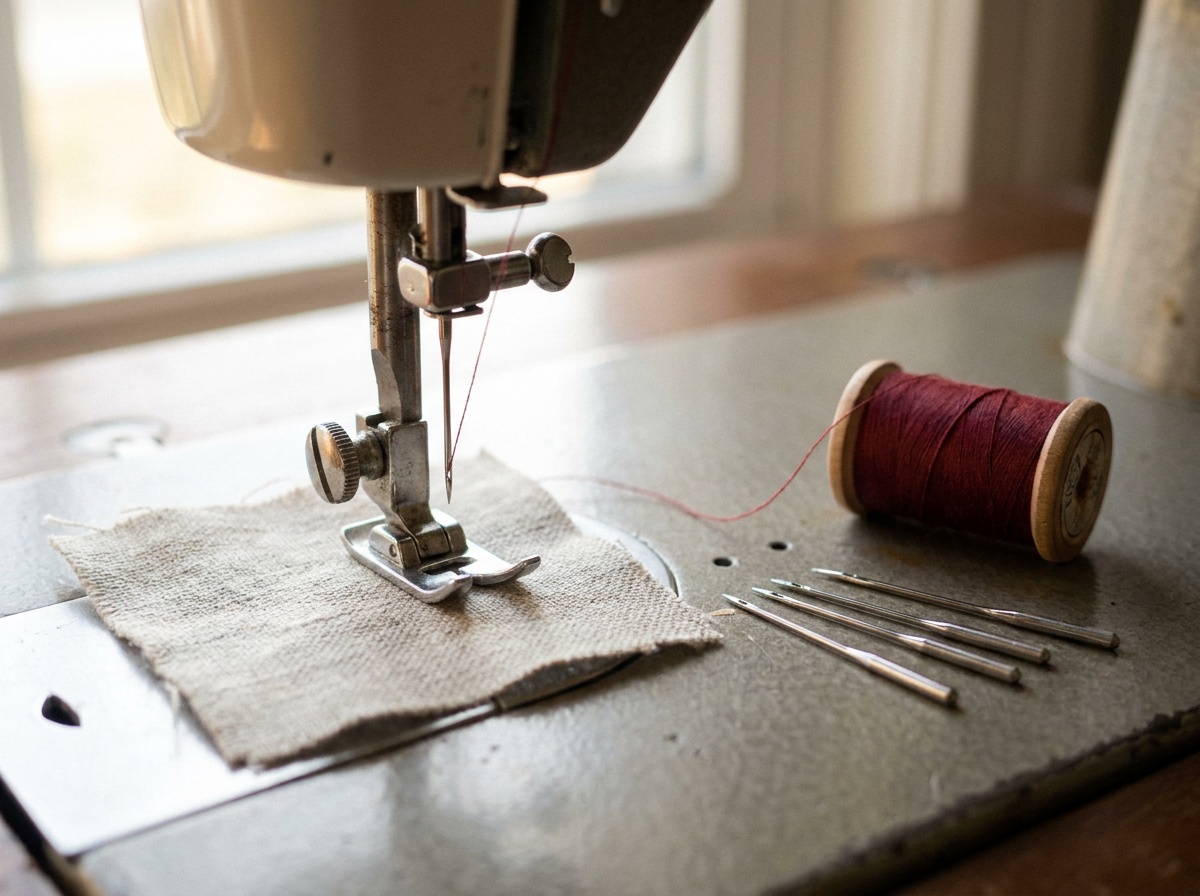
A sewing machine needle is chosen on two axes at once: size and type. Size (like 90/14) matches the needle's thickness to your fabric's weight, heavier fabric needs a higher number. Type (universal, ballpoint, denim, leather, and so on) matches the needle's point shape to your fabric's structure, since a woven, a knit, and leather all need the point to behave differently. Get both right and the machine sews clean. Get either wrong and you get skipped stitches, snagged fabric, or a broken needle.
Most stitching problems that look like a machine fault are a needle problem. The wrong size punches holes too big or fights to get through the cloth. The wrong type snags knits, skips stitches, or leaves visible holes in fabric that needed a rounded point instead of a sharp one. This is the reference to check both before you sit down to sew.
How sewing machine needle sizes work
Every home-machine needle carries two numbers together, like 90/14. The first is the European size, the second the American size. They describe the same needle on two different numbering scales.
The European number is the most literal: it's the shaft diameter in hundredths of a millimeter. A size 90 needle has a 0.90mm shaft. A size 70 needle is thinner, at 0.70mm. Higher number, thicker needle, in both systems. Lower number, finer needle.
Nearly every home sewing machine, across Baby Lock, Bernina, Brother, Elna, Husqvarna Viking, Janome, Juki, Pfaff, and White, uses the same needle system, standardized as 130/705 H. That's why needles from Schmetz, Organ, or Klasse all fit the same machines interchangeably. Industrial machines and sergers use different needle systems and shank shapes, so a needle bought for a home machine won't necessarily fit one.
| 60/8 – 65/9 | Very fine or sheer: chiffon, silk organza, fine lace, tulle |
| 70/10 | Lightweight: voile, chiffon, lingerie fabric, cotton lawn |
| 80/12 | Light to medium: quilting cotton, tricot, poplin, lining fabric |
| 90/14 | Medium: linen, light wool, jersey, muslin, chambray |
| 100/16 | Medium-heavy: denim, corduroy, heavier suiting, canvas |
| 110/18 | Heavy: heavy denim, upholstery fabric, faux fur |
| 120/19 | Very heavy: heavy canvas, some leather and vinyl work |
Treat this as a starting point, not a locked catalog. Brands don't all carry an identical size run, so the exact sizes on the shelf can vary slightly by manufacturer.
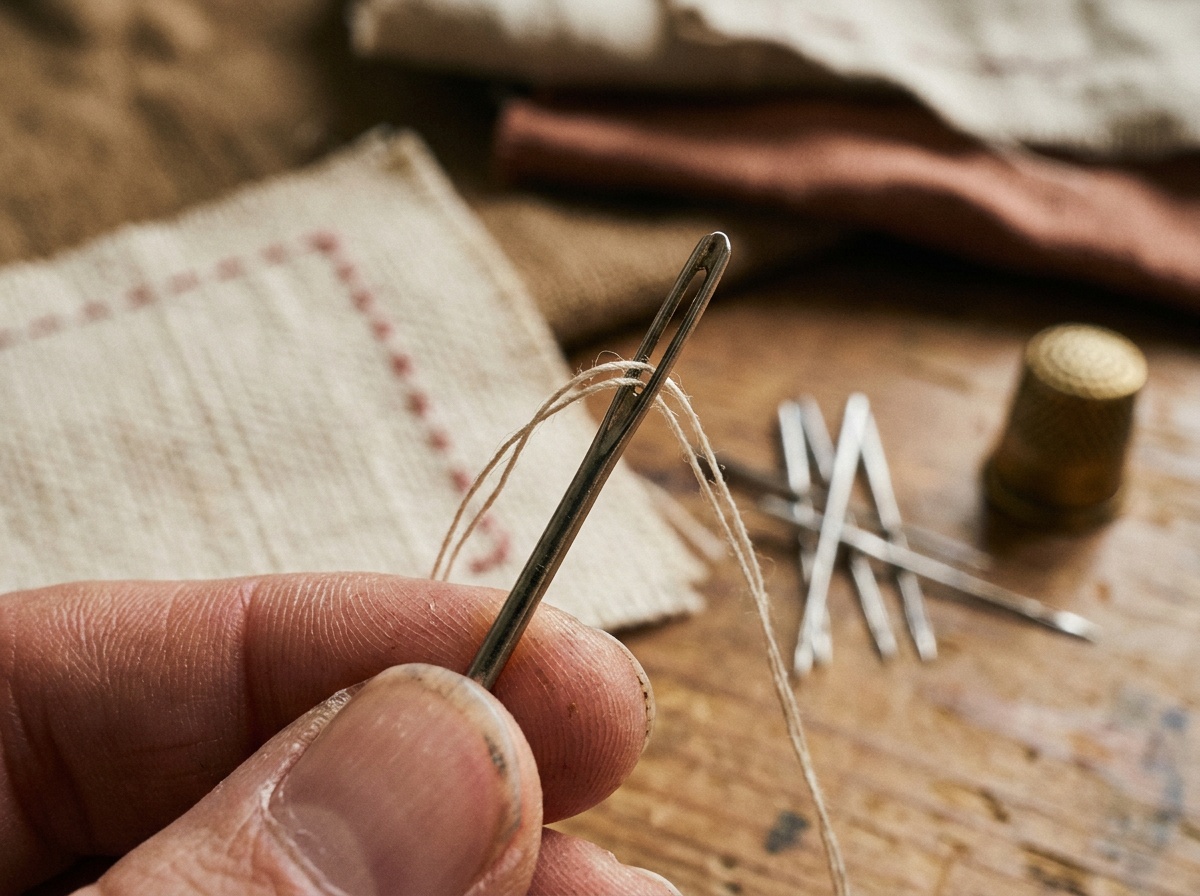
Which needle type do I need?
Size alone doesn't finish the decision. The point shape has to match how the fabric is built, woven fabrics, knits, and leather all respond differently to the same needle tip.
| Universal | Slightly rounded point, sharp enough for wovens. The default choice for most wovens and many knits. |
| Ballpoint (jersey) | Rounded tip that pushes between yarns instead of piercing them. For knits, jersey, and interlock, prevents runs and snags. |
| Stretch | Special eye and deeper scarf for highly elastic knits like swimwear, spandex, and silk jersey. Use over ballpoint if stitches still skip. |
| Microtex (sharp) | Slim shaft, sharp point. For tightly woven fabrics like silk, microfiber, and faux suede, also good for topstitching and pintucks. |
| Denim / jeans | Thick, strong shaft with a reinforced point. For denim, canvas, and other heavy tightly-woven fabrics, resists deflecting or breaking through thick layers. |
| Leather | Wedge-shaped point that cuts rather than pierces. For leather, suede, and vinyl only. Leaves a permanent hole, so it will damage a woven or knit fabric. |
| Topstitch | Extra-large eye and groove for heavy topstitching thread or doubled regular thread. For decorative straight topstitching. |
A midweight knit needs a stretch needle in 90/14. A pair of jeans needs a denim needle in 100/16. The size picks the thickness, the type picks the point, and both decisions happen together, not one or the other.
If a universal needle is skipping stitches on a knit, don't size up, switch type. Go to a ballpoint first, and if it still skips, move to a stretch needle. The rounded point and deeper scarf are what fix a skipped stitch on knit fabric, not a thicker shaft.
How to tell your needle needs replacing
A needle dulls with use even when nothing looks visibly wrong with it. Common guidance is to change the needle every 6 to 8 hours of sewing time, or at the start of a new project, whichever comes first.
Between changes, watch for these signs regardless of the clock:
- Skipped stitches
- A popping or thudding sound as the needle goes through fabric
- Thread fraying or breaking during stitching
- Snags or pulls showing up in the fabric
- A bent tip, or visible burrs or rust on the needle
A dull or damaged needle is the most common misdiagnosed "machine problem." Before adjusting tension or cleaning the bobbin case, swap the needle first and resew the same seam.
Can I use a universal needle for knits?
For stable knits, often yes. For stretchy knits like jersey or interlock, a ballpoint needle is the safer choice, since its rounded tip pushes between the yarns instead of piercing them and reduces runs.
What happens if the needle is too small for the fabric?
The needle can deflect, skip stitches, or break as it struggles to get through the fabric. A needle that's too small for a heavy fabric is a common cause of a needle snapping mid-seam.
Do all home sewing machines use the same needles?
Nearly all home machines across major brands use the 130/705 H needle system, so needles are broadly interchangeable regardless of who made the machine. Industrial machines and sergers use different systems.
How do I read the size printed on the needle package?
The package lists both numbers together, like 90/14. The first is the European size (shaft diameter in hundredths of a millimeter), the second is the American size. Higher numbers mean a thicker needle in both.
Can I reuse a needle between projects?
Yes, as long as it hasn't hit the 6-8 hour mark and shows no signs of dulling or damage. If you're switching to a fabric with a different weight or structure, check whether the needle still matches before you start.