How to Sew with Silk, Rayon, and Slippery Fabrics
Tame slippery silk, rayon, and satin: the fine needle and thread to use, how to cut without the fabric shifting, French seams that hide fraying, and pressing without water spots.
Established sewing references reviewed for needle and thread choice, cutting and feeding, seam finishes, and pressing for fine slippery wovens such as silk and rayon; no universal settings are prescribed, and behaviour is confirmed on a test scrap of the specific fabric.
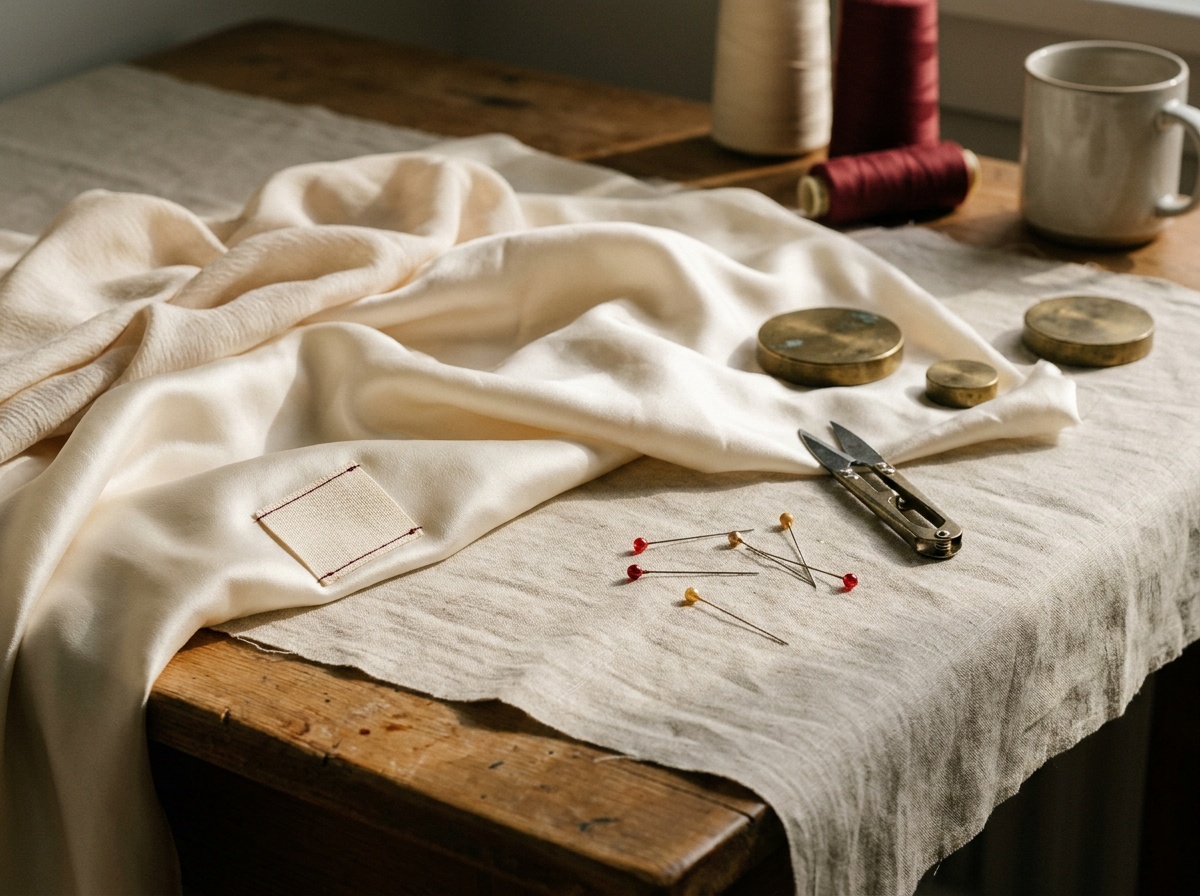
Slippery wovens like silk, rayon, viscose, and satin shift when you cut and pucker when you sew, so slow everything down and go finer. Use a new, sharp fine needle, a universal or microtex in size 60 to 70, and a fine thread to match; you do not need silk thread. Cut in a single layer over a cotton sheet with pattern weights and fine pins kept inside the seam allowance, shorten the stitch length, and add a walking foot to feed the layers evenly. Finish fraying edges with French seams, and press on low heat, testing first because water and heat can mark these fabrics. Test everything on a scrap of the exact cloth.
These fabrics are difficult for a simple reason: they are fine, densely woven, and have almost no grip, so they slide under the ruler, the pins, and the presser foot. Nothing here is hard on its own; the trick is setting up so the fabric cannot move when you do not want it to.
Needle and thread: go fine and fresh
| Needle | A new, sharp universal or microtex needle in a small size, usually 60/8 to 70/10. A microtex has a very slim sharp point that suits densely woven silk. A blunt or too-large needle leaves visible holes and skipped stitches. |
| Thread | A fine thread to match the small needle eye. Cotton or good polyester is fine; despite the myth you do not need silk thread. A thread too heavy for the needle causes puckering. |
| Change it often | Swap to a fresh needle at the first sign of pulls or skipped stitches, since a fine point dulls quickly and a dull one snags a delicate weave. |
Cut so the fabric cannot shift
Most silk and rayon disasters happen at the cutting table, before a stitch is sewn. Lay a clean cotton sheet or a length of cheap cotton on the table first; the slippery fabric grips the cotton instead of sliding on a bare surface. Cut in a single layer rather than folded, so the two halves cannot shift apart, and hold the pattern down with weights as well as fine pins kept inside the seam allowance where the holes will not show. A rotary cutter disturbs the fabric less than lifting it into shears. Staystitching the necklines and curved edges right after cutting keeps them from stretching out of shape while you handle the pieces.
Sew without puckering
| Shorter stitch | Drop the stitch length a little from your usual setting. A shorter stitch sits better in a fine weave and reduces puckering. These are stable wovens, so a straight stitch is right, unlike a knit. |
| Walking foot or fine feed | A walking foot moves the top and bottom layers together so one does not creep ahead of the other. Reducing presser-foot pressure helps for the same reason. |
| Support the seam | If the seam still puckers, sew over a strip of tissue paper or a wash-away stabiliser and tear it away afterward, which stops the feed dogs from chewing the fabric. |
| Do not pull | Let the machine feed the fabric and only guide it. Pulling a fine bias-prone fabric stretches the seam permanently. |
Finish edges with French seams
Silk and rayon fray readily, so an unfinished allowance sheds threads and eventually opens. A French seam solves this by enclosing the raw edge inside the seam itself: you sew the seam once with wrong sides together and a narrow allowance, trim, then fold right sides together and sew again to wrap the raw edge inside. The result is clean on both faces, has no exposed edge to fray, and suits fine and sheer fabrics beautifully. For fuller detail on this and other options, see how to select and validate a seam and edge finish.
Press carefully
Silk and many rayons can water-spot and scorch, and a too-hot iron flattens or glazes the surface. Use a low, dry, or silk setting, press rather than glide, and use a press cloth. Before you touch the garment, test heat and any steam or water on a scrap, since a water ring or a shine mark does not always come out. Let rayon in particular relax and cool before moving it, as it can distort while warm.
Sources and decision boundaries
The needle, thread, cutting, seam, and pressing methods here follow established references such as Threads on sewing with silk, the Closet Core guide to slippery fabrics, and WeAllSew on rayon and viscose. Exact needle size, stitch length, and pressing settings depend on the specific fabric and are confirmed on a test scrap, which this guide does not replace.
What needle should I use for silk or rayon?
A new, sharp universal or microtex needle in a small size, usually 60/8 to 70/10. The microtex point suits densely woven silk. Keep the needle fresh, because a dull or oversized needle leaves holes and skips stitches on a fine weave.
Do I need silk thread to sew silk?
No. That is a common myth. What matters is thread weight matching the small needle, so a fine cotton or good polyester thread works well. A thread too heavy for the needle is a frequent cause of puckered seams on fine fabric.
How do I stop slippery fabric from shifting when I cut?
Lay a clean cotton sheet on the table first so the fabric grips it instead of sliding, cut in a single layer rather than folded, and hold the pattern with weights plus fine pins kept inside the seam allowance. A rotary cutter disturbs the fabric less than shears, and staystitching curves right after cutting keeps them in shape.
What is the best seam finish for silk and rayon?
A French seam, which encloses the raw edge inside the seam so nothing can fray and both sides look clean. It is the standard choice for fine and drapey fabrics. You sew the seam wrong sides together first, trim, then fold right sides together and sew again to wrap the edge inside.
Can I iron silk and rayon?
Yes, but carefully. Use a low, dry setting, press straight down through a press cloth rather than gliding, and test heat and any water or steam on a scrap first, because silk and many rayons can water-spot, scorch, or glaze. Let rayon cool before moving it, since it can distort while warm.