How to Sew with Corduroy
Sew corduroy without crushing the wales or getting mismatched panels: cut every piece the same way with the nap, manage the pile as you stitch, and press it face-down so the ribs survive.
Established sewing references reviewed for nap direction and layout, controlling pile shift, stitch settings, and pressing pile fabrics such as corduroy; no universal settings are prescribed and are confirmed on a scrap of the specific corduroy.
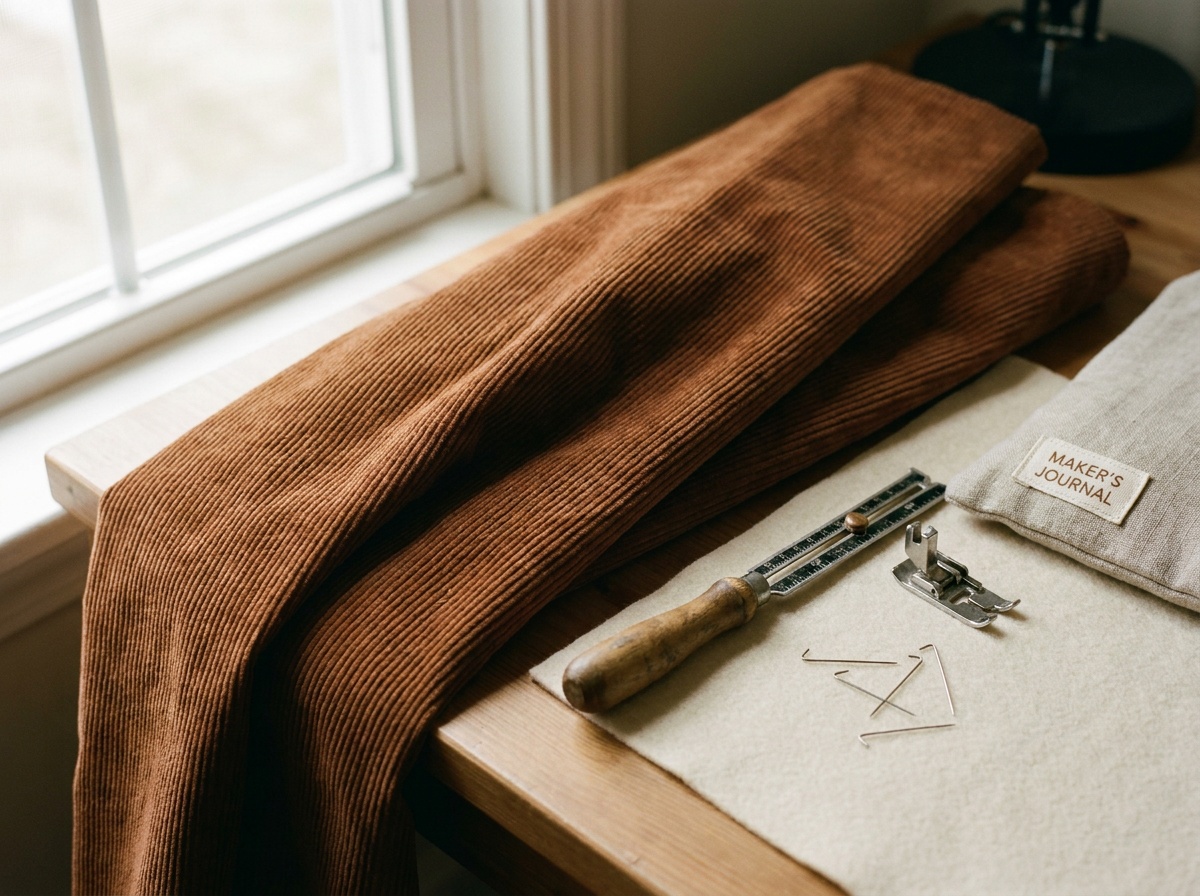
Corduroy is a cut-pile cloth with a nap, so it has two rules. First, it changes colour with direction, so decide which way the pile runs, mark it, and cut every piece the same way using the pattern's with-nap layout, or panels will look like different shades. Second, the pile crushes and creeps, so lower the presser-foot pressure, use a walking foot, and pin generously, and never press it flat on a hard surface, which leaves a permanent shine. Press face-down into a towel or a scrap of corduroy with steam and a light touch, sew in the direction of the pile, and test on a scrap first.
Corduroy is a friendly, hard-wearing fabric that only asks you to respect its pile. Almost every corduroy mistake is either a mismatched nap or a crushed rib, and both are avoidable.
Cut with the nap in one direction
Run your hand along the wales and the pile feels smooth one way and rough the other, like stroking a cat. Because the pile catches light, corduroy looks a deeper, richer colour when the pile runs up and lighter when it runs down, so pieces cut in different directions look like different fabrics. Choose one direction for the whole garment, mark the top of every piece, and lay them all the same way using the pattern's "with nap" fabric requirement, which allows the extra length one-directional cutting needs. Running the pile upward gives the deepest colour, but the rule that matters is that all pieces match. Finer needlecord and standard corduroy both behave this way.
Manage the pile as you sew
| Lower presser-foot pressure | The pile squishes up under a standard foot, which pushes the top layer forward. Ease the pressure so the fabric feeds without being scarred or shoved out of line. |
| Walking foot | Feeds the top and bottom layers together, which stops the pile creeping the layers apart and reduces crushing. |
| Sew in the nap direction | Stitch in the same direction the pile lies so the foot smooths the pile rather than fighting it. |
| Lengthen the stitch on wide wale | For jumbo cord, a slightly longer stitch of around 3 mm sits better than a short one, which buries into the pile and puckers. |
Use plenty of pins, since the pile swallows them, and a universal or denim needle sized to the weight of the cord. The pile also sheds a little when cut, so expect fluff and clear the feed dogs as you go.
Press without flattening the ribs
An iron pressed onto the face of corduroy crushes the wales and leaves a permanent shiny, discoloured mark. Work on the wrong side, lay the corduroy pile-down onto a thick towel or a spare scrap of corduroy so the ribs sink into the surface rather than being flattened against the board, and use plenty of steam with a very light touch, hovering the iron and skimming the back rather than pressing hard. Finger-press seams open first, and always test on a scrap.
Because corduroy is bulky, grade the seam allowances to different widths to soften the ridge, and consider a Hong Kong or overlocked finish since the cut edges shed. See seam finishes visual guide for the options, and how to choose interfacing if you are structuring a corduroy jacket.
Sources and decision boundaries
The nap, pile-control, stitch, and pressing methods here follow established references such as Tilly and the Buttons on sewing with corduroy, Threads Magazine on corduroy, and Alina Design Co's tips for sewing with corduroy. Exact stitch length, pressure, and pressing method depend on the specific corduroy and are confirmed on a scrap, which this guide does not replace.
Which direction should the nap run on corduroy?
Choose one direction for the whole garment and cut every piece to match, using the pattern's with-nap layout. The pile looks a deeper, richer colour running up and lighter running down, so mismatched pieces look like different fabrics. Running the pile up gives the deepest colour, but the essential rule is that all pieces face the same way.
How do I stop corduroy layers from shifting when I sew?
Lower the presser-foot pressure so the pile is not shoved forward, use a walking foot so the layers feed together, and pin generously since the pile hides pins. Sewing in the direction the pile lies also helps the foot smooth the nap rather than push it.
How do you press corduroy without ruining it?
Never press it flat on a hard board, which crushes the wales and leaves a permanent shine. Work on the wrong side with the corduroy pile-down on a thick towel or a scrap of corduroy, and use lots of steam with a hovering, light touch. Finger-press seams first and test on a scrap.
What needle and stitch should I use for corduroy?
A universal or denim needle sized to the weight of the cord, with all-purpose polyester thread. A standard stitch length is fine for fine needlecord, while wide jumbo wale sits better with a slightly longer stitch of around 3 mm, which does not bury into the pile.