Corduroy
trousers, jackets, skirts, children's wear
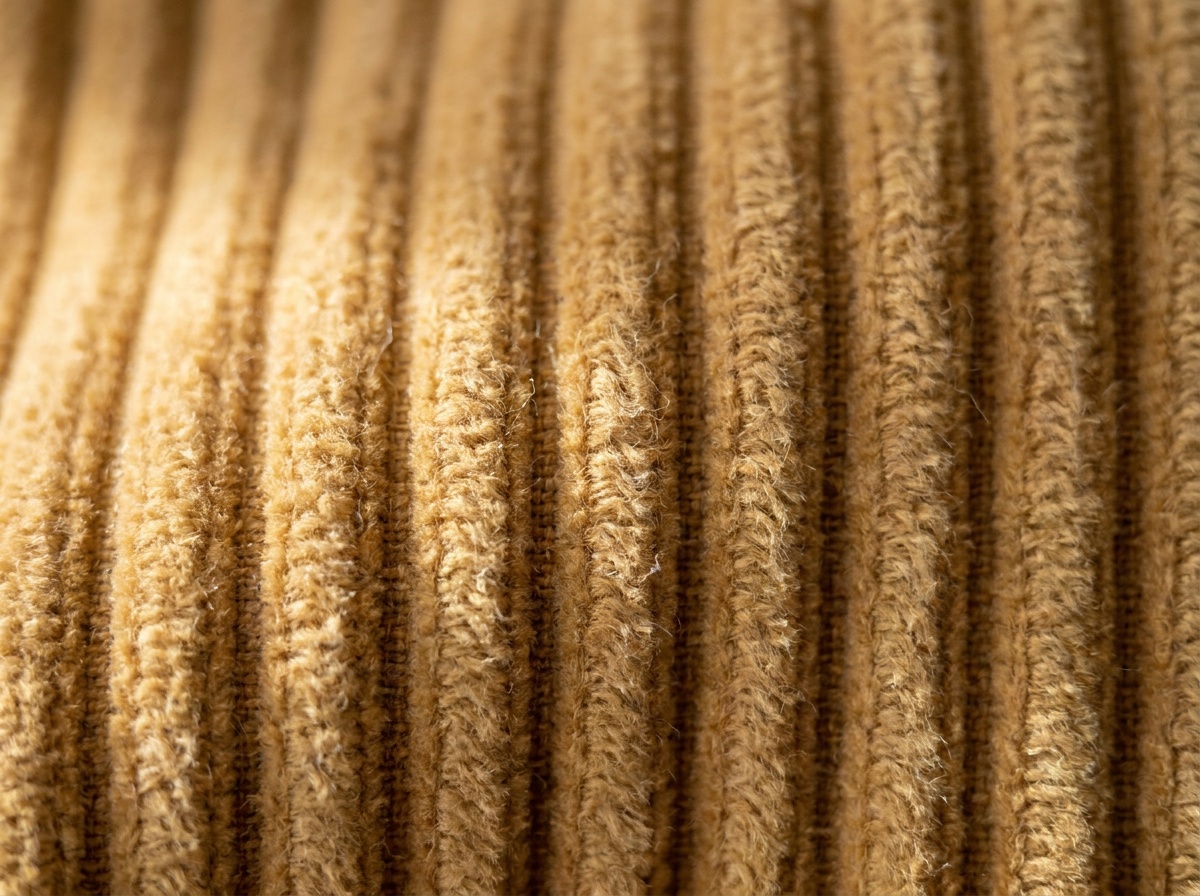
Corduroy is woven with extra weft yarns floating over the base cloth, which are then cut to form raised ridges called wales that run the length of the fabric. The number of wales per inch determines how fine or chunky the cord looks: pinwale corduroy has narrow, closely spaced ribs, while wide-wale corduroy has fewer, thicker ones. Garment-weight corduroy runs from about 200 g/m² for a lightweight pinwale up to 400 g/m² or more for heavy wide-wale jacket-grade cloth.
The cut pile gives corduroy a soft, brushed texture with directional nap, meaning it looks and feels different depending on which way light hits the ribs, so pattern pieces need to be cut with the nap running one direction. It has body and warmth from the pile but no stretch in rigid form, and it presses less crisply than a flat woven because of the raised ridges. Corduroy sheds a little lint when cut and sewn, similar to flannel, and the pile can crush with heavy pressing.
Corduroy is a standard choice for casual trousers, jackets, skirts, and children's clothing, especially in cooler months where its texture and warmth are wanted. Wider wales suit structured outerwear and bottoms, while pinwale suits shirts and lighter garments. Cutting all pieces with the nap running the same direction is not optional, since mismatched nap shows as different shading between pieces.