How to Seam Knitting with Mattress Stitch
Join knitted pieces with an invisible seam: work mattress stitch up the edge bars for a seam that disappears, and know when to graft live stitches with Kitchener stitch instead.
Reviewed knitting references for mattress stitch on cast-off edges, seam tension, and the distinction from grafting live stitches with Kitchener stitch; exact seam allowance and tension are project- and yarn-specific and confirmed on your own pieces, and no pattern is prescribed.
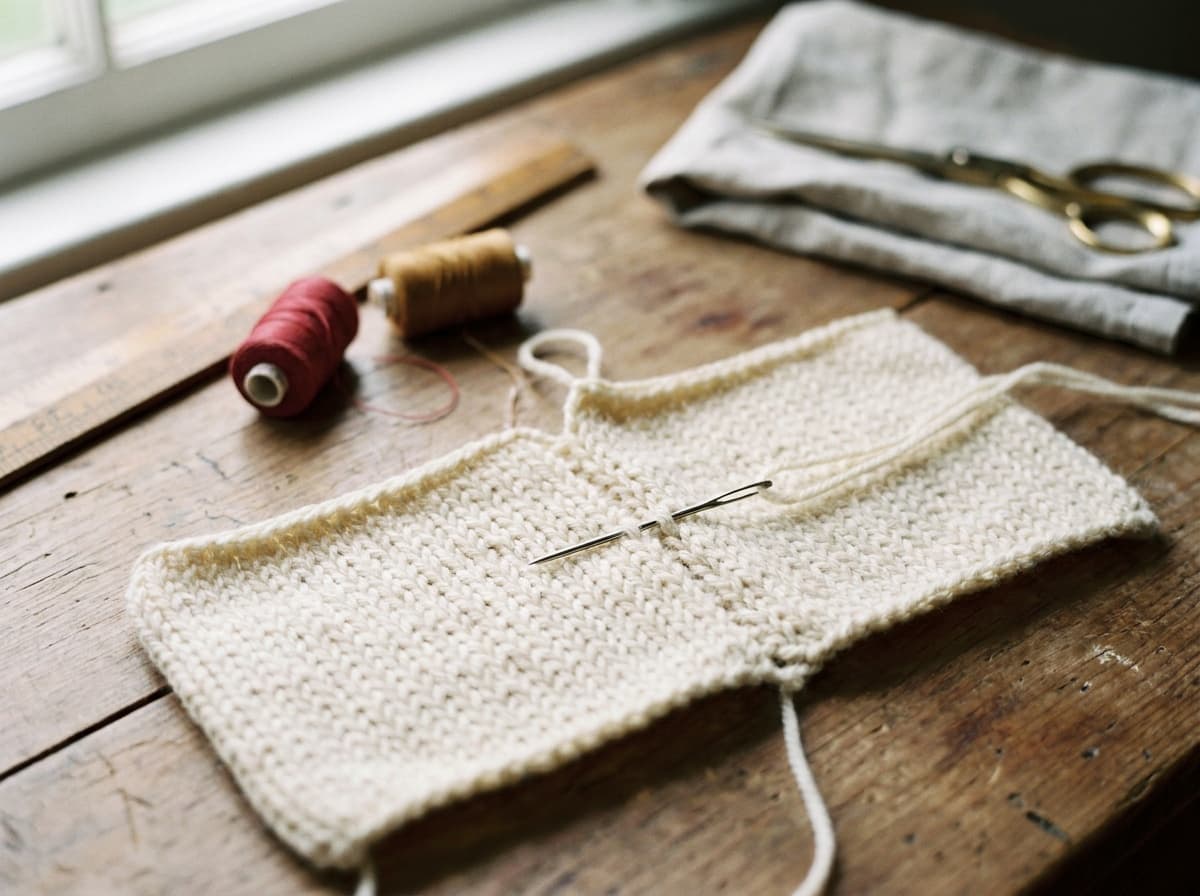
Mattress stitch is the standard way to join two knitted pieces with a seam that disappears from the front. Lay the pieces side by side, right sides up, thread a tapestry needle with a long tail (about three times the seam length), and work up the edges catching the little horizontal bars between the first and second stitches, one side then the other, like lacing. Work loosely for a couple of centimetres, then pull the thread firm so the seam closes and the edge stitches roll to the back, and keep a little elasticity by not over-tightening. Mattress stitch is for finished, non-live edges, worked up the selvages (the row-end edges); to join live stitches still on the needles seamlessly (like a sock toe), you graft them with Kitchener stitch instead. A good seam is worth slowing down for — it is what makes a hand-knit look finished rather than homemade.
Seaming is where many knitters lose the quality they built stitch by stitch. Mattress stitch fixes that: done well, the join is genuinely invisible on the right side because the seam allowance is pulled to the inside.
Work mattress stitch up the bars
| Set up | Place the two pieces side by side, right sides facing you, edges aligned row for row. Thread a blunt tapestry needle with a long length of the same yarn, about three times the seam length, so you do not run out mid-seam. |
| Find the bars | Between the first and second stitches in from the edge runs a ladder of little horizontal bars. Mattress stitch catches these bars, usually one stitch in, or half a stitch in for bulky yarn or a very neat edge. |
| Lace side to side | Insert the needle under one or two bars on one piece, then under the matching bars on the other piece, alternating sides and matching row for row so the pattern lines up. |
| Tension the seam | Work loosely for a centimetre or two, then pull the working yarn firmly to draw the edges together and roll the seam allowance to the back. Do not over-tighten: stretch the seam gently so it keeps the fabric's elasticity. |
Match rows and stitch pattern
Mattress stitch is worked on stockinette and ribbing by catching the edge bars; on garter stitch the join catches the top and bottom loops of the edge bumps instead, so the method adapts to the stitch pattern. Match row for row as you go — skipping a bar on one side pulls the seam crooked and misaligns stripes or pattern. Because the seam is drawn to the inside, the front shows an unbroken column of stitches.
Mattress stitch vs grafting (Kitchener)
Mattress stitch joins finished, non-live edges, working vertically up the selvages (the row-end edges), and is the usual choice for garment side seams and sleeves. Kitchener stitch (grafting) is different: it joins two sets of live stitches still on the needles, weaving a new row of stitches between them so there is no ridge at all — this is what makes a seamless sock toe or a smooth shoulder. Use mattress stitch for finished edges and Kitchener for live stitches; reaching for the wrong one is a common finishing mistake. Both want a blunt tapestry needle and the project yarn (or a smooth matching yarn if the project yarn is too textured to unpick).
For the edges you will be seaming, see how to bind off knitting and how to cast on knitting; to keep pieces the right size to seam, knitting gauge and tension; and the knitting stitch library for the stitch patterns you are joining.
Sources and decision boundaries
The mattress-stitch method, tension, and the distinction from grafting here follow knitting references including Purl Soho on mattress stitch, Nimble Needles on the mattress stitch, and Sister Mountain on seaming with mattress stitch. Exact seam placement and tension depend on your yarn, stitch pattern, and pieces and are confirmed on your own work; this guide does not prescribe a pattern.
FAQ
What is mattress stitch?
It is a seaming method that joins two knitted pieces with an invisible seam on the right side. You catch the little horizontal bars between the first and second stitches of each edge, alternating side to side like lacing, then pull firm so the seam allowance rolls to the back and the front shows an unbroken column of stitches.
What is the difference between mattress stitch and Kitchener stitch?
Mattress stitch joins finished, non-live edges, worked vertically up the selvages (row-end edges), and is used for garment side and sleeve seams. Kitchener stitch (grafting) joins two sets of live stitches still on the needles, creating a ridgeless seamless join such as a sock toe. Use mattress stitch for finished edges and Kitchener for live stitches.
How tight should I pull a mattress-stitch seam?
Work loosely for a centimetre or two, then pull the working yarn firmly to close the edges and draw the seam allowance to the back. Do not over-tighten, though: stretch the seam gently so it keeps the same elasticity as the fabric, or the join will be stiff and may pucker.
Can I use mattress stitch on garter stitch?
Yes, but the method adapts. On stockinette and ribbing you catch the bars between the first two stitches; on garter stitch you catch the top and bottom loops of the edge bumps instead. Either way, match row for row so the seam stays straight and any pattern lines up.