Garment Sample Types Explained
Know what each apparel sample is for: proto, fit, size set, salesman, pre-production, and top-of-production, and why the PP sample is the gold-seal standard bulk is judged against.
Reviewed apparel sampling references for the purpose and sequence of proto, fit, size set, salesman, pre-production, and top-of-production samples and the approval each carries; the exact rounds, naming, fabric, and approval authority are program-specific and require agreement, and no fit, measurement, or acceptance decision is prescribed.
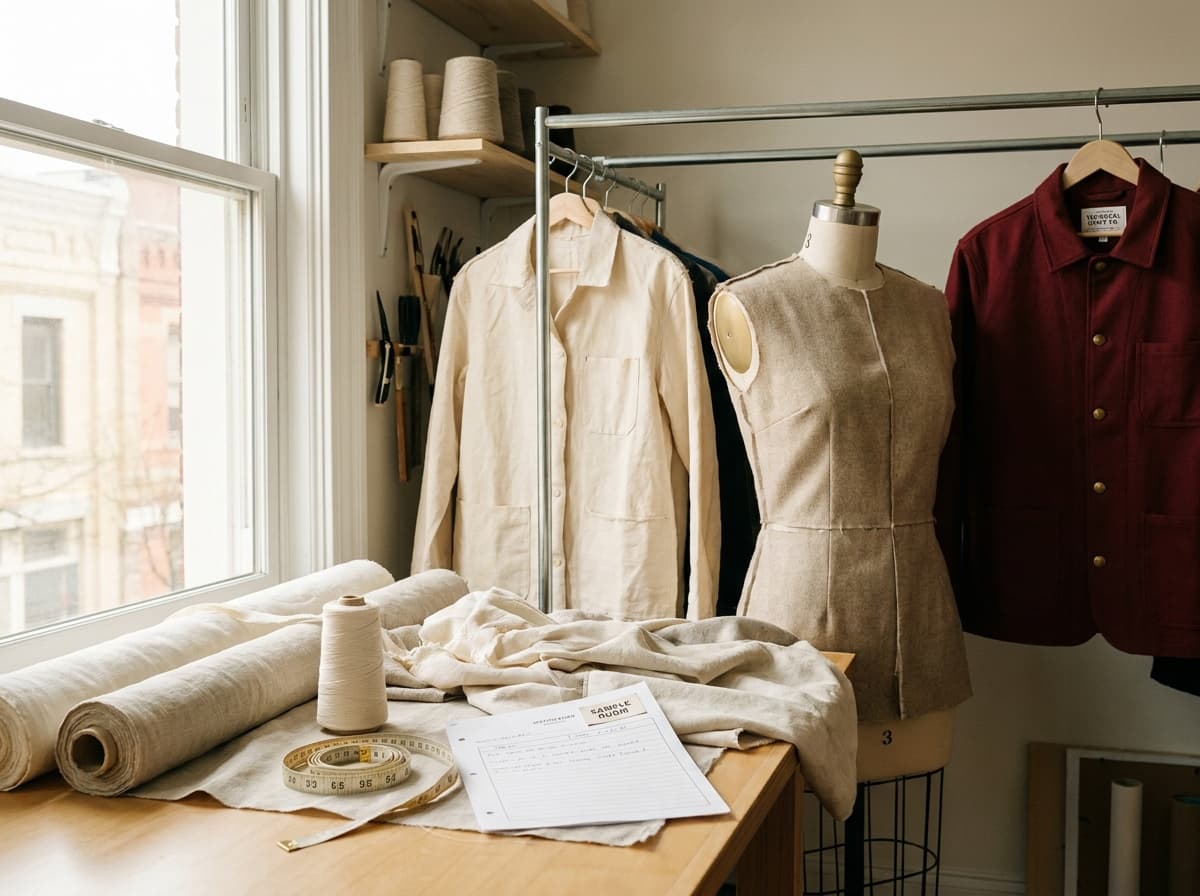
Apparel samples are made in stages, and each stage answers a different question, so calling everything "a sample" hides what is actually being approved. Proto (first) samples test whether the design works, usually in a substitute fabric. Fit samples test the fit on a body or form and drive pattern corrections. Size set samples check the fit and grade across the size range. Salesman samples (SMS) are made in the real materials to sell the style and forecast demand. The pre-production (PP) sample is the critical one: made in actual materials and construction and approved as the gold-seal standard the bulk must match. The top-of-production (TOP) sample is pulled from the real production line to confirm the bulk is matching that approved standard. Most programs run five to seven rounds; the sample that must never be skipped is the PP approval, because it is the reference everything after it is judged against.
Naming matters here because each sample is an approval gate, not just a garment. Skipping or blurring a stage means approving something you did not actually check — a design with no confirmed fit, or a bulk run with no approved standard behind it.
The stages, in order
| Proto (first) sample | The first physical version from the sketch, testing whether the design and proportions work. Often sewn in a cheaper substitute fabric because the point is the concept, not the final material. |
| Fit sample | Made to the actual measurements and tried on a fit model or dress form to check fit and fall. Drives pattern corrections, usually over several rounds; see how to give fit comments. |
| Size set | Samples in several sizes across the range to confirm the fit holds and the grade is correct at the extremes, not just the base size. |
| Salesman sample (SMS) | Made in the real, final materials to show buyers and take orders, so demand can be forecast before bulk. It represents what will actually be sold. |
| Pre-production (PP) sample | Made in the actual materials, trims, and construction at the production factory and approved as the gold-seal standard for bulk. This is the reference the run is measured against. |
| Top of production (TOP) | Pulled from the actual production line early in the run to confirm the bulk is matching the approved PP standard under real conditions, before the line continues at full speed. |
The PP sample is the standard, not a formality
The pre-production sample is the single most important sample, because it converts every earlier decision — fit corrections, materials, colour, construction, labels — into one approved physical reference made in the real materials at the real factory. Once it is approved, it is the gold seal: the production run, the top-of-production sample, and the final AQL inspection are all judged against it. Approving bulk with no PP standard behind it means there is nothing objective to accept or reject against. Fix the PP approval, with a retained sealed sample, before the factory cuts bulk.
This taxonomy sits alongside the garment sampling process for the workflow, the sample approval record for documenting each gate, and how to give fit comments for driving the fit rounds. The final run is then checked against the PP standard with an AQL acceptance-sampling inspection.
Naming and rounds vary — agree them
| Names differ | Terms like proto, first, development, sew-by, or costing sample overlap between suppliers. Agree what each named sample means and what it approves, rather than assuming a shared vocabulary. |
| Rounds are not fixed | Most programs run five to seven sampling rounds, but complex or troubled styles run more. Plan the rounds into the schedule instead of treating extra rounds as a surprise. |
| Each sample needs an owner and a decision | A sample with no recorded approval, comments, and next action is a missed gate. Every round ends in approve, approve with comments, or reject with direction. |
| Retain the sealed reference | Keep the approved PP (and key fit) samples sealed and dated, because they are the physical evidence bulk is compared to. |
Sample log and approval record
Sample log and approval record
One row per sample round, so every stage has a recorded purpose, result, and next action, and the approved PP standard is retained.
Saved in this browser only, never sent to a server.
Style and program
Sample round (repeat per round)
Gold-seal control
Sources and decision boundaries
The stages, purposes, and sequence here follow apparel sampling references such as Online Clothing Study on sampling stages, Techpacker on types of garment samples, and TEG on sample types explained. The exact rounds, naming, fabrics, and approval authority are program-specific and must be agreed with the supplier; this guide does not make a fit, measurement, or acceptance decision for any specific product.
Work with a technical designer.
If a program keeps having bulk-quality arguments, check whether a PP sample was actually approved and sealed before cutting. Very often the answer is no — the fit sample was treated as the go-ahead — and with no gold-seal standard, every later dispute has nothing objective to resolve against.
FAQ
What is the difference between a proto and a fit sample?
A proto (first) sample tests whether the design and proportions work, often in a cheaper substitute fabric, because the point is the concept. A fit sample is made to the actual measurements and tried on a fit model or form to check fit and fall, driving pattern corrections. Proto answers 'does the design work'; fit answers 'does it fit'.
What is a PP sample and why does it matter?
A pre-production (PP) sample is made in the actual materials, trims, and construction at the production factory and approved as the gold-seal standard for bulk. It matters because the production run, the top-of-production sample, and the final inspection are all judged against it. Approving bulk without a PP standard means there is nothing objective to accept or reject against.
What is a TOP sample?
A top-of-production (TOP) sample is pulled from the actual production line early in the run to confirm the bulk is matching the approved PP standard under real production conditions. It is an early verification point before the line continues at full speed, catching a drift from the standard before the whole order is affected.
How many sampling rounds should I expect?
Most programs run about five to seven rounds across proto, fit, size set, salesman, pre-production, and top-of-production, though complex or troubled styles run more. Plan the rounds into the schedule rather than treating extra rounds as a surprise, and end each round with a recorded approval, comments, or rejection.