The Garment Sampling Process: Proto, Fit, SMS, PP, TOP
What each garment sampling stage checks, who signs off, and how long the process typically takes before a factory cuts bulk fabric.
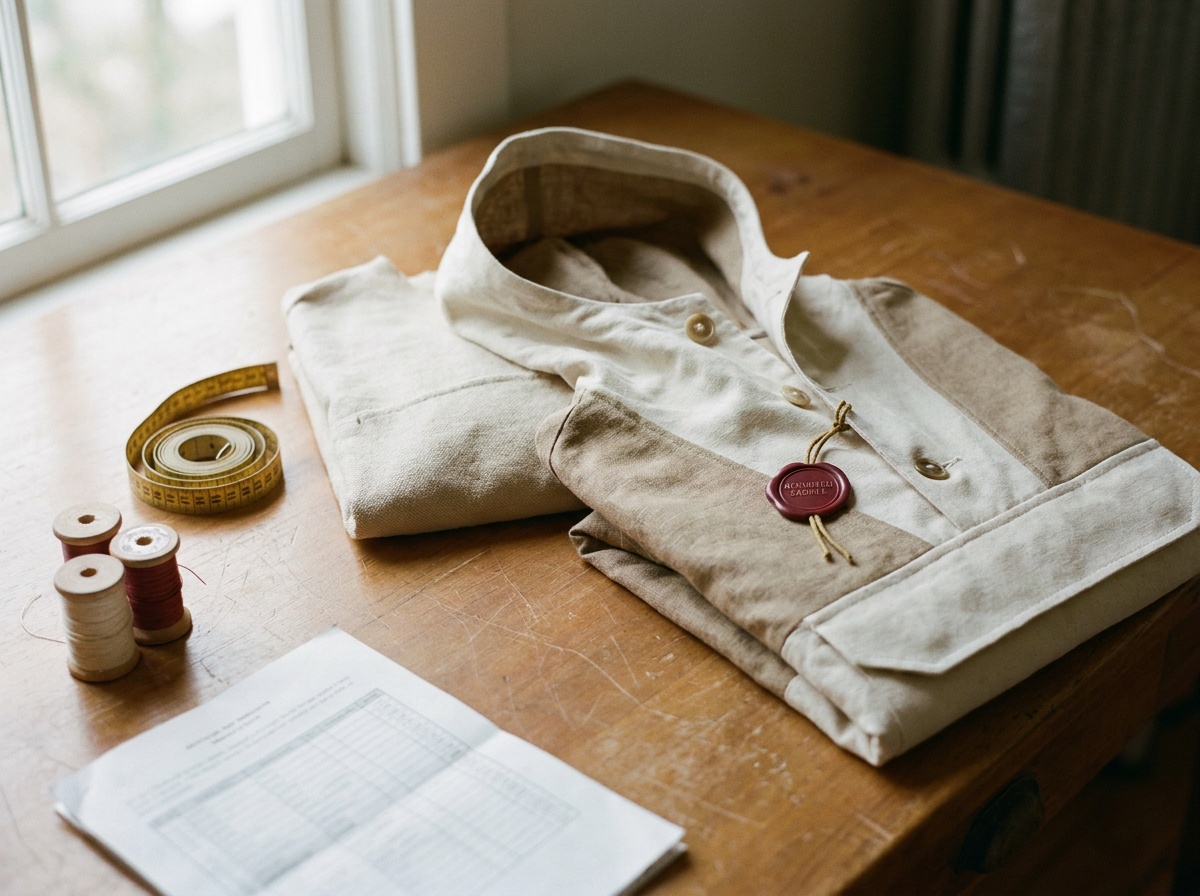
Garment sampling runs through a sequence of named stages, each with a different purpose and a different sign-off. A proto sample proves the pattern and construction work. A fit sample checks measurements and silhouette. A size set sample confirms the graded fit holds across the full size range. A salesman sample (SMS) supports buyer meetings and marketing. A pre-production (PP) sample locks the final standard in final materials. A top of production (TOP) sample checks the bulk run against that standard after cutting starts. Skipping a stage doesn't skip the work; it moves the correction later, where it costs more.
Founders shipping their first production run tend to hear these terms out of order, from different vendors, with different names attached. A factory in one region says "PP sample," an agent in another says "gold seal," and a sourcing platform calls the same thing something else. The stages are consistent even when the vocabulary isn't. Here's the sequence, what each stage checks, and where founders lose the most time.
What each sample stage is for
Proto sample (also called a first sample or prototype). This is the earliest physical version of the garment, built from the tech pack or sketch to prove the pattern and construction logic work, not to check fit or final look. It's usually sewn in a substitute fabric of similar weight and stretch, since the final fabric often isn't sourced yet, and made in one size only, the base or sample size. One common convention is three protos per round: two go to the brand (one kept, one returned marked up) and one stays with the factory as its own reference copy. This count is widely cited but not universal, so treat it as common practice rather than fixed rule. At this stage, the brand approves or sends the sample back with comments. There's no formal QC sign-off yet; this is a design-stage checkpoint.
Fit sample. This is where the garment gets checked against the point-of-measure spec sheet, on a dress form or a fit model, for fit, drape, and construction accuracy. Fabric is usually closer to the intended final fabric than the proto, though not always exact. Like the proto, it's built in the base sample size only, not the full size range. Two to three revision rounds is typical; complex or tailored garments often need four or more. This stage has the highest resubmission rate in the entire process, and the most common way to blow the timeline here is scope creep: introducing a new design change mid-fit-review resets the clock, since the factory is now revising against a moving target instead of converging on one.
Size set sample. Once fit is approved in the base size, the size set sample confirms the graded pattern, the base size scaled up and down, produces a correct and proportional fit across the full range, not only the size that got all the fitting attention. It's usually built in the actual or near-final fabric, and either one of every size or a set of "jump sizes" (for example S, L, XXL) depending on what the buyer requires. Sequencing varies here: most brands run size set after fit approval and before the pre-production sample, but some buyers reverse that and run it after PP approval instead. Both orders are used in practice, so treat neither as universal.
Salesman sample (SMS), also called a sales sample. This sample exists for order-taking and marketing, not construction QC: showrooms, trade shows, wholesale buyer meetings, and catalog or lookbook photography. It's built in final fabric, trims, and colors, since it has to look right even though it may be made in a sample room rather than on the actual production line, which can mean the finish is cleaner than what bulk production will produce. One source puts a typical SMS run at 10 to 50 pieces across key sizes and colorways. That figure comes from a single source, so treat it as a planning range rather than an industry constant. A separate, related term, photo or editorial sample, covers styling-only pieces made for photography and isn't necessarily production-accurate. Some brands and product categories skip this stage entirely.
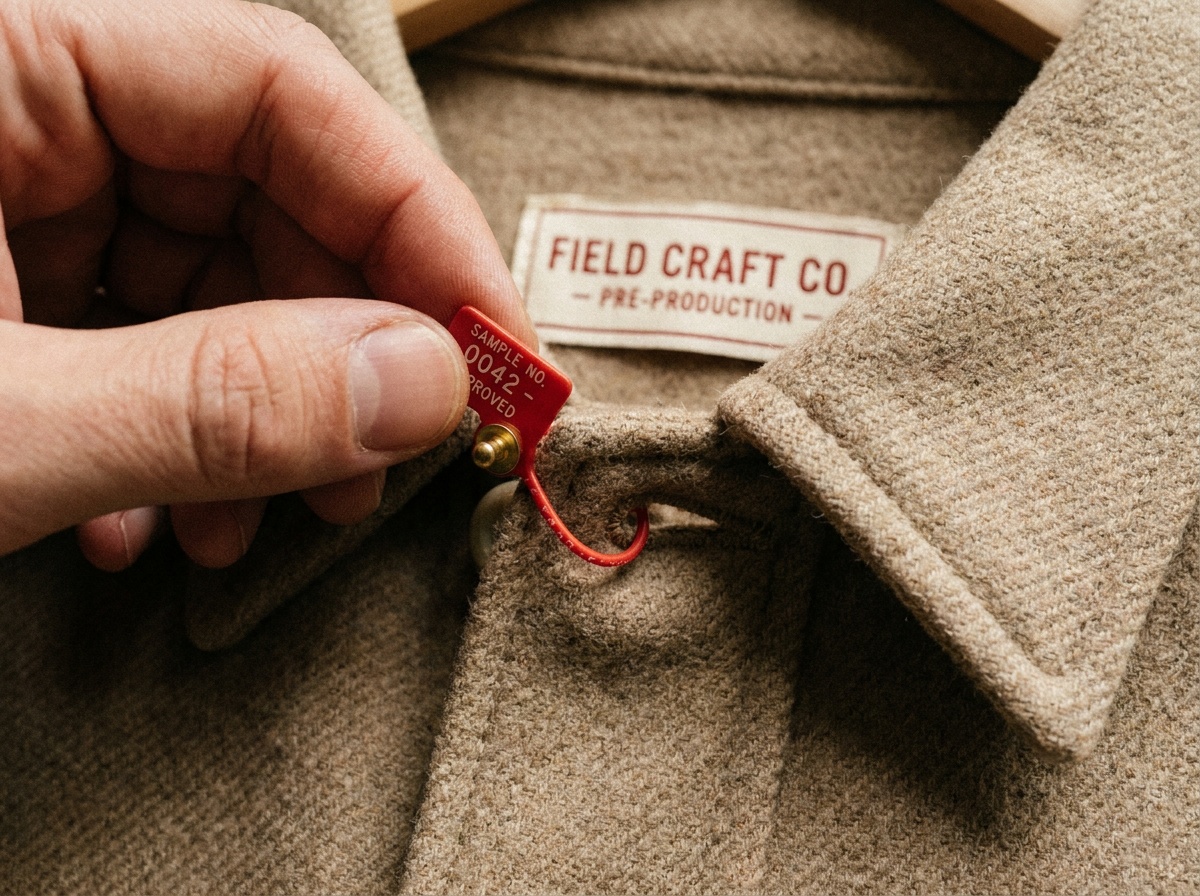
Pre-production sample (PP sample), also called a golden sample or sew-by. This is the hardest gate in the sequence: a full-spec sample built on or near the actual production line, in 100% final materials, fabric, trims, thread, labels, and packaging components included. It becomes the reference standard the entire bulk run is measured against. Sign-off here typically requires both the brand's technical designer or representative and the factory's QC manager, and some brands prefer to approve it in person to remove ambiguity. Once approved, the sample is often sealed, sometimes called a gold seal or sealed sample, with a colored, non-removable, sometimes numbered tag, to prevent it from being altered after approval. A rejected or flagged sample is sometimes called a red tag. Timing for this stage runs roughly the same as a proto round, and the biggest variable is how quickly final materials arrive, not the sewing itself.
Top of production sample (TOP). Once cutting and sewing begin on the bulk order, a TOP sample is pulled from the actual production line, either by the buyer's QC inspector or as a random pull from the first run, and checked against the sealed PP sample. This checks construction and quality match, and it also checks packaging, which earlier stages generally don't. TOP is not the same approval as PP: PP approves the standard, TOP verifies the factory is executing that standard at scale. If a TOP sample fails, the consequence is different from every earlier stage. A failed proto or fit sample means another sampling round. A failed TOP sample means production stops for correction, on goods that are already cut.
Some sources present this as one flat chronological list, which is how founders usually encounter it because that's the order the terms get used in. Others group the stages into two phases: development sampling (proto, fit, SMS) confirms the design and the salable product, and production sampling (size set, PP, TOP) confirms the bulk run will match it. Both framings describe the same sequence; the two-phase version is a useful way to remember which stage answers which question.
The stage sequence at a glance
| Proto sample | Confirms pattern and construction feasibility, substitute fabric, base size only |
| Fit sample | Confirms measurements and silhouette, 2 to 3 revision rounds typical |
| Size set sample | Confirms graded fit across the full size range, made in final or near-final fabric |
| Salesman sample (SMS) | Built for buyer meetings and marketing, final fabric and trims, not construction QC |
| Pre-production (PP) sample | Final full-spec sample on final materials, signed off by brand and factory QC, becomes the production standard |
| Top of production (TOP) sample | Pulled from the live production line, checked against the sealed PP sample and packaging |
Stage count varies by who's naming them. Some references list as few as five or six stages; others break the process into a dozen or more by adding sealed, shipment, GPT, and counter samples as separate entries. The six above are the ones every founder needs to plan around. A few adjacent terms are worth knowing but aren't separate gates in the main approval chain: a shipment sample is pulled from finished, packed goods to check folding, packaging, and labeling before the order leaves the factory; a GPT (garment performance test) sample goes to a lab for seam strength, colorfastness, or wash testing, and is often satisfied with a test report rather than a physical sample submission; a counter sample is the factory's own duplicate of whatever was submitted, kept on hand for reference; and a digital or 3D sample is an increasingly common stand-in for a physical proto or fit sample, used to save time and material cost rather than to replace a stage outright.
How long sampling typically takes
These ranges come from a sample-room source and line up loosely with the timing language other sources use, but they aren't a universal standard. Garment complexity, how many fit rounds a design needs, fabric and trim lead time, and a given factory's backlog all move these numbers, sometimes considerably. Treat them as planning ranges, not guarantees a factory owes you.
Where founders lose the most time
Most delays trace back to two habits. The first is treating the fit sample stage as a place to keep designing: a change that goes beyond correcting fit, a new pocket, a different closure, a revised hem, restarts the fit clock rather than moving it forward. The second is underestimating the pre-production sample. Founders sometimes treat PP as a formality because the fit sample already looked right, but PP is the first time the garment exists in 100% final materials, and problems that never showed up in a substitute fabric, shrinkage, drape, colorfastness, hand feel, show up here. Because PP becomes the literal standard the factory measures bulk production against, an error that slips through at this stage doesn't get caught again until TOP, by which point goods are already cut.
Work with a technical designer.
Approving a pre-production sample sets the standard for your entire bulk run. A second set of eyes on the PP sample, before you sign off, catches the details that are expensive to fix once cutting starts.
What is the difference between a PP sample and a TOP sample?
A PP (pre-production) sample sets the standard: it's the final full-spec sample, in 100% final materials, that the brand and factory sign off on before bulk cutting begins. A TOP (top of production) sample is pulled after cutting and sewing start, from the actual bulk run, and checked against that sealed PP standard. PP approves the standard; TOP verifies the factory is executing it at scale. They check different things and shouldn't be treated as the same approval.
Is a salesman sample (SMS) required for every production run?
No. SMS supports wholesale buyer meetings, showroom presentations, and marketing or catalog photography, not construction quality control. Several brands and product types skip this stage entirely if there's no wholesale buying process or photo shoot that needs a finished sample ahead of bulk production.
Why does the size set sample matter if the fit sample already passed?
A fit sample is built and approved in one size only, usually the base or sample size. Grading scales that pattern up and down across the rest of the size range, and grading doesn't always hold proportionally, especially at the smallest and largest sizes. The size set sample is the check that the graded range fits the way the base size did, not only that the math of the grade rule was applied.
How many fit sample rounds are normal?
Two to three revision rounds is typical for most garments. Complex or tailored construction, tailored jackets, structured outerwear, anything with precise draping, often needs four or more rounds. The number goes up when new design changes get introduced during fit review instead of the round being used strictly to correct fit against the existing spec.
Reviewed by Karolyn, Technical Apparel Designer · kellyhouse.studio