How to Give Fit Comments a Factory Can Use
The three-part formula that turns a fitting-room reaction into a comment a pattern maker can act on, plus the mistakes that send a comment sheet back unread.
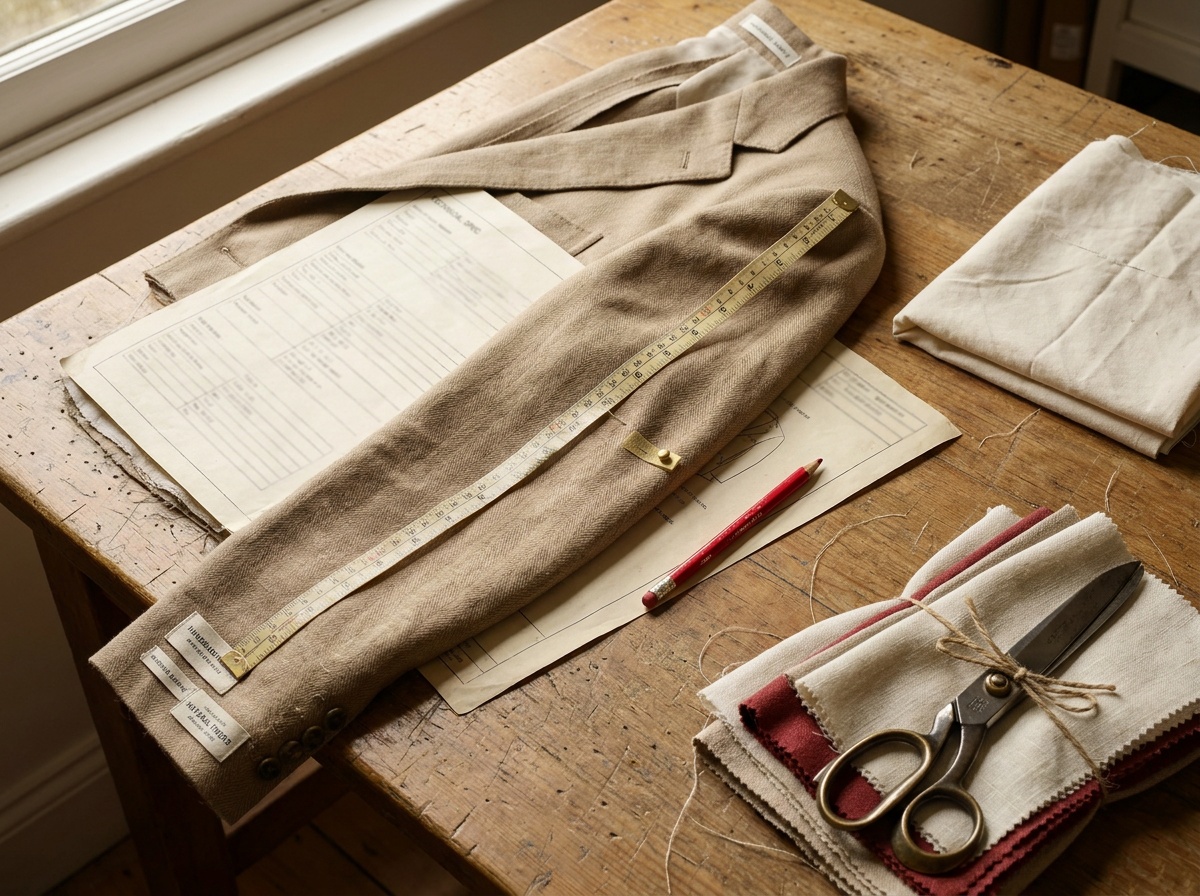
A usable fit comment has three parts: the point of measure from the spec sheet, the direction it needs to move, and the amount, in the spec sheet's unit. "The zipper area feels off" tells a pattern maker nothing. "CF zipper (#8) is 15 cm too short, lengthen to spec plus 15 cm for the next proto" tells them exactly what to change.
A factory doesn't fit the garment on your body. It fits the garment against your tech pack's point-of-measure grid. A comment that describes a feeling, not a measurement, gets interpreted by whoever reads it that day, and the next sample comes back wrong for a different reason than the first one.
What a usable fit comment contains
Sample-review guidance from pattern makers and technical designers converges on the same structure, whether or not it's named as a formula. A comment a factory can act on states:
- Point of measure: the exact line on the spec sheet, by name or number ("#12 Chest Width," "CB Length," "Bicep"), not a garment area described in prose.
- Direction: which way it moves: larger, smaller, higher, lower, longer, shorter, add, remove.
- Amount: a number, in the same unit the spec sheet uses (inches or centimeters), not a relative word like "a bit" or "some."
| Point of measure | The exact spec sheet line, by name or number (e.g., #12 Chest Width) |
| Direction | Larger, smaller, higher, lower, longer, shorter, add, remove |
| Amount | A number, in the spec sheet's unit, not a relative word |
| Priority | Must-fix before next sample, or preference |
| Photo reference | Front, back, side, and a close-up with the issue marked |
A comment sheet built from sample-review templates typically groups comments under headers like Design, Measurement, Construction, and Pattern, then closes with a Next Steps line. That structure matters as much as the wording: a factory reading a long list of issues needs to know which ones are pattern corrections versus which are one-line spec changes.
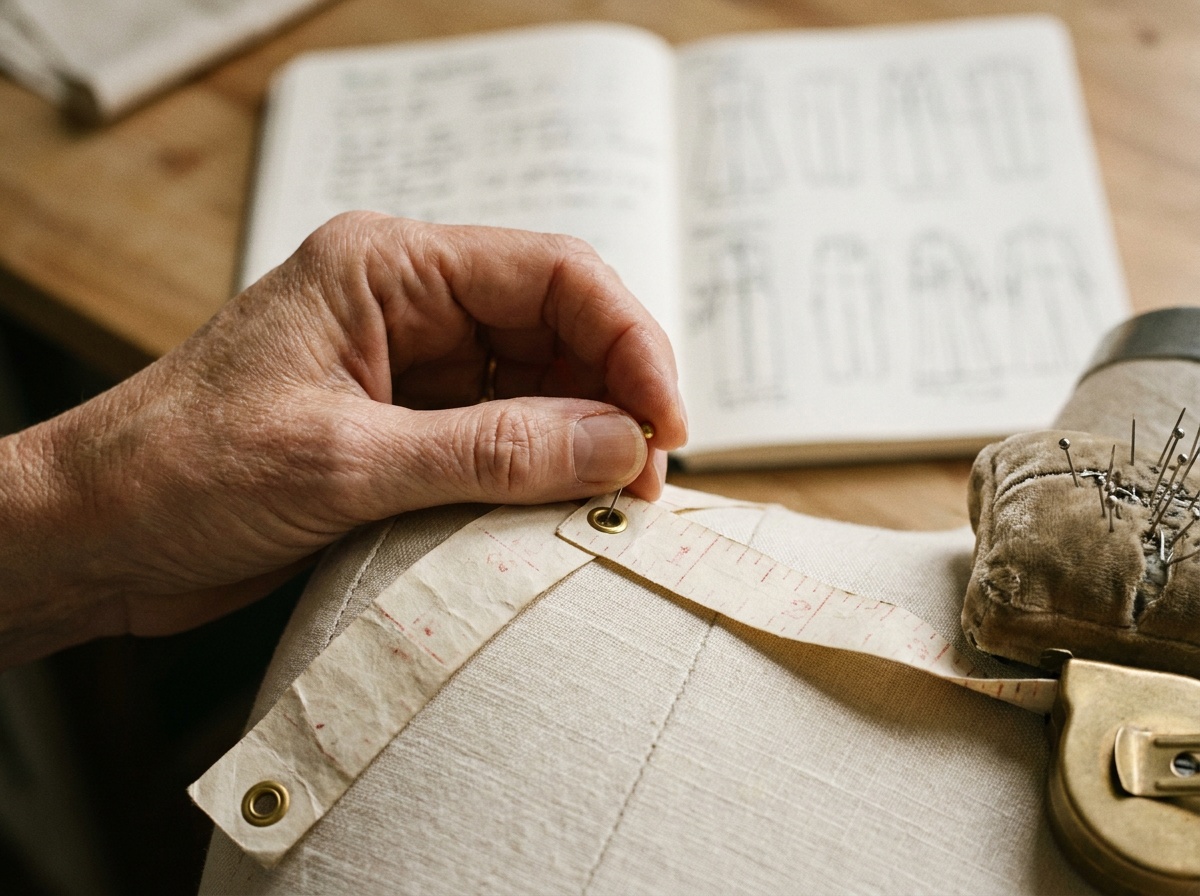
Before and after
Vague: "The zipper area is hard to get on and it feels off."
Usable: "CF zipper (#8) is 15 cm too short. Lengthen to spec + 15 cm for next proto."
The usable version names the point of measure (the zipper, referenced to its spec sheet line), the direction (lengthen), and the amount (15 cm). Nothing in it needs a follow-up email to clarify.
The same discipline applies past construction and into pure measurement. Instead of "the chest is tight," write "#4 Chest Width is 1 in short of spec, add 1 in for next sample." Instead of "the sleeves are too long," write "#15 Sleeve Length is 0.75 in over spec, shorten by 0.75 in." Bespoke tailoring uses the same pattern at the level of a single garment: a tailor's fit notes read like "raised the back collar 1/2 in, opened the shoulder and half-back 1/2 in, took in the bicep 3/4 in." That's a style reference, not a production-sampling standard, since bespoke fitting works garment-by-garment rather than against a graded spec sheet, but the shape of the sentence, measurement plus direction plus amount, is the same discipline scaled down.
Is it a fit problem or a tolerance problem
Before writing a comment, check whether the measurement is outside the tech pack's stated tolerance. Tolerance is not one universal number. It depends on the garment category, the fabric (woven versus knit), and how fitted the silhouette is.
| Wovens, critical POMs (chest, waist) | ±0.25 in |
| Knits, critical POMs (chest, waist) | ±0.5 in |
| Secondary POMs (sleeve length, garment length) | ±0.5 in, up to ±1 in on casual fits |
| Fitted or structured garments | Tighter end of the range, ±0.25 to 0.5 in |
| Relaxed or casual garments | Looser end of the range, ±0.5 to 1 in |
Knits get wider tolerance than wovens because the fabric stretches and recovers, so a measurement half an inch off spec is often within normal variance, not a defect. Fine-gauge knitwear is an exception: tighter gauge control means less fabric give to hide an error, so a tech pack for a fine-gauge sweater often states a tolerance closer to the woven end of the range. If a measurement falls inside the tolerance your tech pack states, it isn't a fit comment. Writing one anyway sends the factory chasing noise instead of the actual problem.
Fit vocabulary worth knowing before you write a comment
- Drag lines: wrinkles that radiate toward a point on the body. The direction a drag line points is generally the direction that needs more fabric or ease.
- Pooling: fabric bunching in a specific zone, commonly the back of the knee or the small of the back, from too much ease at that point.
- Grain and off-grain: grain is the direction of the fabric's yarns (lengthwise and crosswise). A panel cut off-grain hangs crooked or twists around the body even when its flat measurements match the spec sheet exactly. If a garment looks wrong but every measurement checks out, grain is worth inspecting before writing a measurement-based comment.
- Ease: the difference between a body measurement and the finished garment measurement at that point. Wearing ease allows movement; design ease is a deliberate silhouette choice. When a garment reads as "too loose" by design intent rather than by error, the comment should say "reduce ease at [POM]," not "make it smaller," since that flags it as a design decision, not a construction mistake.
Where fit comments belong in the sampling process
A proto sample checks design and construction intent, often in muslin or a low-cost substitute fabric, and isn't evaluated for fit. The fit sample, made in the actual or close-to-actual fashion fabric and checked on a fit model or form, is where the bulk of fit comments happen and where the measurement-direction-amount discipline matters most. The size-set sample takes the corrected fit and grades it across the full size range, checking that a fix made at the sample size holds proportionally elsewhere. By the pre-production (PP) sample, made on the actual line with production fabric and trims, fit comments should be rare: the fit pack, tech pack, was supposed to be sealed already, and a real fit problem surfacing this late costs a production delay, not only a sampling round. The TOP (top-of-production) sample pulled during the bulk run is a conformance check against the sealed sample, not a stage for new fit comments.
Work with a technical designer.
Writing fit comments against a spec sheet that's incomplete or missing tolerances makes this harder than it needs to be. A technical designer can review your tech pack and fit sample together before the comments go back to the factory.
Common mistakes that slow a sample down
- Describing the symptom instead of the fix. "Too tight," "doesn't sit right," and "looks off" describe a reaction, not a change. State the point of measure, the direction, and the amount instead.
- Giving a direction with no amount. "Make the sleeve shorter" forces the pattern maker to guess how much, which produces a second wrong sample instead of a corrected one.
- Not referencing the tech pack's POM number. Free-text descriptions like "the area near the underarm" are ambiguous across a multi-page spec sheet. Numbered references remove the ambiguity.
- Giving verbal-only feedback. A comment spoken in a fitting room and never written into the tech pack's comment sheet doesn't reach the factory floor and gets lost between rounds.
- Not checking tolerance first. A measurement inside the stated tolerance isn't a defect. Confirm the number is out of range before writing the comment.
- Skipping photos. Front, back, and side photos, with the specific issue marked, belong with every comment sheet, not as optional backup.
- No priority marked. A long comment list without a must-fix versus preference distinction gives the factory no way to triage it.
- No next step stated. End the comment sheet with an explicit instruction, such as "send second proto with all revisions above," rather than trailing off after the last comment.
What's the minimum a fit comment needs to be usable?
A named point of measure from the spec sheet, a direction (larger, smaller, longer, shorter, and so on), and a specific amount in the spec sheet's unit. Leave any of the three out and the factory has to guess.
Should fit comments go in an email or in the tech pack?
In the tech pack's fit or comment sheet. An emailed or verbal comment that isn't logged there tends to get lost between sampling rounds.
How do I know if something is a real fit issue or normal tolerance variance?
Check the measurement against the tolerance stated in your own tech pack. If it falls inside that range, it isn't a defect. Tolerance varies by fabric type and garment category, so there's no single number that applies everywhere.
Do I need photos with every fit comment?
Yes. Front, back, and side shots, plus a close-up of the specific issue with the area marked, remove ambiguity that written comments alone can leave.
Why did my comments get partially applied on the next sample?
Usually because some comments lacked an amount or a clear priority. A factory acting on a long list without either will apply what's unambiguous and skip or misinterpret the rest.
Reviewed by Karolyn, Technical Apparel Designer · kellyhouse.studio