Increases and Decreases in Knitting
Shape knitting with confidence: the core increases (M1L/M1R, KFB, yarn over) and decreases (k2tog, ssk), which way each leans, and how to pair them for symmetric shaping.
Reviewed knitting references for common increases (M1L/M1R, KFB, yarn over) and decreases (k2tog, ssk) and their lean and pairing for symmetric shaping; the exact increase or decrease a pattern wants is pattern-specific and confirmed against it, and no pattern is prescribed.
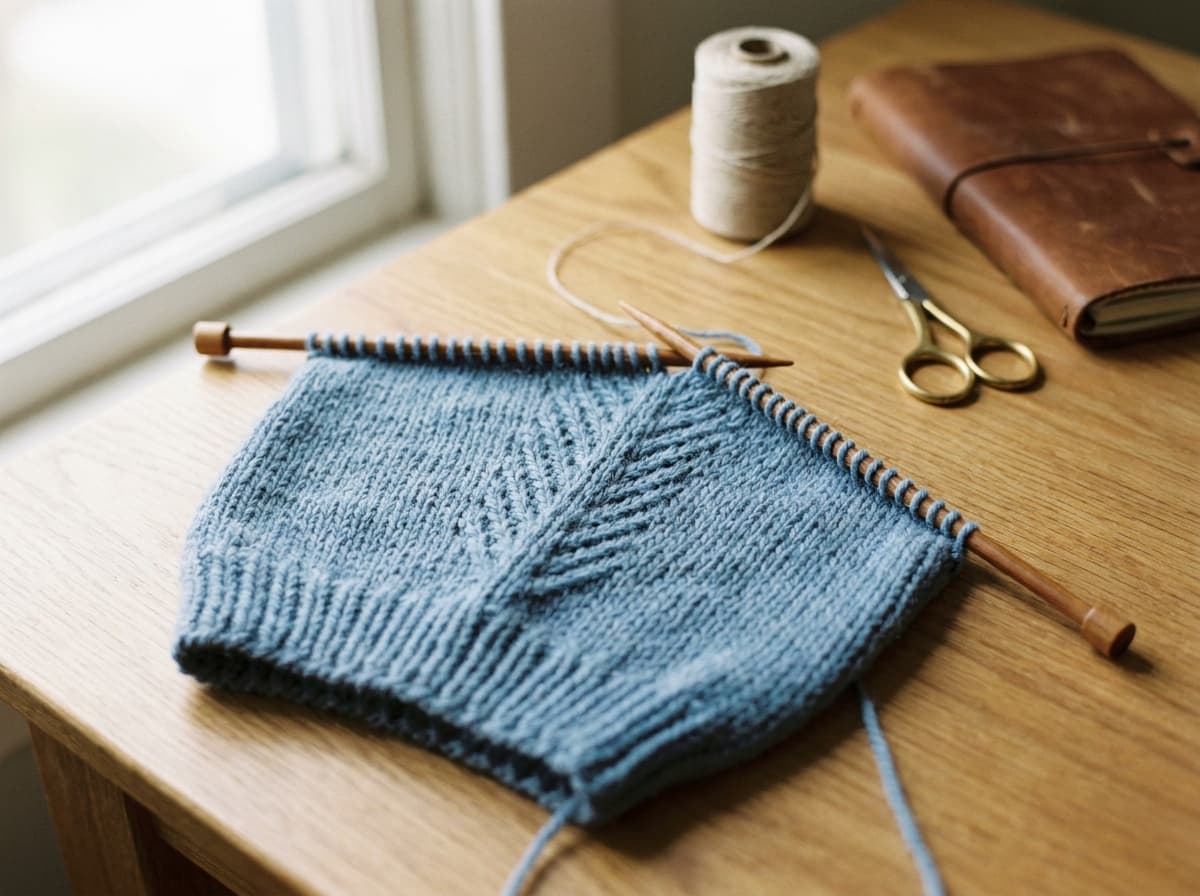
Shaping in knitting means adding stitches (increases) to widen the fabric or removing them (decreases) to narrow it, and the key idea is that most of these moves lean left or right, so patterns pair them for symmetry. The everyday decreases are k2tog (knit two together), which leans right, and ssk (slip, slip, knit), which leans left; used together at the two edges of a shaped piece they mirror each other. The common increases are M1L and M1R (make one left and right, made by lifting the bar between stitches), KFB (knit front and back, quick but leaves a small bump), and the yarn over, which increases and deliberately leaves a decorative hole (the basis of lace). If a pattern just says "M1," use M1L by default. Knowing which way each move leans is what makes shaping look intentional rather than messy.
Almost every shaped knit — a hat crown, a sock gusset, a raglan yoke, a lace panel — is built from a small set of increases and decreases. The craft is choosing the one that leans the right way and pairing it with its mirror.
The core decreases
| k2tog (knit two together) | Knit two stitches together as one. It removes one stitch and leans to the right. The simplest and most common decrease. |
| ssk (slip, slip, knit) | Slip two stitches knitwise one at a time, then knit them together through the back. It removes one stitch and leans to the left, mirroring k2tog. |
| Pair them for symmetry | At the two edges of a shaped piece, use the decrease that leans toward the centre on each side (commonly ssk at the start of the row and k2tog at the end, or the reverse) so the shaping is symmetric. |
| Double decreases | For steeper shaping (like a hat crown or a chevron), central or double decreases remove two stitches at once; patterns specify which to keep the lean consistent. |
The core increases
| M1L and M1R (make one left / right) | Lift the horizontal bar between two stitches onto the left needle and knit it, twisting it so it does not leave a hole. M1L and M1R lean opposite ways and are paired for symmetric increases. If a pattern says only 'M1,' M1L is the usual default. |
| KFB (knit front and back) | Knit into the front and then the back of the same stitch, making two from one. Fast and beginner-friendly, but it leaves a small purl-like bump, so it is used where that bump is hidden or acceptable. |
| Yarn over (YO) | Wrap the yarn over the needle between two stitches. It adds a stitch and intentionally leaves a hole, which is the basis of lace and eyelets, and is paired with decreases to keep lace stitch counts constant. |
Lean is the whole point
The reason there are several increases and decreases that do the same arithmetic is direction. A decrease that leans right looks tidy on one edge and untidy on the other, so shaped pieces pair a right-leaning move on one side with its left-leaning mirror on the other, and the two edges look deliberate and symmetric. The same applies to M1L/M1R at raglan lines or sleeve seams. When a pattern is fussy about ssk versus k2tog, or M1L versus M1R, it is controlling that lean — following it exactly is what separates crisp shaping from a lumpy edge. Where a pattern only says "increase" or "decrease," a plain k2tog and M1L are safe defaults, but keep them consistent.
Increases and decreases also carry stitch-pattern meaning in the knitting stitch library, especially lace; keep shaped pieces to size with knitting gauge and tension; and read how a pattern notates shaping in how to read a knitting pattern.
Sources and decision boundaries
The increases, decreases, lean, and pairing here follow knitting references including Gathered on how to decrease in knitting, Gorgeous Alpacas on knitting increases (M1, KFB, YO), and Purl and Hook on increases and decreases explained. The exact increase or decrease and its placement are set by each pattern and confirmed against it; this guide does not prescribe a pattern.
FAQ
What is the difference between k2tog and ssk?
Both remove one stitch, but they lean opposite ways: k2tog (knit two together) leans right, and ssk (slip, slip, knit) leans left. Patterns pair them at the two edges of a shaped piece so the decreases mirror each other and the shaping looks symmetric. Using the wrong one makes one edge look untidy.
Which increase should I use if the pattern just says M1?
Use M1L (make one left) as the default when a pattern says only 'M1.' M1L and M1R are mirror-image increases made by lifting and twisting the bar between stitches, and they are paired for symmetric shaping. KFB and yarn over are different increases used where their bump or hole is wanted.
Why does my shaping look lumpy on one side?
Usually because the increase or decrease leans the wrong way for that edge. Each move leans left or right, so a shaped piece should use the version that leans toward the centre on each side. Matching the lean to the edge, and pairing mirror moves, is what makes shaping look crisp and deliberate.
What is a yarn over for?
A yarn over adds a stitch and deliberately leaves a hole, which is the basis of lace and eyelet patterns. It is often paired with a decrease so the overall stitch count stays constant while the holes form the lace. Unlike M1 increases, the hole is the point, not a fault.