How to Read a Knitting Pattern
Every knitting abbreviation, bracket, and asterisk explained, plus the US/UK differences and how to read a chart.
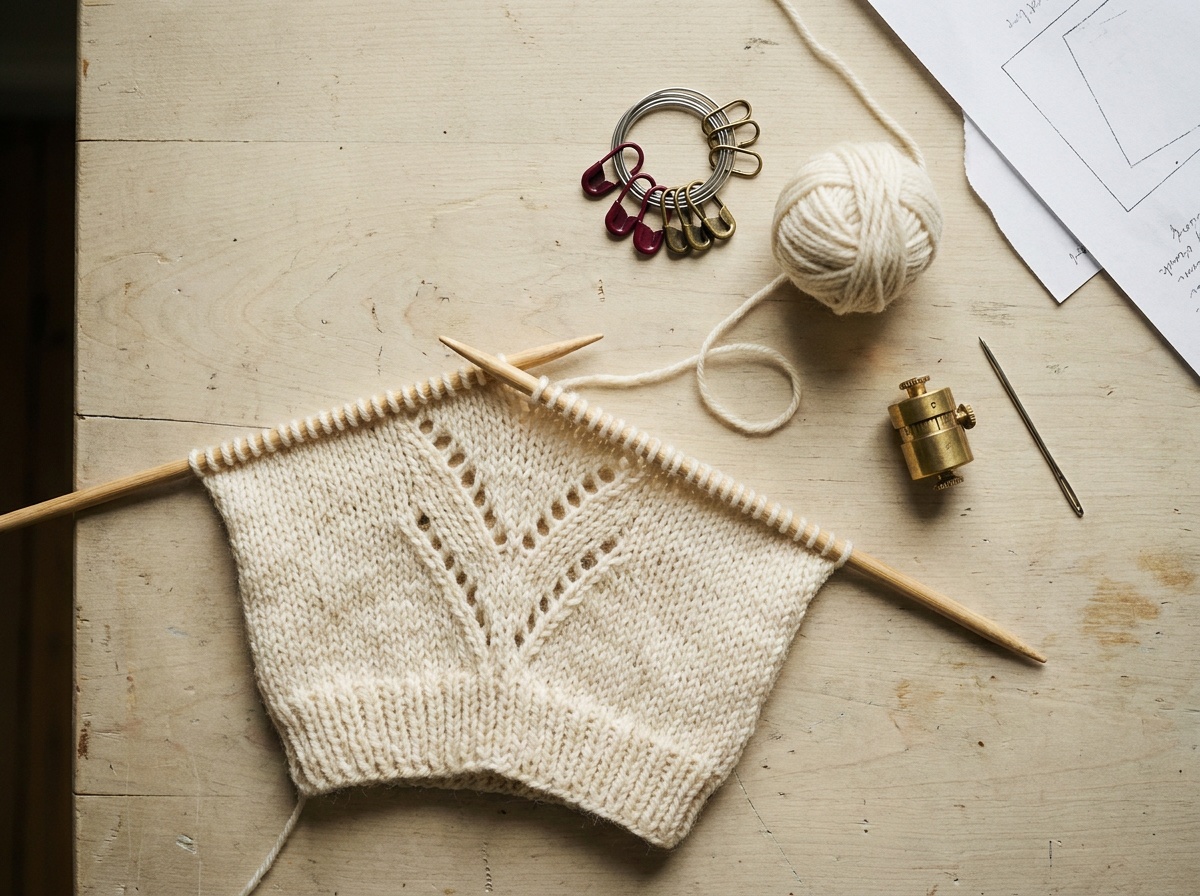
A knitting pattern is written in abbreviations (k, p, yo, k2tog), grouped with asterisks, parentheses, and brackets that mark repeats, and checked with a stitch count at the end of each row or round. The two things worth learning first: the shorthand for increases and decreases (they set the shape of the piece), and how to read a chart, where each square is one stitch and the reading direction flips between right-side and wrong-side rows. US and UK terms differ far less than in crochet, mostly bind off versus cast off and gauge versus tension. Once you can read those, the rest is vocabulary.
A knitting pattern looks like a wall of shorthand the first time you open one. It isn't. Every abbreviation traces back to a small, fixed list, and every asterisk or bracket is doing one of a handful of jobs: marking a repeat, grouping a set of stitches, or telling you how many stitches you should have when a row is done. Learn the shorthand once and every pattern from every designer reads the same way.
What the abbreviations mean
| k | knit |
| p | purl |
| st(s) | stitch(es) |
| st st | stockinette stitch (knit RS rows, purl WS rows) |
| rev st st | reverse stockinette stitch (purl side facing out) |
| yo | yarn over (adds a stitch, leaves a hole) |
| k2tog | knit two stitches together (right-leaning decrease) |
| ssk | slip, slip, knit those two together (left-leaning decrease) |
| psso | pass slipped stitch over (a decrease) |
| m1 / m1l / m1r | make one / make one left-leaning / make one right-leaning (increase) |
| kfb | knit into front and back of one stitch (increase) |
| sl | slip a stitch from one needle to the other, unworked |
| wyif / wyib | with yarn in front / with yarn in back |
| tbl | through the back loop |
| pm / sm | place marker / slip marker |
| RS / WS | right side / wrong side |
| rep | repeat |
| beg / rem | beginning / remaining |
These abbreviations are standardized by the Craft Yarn Council, the industry body most US pattern designers and yarn companies follow, so they read the same across a magazine pattern, an indie PDF, and a yarn label insert. A pattern never tells you to make the cast-on slip knot or explain how to cast on. That setup is assumed before row 1 begins.
The pairs worth memorizing early are the decreases. k2tog leans right, ssk leans left, and designers pick between them so the decreases mirror each other on either side of a piece. m1l and m1r do the same job for increases. Getting these directions right is what makes shaping look intentional instead of lumpy.
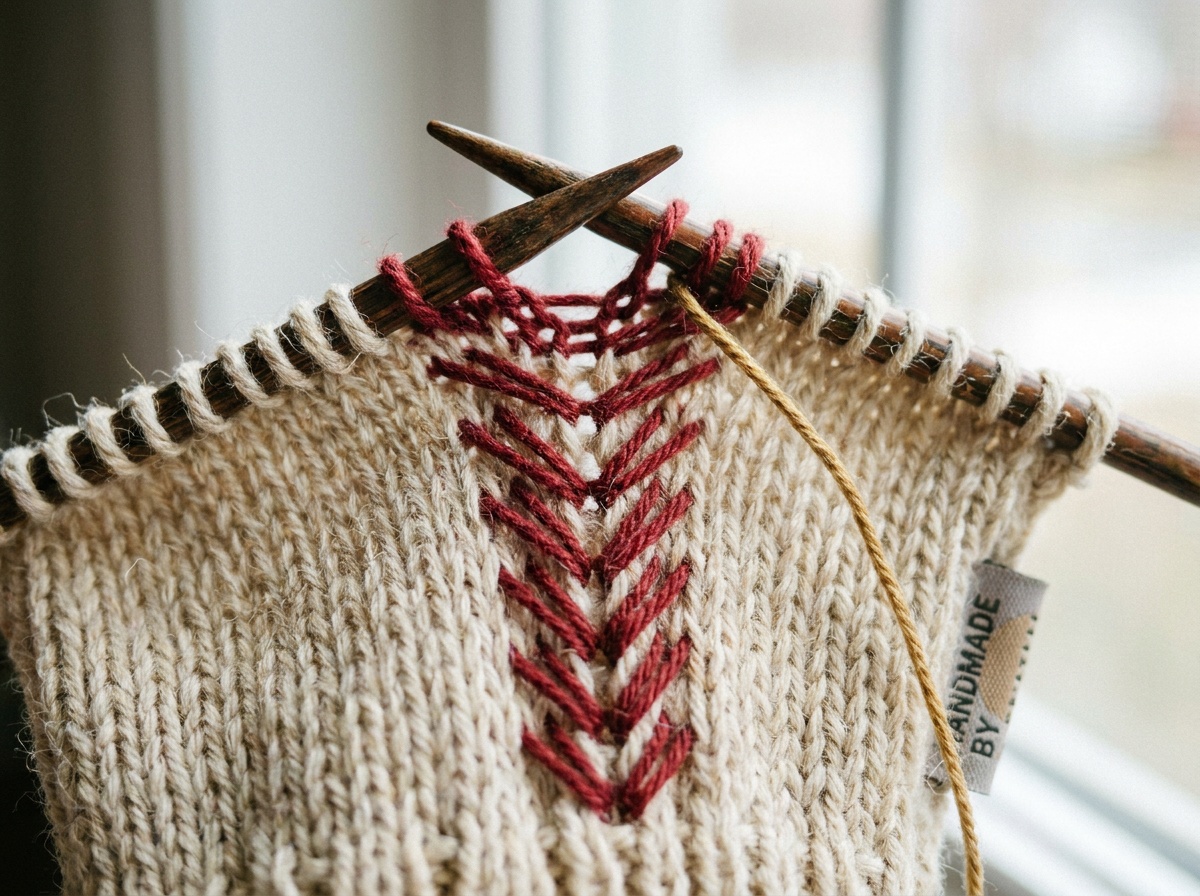
What the symbols and punctuation mean
| * (single asterisk) | Marks the start of a repeat; work again from here as the instruction directs |
| * ... * (two asterisks) | Repeat everything between them as many times as stated |
| ( ) parentheses | Group stitches worked together, or give sizes/measurements for different versions |
| [ ] brackets | Work the enclosed instructions the number of times stated right after the bracket |
| Number at end of row/round | A stitch count, not an instruction: it tells you what you should have after that row |
A line like *k2, p2; rep from * to end means work the two-stitch knit, two-stitch purl group over and over across the row. A line like [k1, yo, k1] in next st means work all three of those into a single stitch. Parentheses do double duty: they group stitches the same way brackets do, and in garment patterns they hold the numbers for each size, written smallest first with the rest in parentheses after it, like cast on 80 (88, 96) sts.
A stitch count at the end of a row (often written as "(64 sts)") is there so you can catch a mistake immediately. If your count is off, the error is almost always in the row you finished last, not somewhere further back. A missed yarn over or a decrease worked twice is the usual culprit.
Where US and UK terms differ
Knitting has far fewer US/UK term traps than crochet, where the same stitch names mean different stitches. In knitting, a knit stitch is a knit stitch in both. The differences are a short list of vocabulary swaps.
| US bind off | UK cast off |
| US gauge | UK tension |
| US stockinette stitch | UK stocking stitch |
| US yarn over (yo) | UK yarn forward / yarn round needle (yfwd / yrn) |
| US gray area: needle sizing | US numbers, UK old numbers, and metric mm all differ |
Needle sizing is the one that catches people out. US needles run on their own number scale, older UK needles run on a different scale (where the number goes down as the needle gets larger), and metric sizing states the diameter in millimeters. The millimeter figure is the reliable one, so if a needle seems off from what a pattern expects, check the mm. A US 8 is 5 mm; a US 7 is 4.5 mm. When a pattern lists two numbers for a needle, match the metric size and ignore the letter scale.
How to measure and match gauge
Gauge is stitches and rows per 4 inches (10 cm), never per inch. It's the number that decides whether your finished piece comes out the size the pattern promises.
To check gauge: knit a swatch a few stitches and rows larger than 4x4 inches in the pattern's stitch and needle. Wash and block it the way you'll treat the finished piece, lay it flat, and measure a clean 4-inch span in the middle, away from the edges. Count stitches, then count rows.
- More stitches per 4 inches than the pattern states means your knitting is tighter than the designer's. Go up a needle size.
- Fewer stitches means your knitting is looser. Go down a needle size.
Gauge matters most on anything fitted: sweaters, hats, socks, anything worn close to the body. It matters far less on a blanket or scarf where an inch either way won't ruin the fit. Row gauge matters less than stitch gauge for most projects, since you can add or remove rows to fix length, except when a pattern ties shaping to an exact row count or is worked side to side.
Reading a knitting chart
A knitting chart is a grid where each square is one stitch and each row of squares is one row of knitting. A symbol key next to the chart tells you what stitch each square stands for: a blank or a dot for knit or purl, a slanted line for a decrease, an "O" for a yarn over. The key is specific to that pattern, so read it before you read the chart.
Charts are read the way the fabric is built, from the bottom up. Direction flips by row:
- Right-side (RS) rows are read right to left, matching the direction you knit across the front of the work.
- Wrong-side (WS) rows are read left to right, back the way you came.
- Row numbers usually sit at the side where that row starts, which is a quick way to confirm the direction before you begin a row.
There are two common chart types, and they read a little differently:
- Lace and texture charts show a symbol for each stitch. A blank square often means "knit on RS, purl on WS," so the same square can mean two different actions depending on which side you're working. The key states this. These charts also make repeats visible: a bordered block shows the section you work over and over across a row.
- Colorwork charts use a color or shade in each square instead of a stitch symbol. Every stitch is knit; the chart is only telling you which yarn color to use for each one. These are the easiest charts to read because the picture on the grid matches the picture on the fabric.
You don't have to read charts to knit from a pattern that includes full written instructions. Charts and written directions describe the same thing. Charts are useful for seeing a lace or colorwork repeat at a glance, but a fully written pattern can be completed without them.
Skill levels, if a pattern states one
| Beginner | Basic knit and purl, minimal shaping, easy finishing |
| Easy | Simple stitch patterns, basic increases and decreases, simple color changes |
| Intermediate | A range of stitch patterns, mid-level shaping, double-pointed or circular needles |
| Experienced | Fine yarns, complex lace or colorwork, several techniques combined |
What's the difference between k2tog and ssk?
Both decrease one stitch, but they lean in opposite directions. k2tog knits two stitches together and leans right; ssk slips two stitches then knits them together through the back and leans left. Designers use them in pairs so decreases mirror each other on the two sides of a piece.
Do US and UK knitting patterns use different stitch names?
Barely. Unlike crochet, a knit stitch means the same thing in both. The differences are vocabulary: US bind off is UK cast off, US gauge is UK tension, US stockinette is UK stocking stitch. Needle sizing also differs, so match the millimeter size rather than the letter or number.
Which direction do I read a knitting chart?
Bottom to top, and the horizontal direction flips by row. Read right-side rows right to left and wrong-side rows left to right, matching how the fabric was knit. Row numbers on the side of the chart mark where each row starts.
Is gauge as important for a scarf as it is for a sweater?
No. Gauge matters most for fitted, wearable pieces where size has to be exact, like sweaters, hats, and socks. A scarf or blanket a little larger or smaller than stated rarely affects whether the finished piece works.