How to Sew with Laminated and Coated Fabric
Sew PUL, laminated cotton, and oilcloth cleanly: why you cannot pin or iron them, the foot and needle that stop the coating sticking, and the longer stitch that keeps them from perforating.
Established sewing references reviewed for foot and needle choice, stitch length, holding coated fabrics without pins, feeding a sticky surface, and pressing laminated cottons, PUL, and oilcloth; no universal settings are prescribed and are confirmed on a test scrap of the specific material.
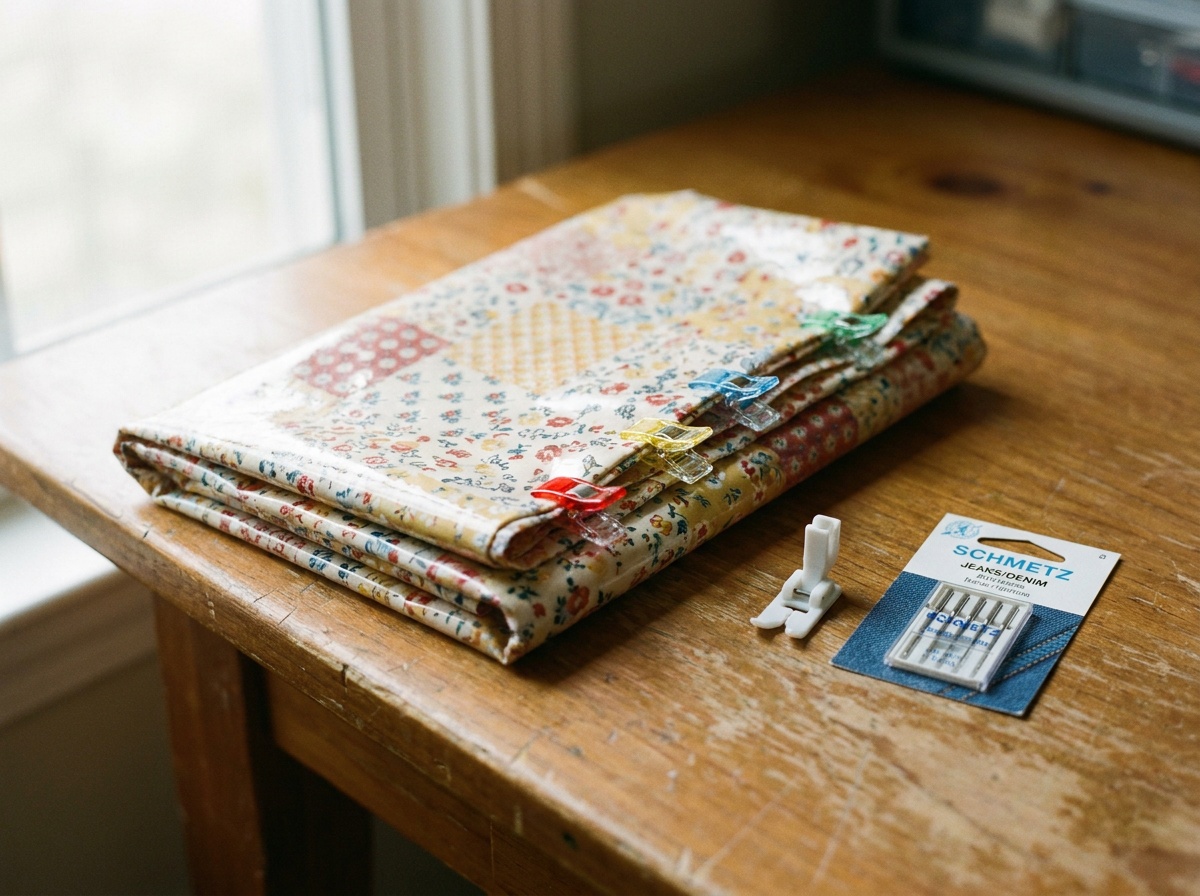
Laminated cotton, PUL, and oilcloth share two rules that drive everything: the coated surface sticks to a metal presser foot, and every needle hole is permanent. So do not pin in the body of the piece, since holes stay and can leak; hold layers with clips or basting tape in the seam allowance. Stop the surface sticking with a walking foot, a Teflon or roller foot, or a strip of tissue paper sewn on top and torn away, and where you can, sew with the coated side down against the feed dogs. Use a sharp universal or denim needle, lengthen the stitch to 3 mm or more so you do not perforate a tear line, and never iron the coated face, which melts it. Finger-press or roll seams, and test on a scrap.
Laminated cottons, polyurethane laminate (PUL), and oilcloth are forgiving to design with because they do not fray, and unforgiving of holes and heat. The techniques are close to those for faux leather and vinyl, because the same two problems, a sticky surface and permanent holes, apply.
The two rules
| Holes are permanent | There is no weave to close back up, so every pin and needle hole stays, and on a waterproof project a line of holes can leak. Do not pin in the body, and get the seam right the first time on a scrap. |
| The surface sticks | The coated or laminated face drags against a metal foot and the machine bed, so a plain foot stalls and stitches bunch. A walking, Teflon, or roller foot, or a tissue-paper leader, is what makes it feed. |
Machine setup
| Foot | A walking foot feeds the layers evenly; a Teflon or roller foot slides over the coating. No special foot? Sew over a strip of tissue paper and tear it off, or place the coated side down against the feed dogs and the fabric side up against the foot. |
| Needle | A sharp universal 80/12 to 90/14 for laminated cottons and PUL, or a denim 90/14 to 100/16 for thicker oilcloth. A sharp point pierces the coating cleanly instead of dragging it. |
| Thread | A strong all-purpose polyester, which resists the abrasion these projects (bags, mats, wet bags) take. |
| Stitch length | 3 mm or longer. A short stitch punches a dense line of holes that perforates the coating into a weak, leak-prone tear line. |
Hold it without pins
Use sewing clips along the edge, or basting tape placed inside the seam allowance where the needle will not run through it. If you absolutely must pin, pin only within the seam allowance where the holes will be hidden and cannot leak. Mark on the wrong side.
Press only on the wrong side, cool
A hot iron melts laminate and oilcloth onto its soleplate and ruins both. Do not touch the iron to the coated front. Where a seam must be flattened, finger-press it, run a leather or wallpaper roller over it, or use a warm (not hot) iron on the fabric wrong side only, through a press cloth, testing on a scrap first. Because the material does not fray, seam allowances need no edge finishing, which is one way coated cloth is easier than woven fabric.
For structured items, topstitching seam allowances down gives crisp edges and keeps them flat without pressing. See the seam finishes visual guide for the wider options, and the oilcloth and waxed-cotton cloth profiles for how coatings differ.
Sources and decision boundaries
The foot, needle, stitch, fastening, and pressing methods here follow established references such as Sew4Home on sewing laminated cottons and oilcloth, Polka Dot Chair on sewing laminated fabric, and Cucicucicoo on sewing PUL fabric. Exact needle, foot, and stitch length depend on the specific material and are confirmed on a test scrap, which this guide does not replace.
Can I pin laminated fabric, PUL, or oilcloth?
Not in the body of the piece. The holes are permanent because there is no weave to close, and on a waterproof project a line of pin holes can leak. Use sewing clips or basting tape inside the seam allowance instead, and if you must pin, keep the pins within the seam allowance where holes will be hidden.
Why does my machine drag or skip on coated fabric?
The coated surface sticks to the metal presser foot and bed. Use a walking, Teflon, or roller foot, sew over a strip of tissue paper and tear it off, or place the coated side down against the feed dogs with the fabric side up against the foot so only the fabric touches the metal.
What stitch length should I use for waterproof fabric?
3 mm or longer. A short stitch punches a dense row of holes that perforates the coating into a weak line that can tear or leak. A longer stitch keeps the seam strong and, on a waterproof item, more water-resistant. Confirm on a scrap.
How do I press laminated or coated fabric?
Never iron the coated front, which melts onto the soleplate. Finger-press seams, run a leather or wallpaper roller over them, or use a warm iron on the fabric wrong side only, through a press cloth, after testing on a scrap. The material does not fray, so seam allowances need no finishing.