How to Sew with Faux Leather and Vinyl
Sew faux leather and vinyl on a home machine: why you cannot use pins or backstitch, the foot and needle to use, the longer stitch that stops it perforating, and how to press without melting it.
Established sewing references reviewed for needle, foot, stitch length, fastening, seam finishing, and pressing when sewing faux leather and vinyl on a domestic machine; no universal settings are prescribed and are confirmed on a test scrap of the specific material.
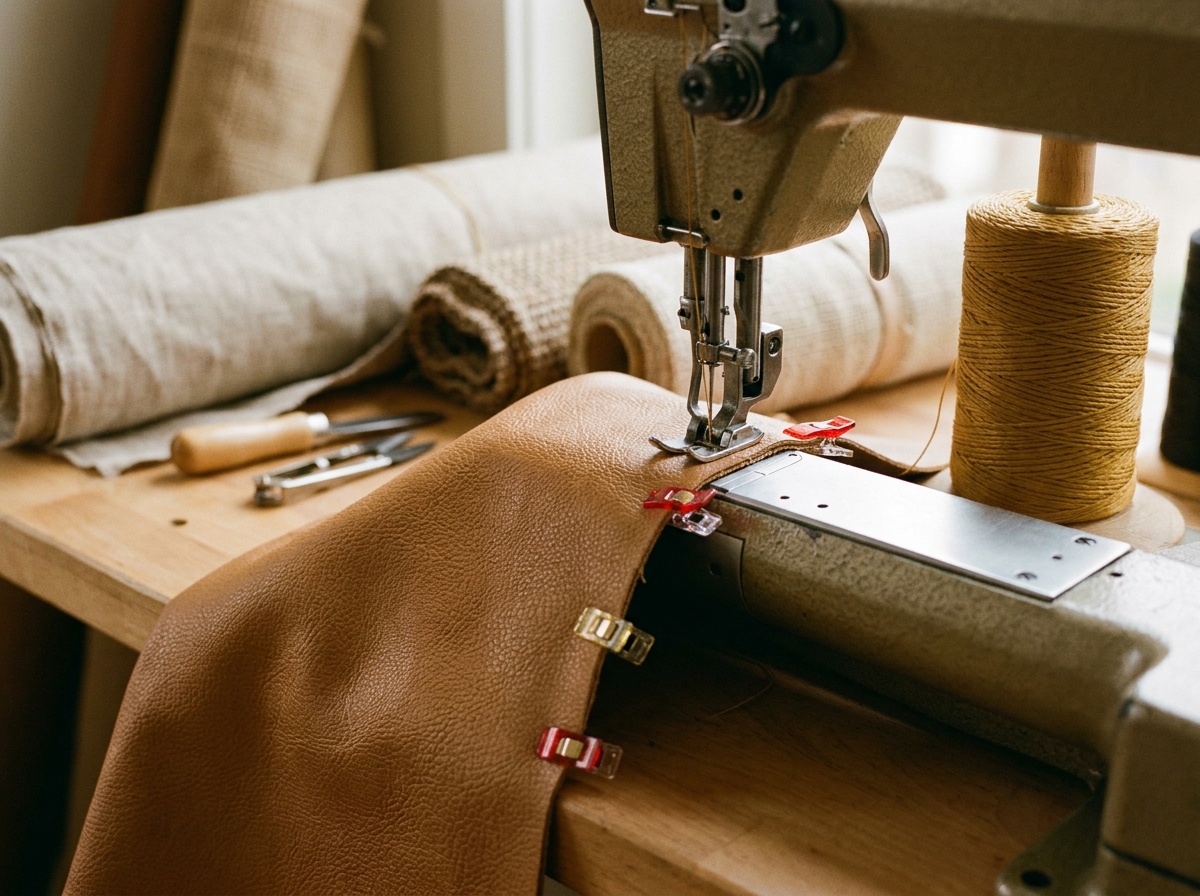
Faux leather and vinyl behave unlike fabric in two ways that drive every rule: every needle hole is permanent, and the coated surface sticks to a metal presser foot. So do not use pins, which leave holes, and do not backstitch, which perforates a line that tears; hold layers with clips or double-sided tape outside the seam, and secure thread ends by tying and burying them. Sew with a walking foot or a Teflon foot so the surface feeds instead of sticking, a denim or leather needle, a strong polyester thread, and a longer stitch of about 3.5 to 4.0, because short stitches perforate the material like a stamp. It cannot be ironed, so finger-press and topstitch or glue seams flat. Test on a scrap first.
Faux leather, pleather, and vinyl are forgiving to design with and unforgiving of holes. The material does not fray, so edges can be left raw, but anything that punctures it, a pin, a seam ripper, a line of backstitching, stays punctured. Work with that and it sews cleanly on an ordinary machine.
The two rules that change everything
| Holes are permanent | There is no woven structure to close back up, so every pin and needle hole stays. Do not pin in the body of the piece, and do not unpick and resew the same line. Get it right the first time on a scrap. |
| The surface sticks | The coated face drags against a metal presser foot and the machine bed, so a plain foot stalls and stitches bunch. A walking foot or a Teflon foot is what makes it feed smoothly. |
Machine setup
| Foot | A walking foot feeds the top layer with its own dogs so it does not stick and lag; a Teflon or roller foot slides over the surface. No special foot? Stick Teflon tape to your regular foot, or sew through a strip of tissue paper and tear it off after. |
| Needle | A denim or microtex needle around 80/12 to 90/14 for faux leather. A true leather needle has a wedge point for real hide and is usually not needed, and can be too aggressive, on thin faux leather. |
| Thread | A strong all-purpose polyester. Polyester is stronger than cotton and resists the abrasion these projects, often bags, take. |
| Stitch length | Lengthen to about 3.5 to 4.0, and 4.5 for topstitching. Short stitches punch a dense row of holes that behaves like a tear-off line and weakens the seam. |
Hold it without pins
Use sewing clips along the edge, or double-sided tape placed inside the seam allowance where the needle will not run through it, choosing a tape that will not gum the needle. If you must pin, pin only within the seam allowance where the holes are hidden. Marking is safest done on the wrong side.
Do not backstitch
Backstitching drives several stitches into the same short span and perforates it into a line that tears out. Instead, leave long thread tails at the start and end of each seam, pull them to the back, tie them off, and bury the ends between the layers. Some sew a few stitches in place at a very short length only if the material is thick enough to take it, but tying off is the reliable habit.
Pressing and seams
A hot iron melts or glazes faux leather and vinyl. Do not press it directly. Open seams with your fingers or a bone folder, and hold them flat by topstitching the allowances down or gluing them with a fabric or craft glue. If you must apply any heat, use a low iron over a press cloth on the wrong side only, and test on a scrap first, since the surface can distort with very little heat.
Because the material does not fray, seam allowances need no finishing, which is one place faux leather is easier than woven fabric. For structured bags, topstitching the seams down also gives the crisp edges the look depends on. See how to select and validate a seam and edge finish for the wider set of options.
Sources and decision boundaries
The foot, needle, stitch, fastening, and pressing methods here follow established references such as WeAllSew on vinyl and faux leather, Sew Sweetness, and Sallie Tomato. Exact needle, foot, and stitch length depend on the specific material and are confirmed on a test scrap, which this guide does not replace.
Can you sew faux leather on a regular sewing machine?
Yes. A domestic machine handles most faux leather and vinyl with a walking foot or Teflon foot so the surface feeds instead of sticking, a denim or microtex needle around 80/12 to 90/14, strong polyester thread, and a longer stitch. Thick multi-layer bag construction is where a heavier-duty machine helps.
Why can't I use pins on faux leather?
Because the holes are permanent. Faux leather and vinyl have no woven threads to close back up, so a pin leaves a visible hole for good. Use sewing clips or double-sided tape inside the seam allowance instead, and if you must pin, keep the pins within the seam allowance where the holes will be hidden.
Why does my faux leather tear along the stitching?
The stitch length is too short. Closely spaced stitches punch a dense line of holes that acts like a perforated tear-off strip. Lengthen the stitch to about 3.5 to 4.0, and do not backstitch, which concentrates holes in one spot; tie and bury the thread tails instead.
How do I press faux leather without ruining it?
Do not iron it directly, since heat melts or glazes the surface. Finger-press seams open and hold them flat by topstitching them down or gluing the allowances. If heat is unavoidable, use a low iron over a press cloth on the wrong side only, after testing on a scrap.