How to Sew with Fleece
Sew warm, bulky fleece cleanly: the needle and stitch to use, why it has a nap, how to manage the bulk and grade seams, and how to press a synthetic without melting it.
Established sewing references reviewed for needle and stitch choice, nap and layout, bulk and seam grading, edge finishing, and pressing when sewing fleece; no universal settings are prescribed and are confirmed on a scrap of the specific fleece.
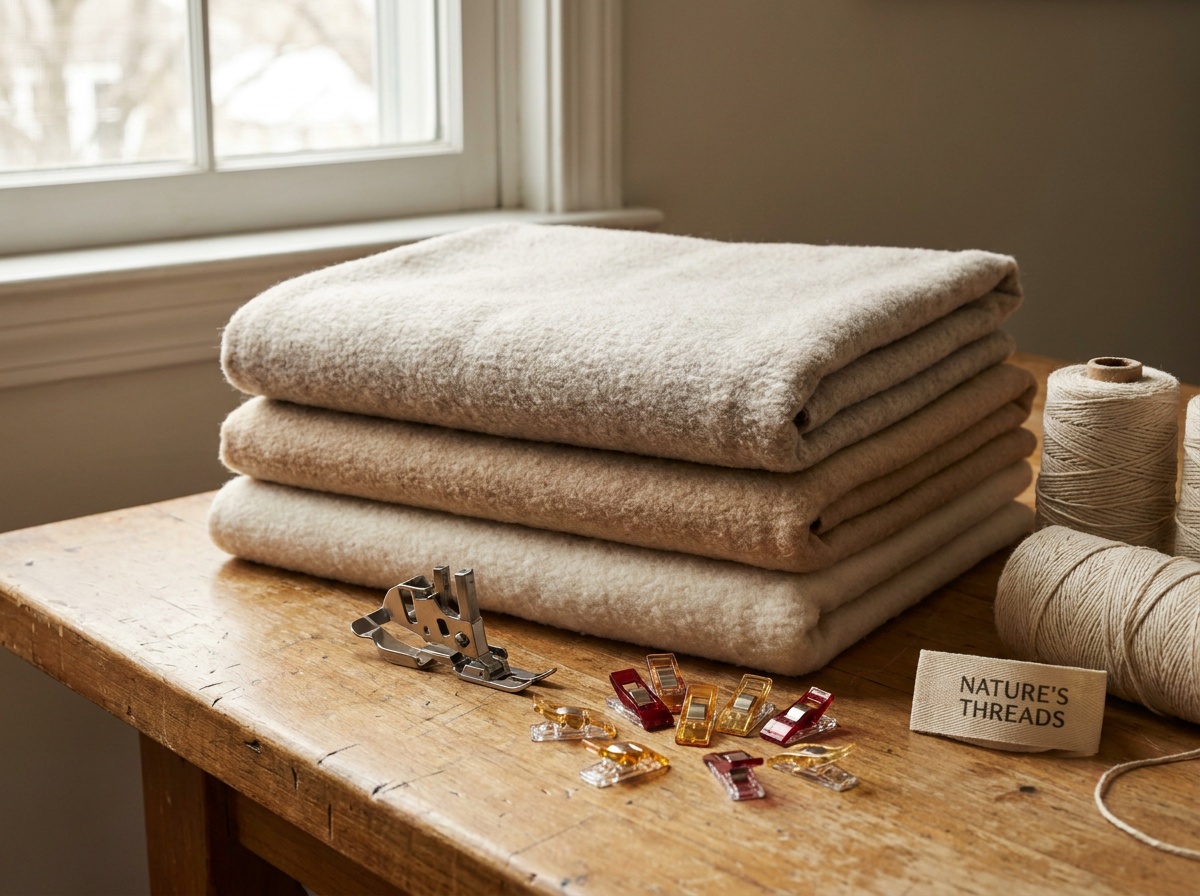
Fleece is a thick synthetic knit that is warm, forgiving, and does not fray, which makes it a great beginner fabric once you handle the bulk. Use a ballpoint or stretch needle around 90/14 and polyester thread, and lengthen the stitch to about 3 to 4, using a slight zigzag or stretch stitch where a seam needs to give. Feed it with a walking foot, grade the seam allowances to cut the bulk, and leave edges unfinished since it will not fray. Cut all pieces in the same direction because fleece has a nap, and press only with low heat and a cloth, or not at all, since the fibers melt. Use plenty of long pins so they do not vanish in the pile.
Fleece is easy to sew and hard to sew badly, which is why it is a staple for blankets, hats, jackets, and children's clothes. The two things to respect are its bulk and the fact that it is a heat-sensitive synthetic.
Needle, thread, and stitch
Fleece is a knit, so treat it like one. A ballpoint or stretch needle around 90/14 slips between the loops instead of cutting them, and polyester thread has a little give to match the fabric. Lengthen the stitch to roughly 3 to 4, since short stitches pucker thick fabric and are miserable to unpick. Most fleece has some crosswise stretch, so use a narrow zigzag or a stretch stitch on seams that must stretch, and a straight stitch is fine on stable seams that will not be pulled. For matching needle type and size to fabric in general, see the sewing machine needle guide, and for stretch-seam technique the guide to sewing with knits.
Fleece has a nap
Run your hand over fleece and it feels smoother one way than the other, because the raised fibers lie in a direction. That is the nap, and it means every pattern piece must be laid out the same way up, or panels will look like slightly different colours in the finished garment. Use the "with nap" fabric requirement on the pattern, which allows the extra length one-directional cutting needs.
Manage the bulk
| Walking foot | Feeds the thick top and bottom layers together so the fabric does not shift or stretch as it sews. |
| Grade the seams | Trim the layers of a seam allowance to different widths, the outermost closest to the stitching and each one below a little longer, so the seam does not form a hard ridge. |
| Leave edges raw | Fleece does not fray, so seam allowances need no finishing. A zigzag or pinked edge is only for looks, and hems can often be left as a raw single-fold or skipped. |
| Plenty of long pins | The pile swallows short pins. Use long pins and more of them, especially around curves and thick layers, or use clips. |
Pressing and static
Fleece is usually polyester, and a hot iron will flatten the pile permanently or melt it. Press with a low, cool setting through a press cloth and a light touch, or skip the iron and finger-press or topstitch seams open instead. Take fleece out of the dryer promptly to limit the static and creasing it builds up. As always, test heat on a scrap before touching the garment.
Sources and decision boundaries
The needle, stitch, nap, bulk, and pressing methods here follow established references such as Craftsy on sewing with fleece, the American Sewing Guild fleece tips, and Sew Direct. Exact needle, stitch, and heat settings depend on the specific fleece and are confirmed on a scrap, which this guide does not replace.
What needle and stitch should I use for fleece?
A ballpoint or stretch needle around 90/14, since fleece is a knit, with polyester thread for a little give. Lengthen the stitch to about 3 to 4, and use a narrow zigzag or stretch stitch where the seam needs to stretch, or a straight stitch on stable seams.
Does fleece have a nap?
Yes. The raised fibers lie in one direction, so the fabric feels and reflects light differently each way. Lay every pattern piece the same way up and use the pattern's with-nap fabric requirement, or panels will read as slightly different shades in the finished piece.
Do I need to finish fleece seams?
No. Fleece does not fray, so seam allowances can be left raw. Grade the allowances to reduce bulk, and any zigzag or pinked edge is only for a tidier look rather than to stop fraying. Many fleece hems can even be left as a raw single fold.
Can you iron fleece?
Only very carefully. Fleece is usually polyester and a hot iron crushes the pile or melts it. Use a low setting through a press cloth with a light touch, or avoid the iron and finger-press or topstitch seams instead, testing on a scrap first.