How to Read a Crochet Chart
Read crochet symbol charts with confidence: learn the standard stitch symbols, follow the right direction for rows and rounds, and always check the pattern's own key first.
Reviewed crochet references for standardised chart symbols, reading direction for rows and rounds, and the role of the pattern key; symbol meanings can vary between patterns and are confirmed against each pattern's own key, and no chart is prescribed.
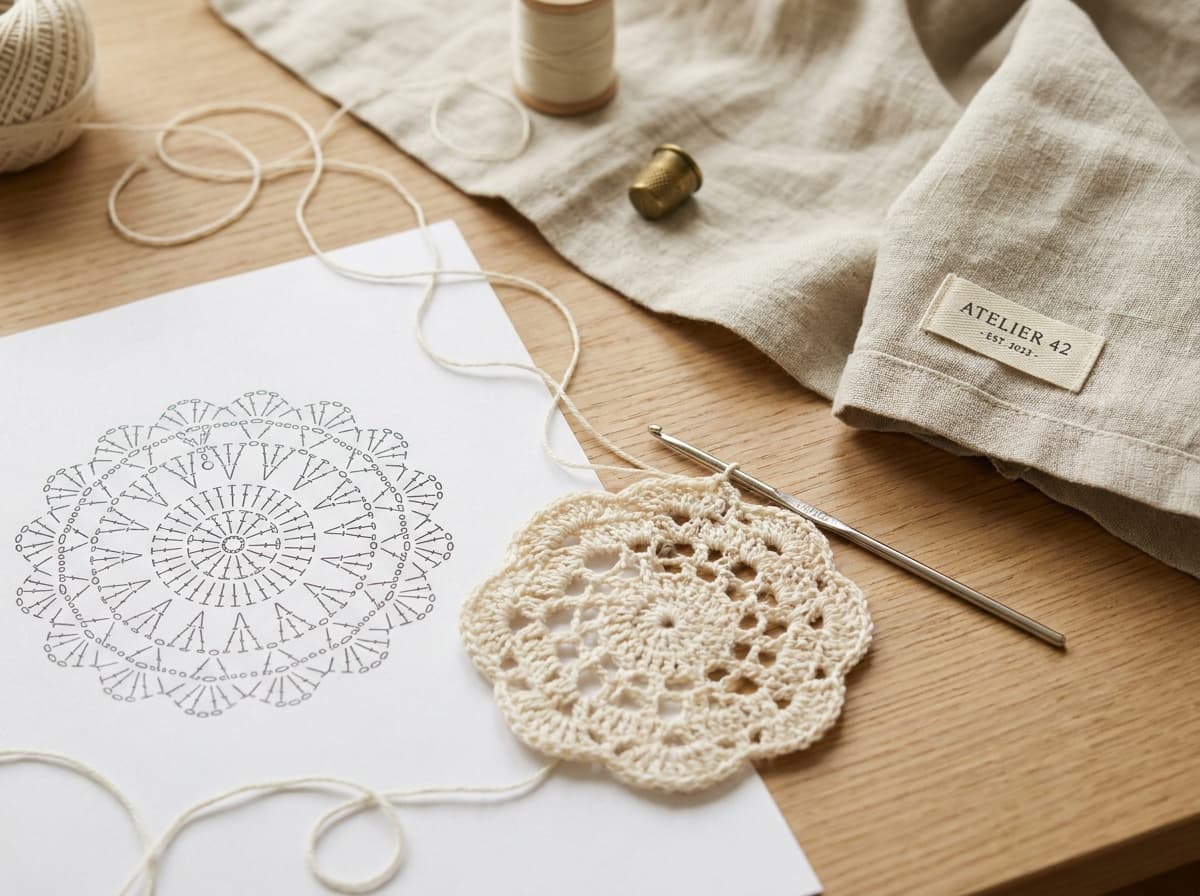
A crochet chart is a picture of the pattern built from standardised symbols, where each symbol is a small drawing of the stitch it represents — a plus or cross for single crochet, a T with diagonal slashes for taller stitches, an oval for a chain. It is often faster than written instructions once you can read it, because you can see the shape of the fabric. Read flat, row-based charts from the bottom up, right to left on right-side rows and left to right on wrong-side rows, following the direction you actually crochet. Read round-based charts from the centre outward, going counter-clockwise for right-handed crochet. The symbols are largely standardised (the Craft Yarn Council set is widely used), but a chart should always come with its own key, so read that key first, because a symbol can mean slightly different things between designers.
Charts intimidate people who are comfortable with written patterns, but they are just a visual version of the same instructions. Because the symbols look like the stitches, a chart shows you the structure of the fabric at a glance, which is especially helpful for lace and motifs.
The symbols look like the stitches
| Chain (ch) | A small oval or open dot. Chains form the foundation and the turning or starting chains between stitches. |
| Slip stitch (sl st) | A small filled dot or short dash, used to join and to move across without adding height. |
| Single crochet (sc) | A plus sign or a cross (X). The shortest of the everyday stitches. |
| Half double / double / treble | A vertical T with one or more diagonal slashes across the stem showing the added height: half double is a plain T (with a small top mark), double crochet has one slash, treble two. More slashes means a taller stitch. |
| Symbols sit where the stitch goes | A symbol is drawn in the position the stitch occupies, so groups (shells, clusters, V-stitches) look like fans or bundles, showing the shape directly. |
Follow the right direction
| Start at the bottom | Charts are worked from the bottom up, the same way the fabric grows, beginning at the foundation chain or the centre ring. |
| Flat rows alternate | Read right-side (odd) rows from right to left, and wrong-side (even) rows from left to right, mirroring the direction you turn and crochet. The chart usually numbers the rows at the side where each begins. |
| Rounds go centre-out | Round-based charts start in the centre and are read outward, counter-clockwise for right-handed crocheters, matching the way you build a circle. |
| Left-handed mirrors it | Left-handed crocheters generally work charts in mirror image, reading rows the opposite way and rounds clockwise. |
Always read the key first
Crochet symbols are largely standardised, and the Craft Yarn Council set is used across many patterns, but they are not perfectly universal: a designer may use a slightly different symbol or use a familiar symbol for a special stitch. Every good chart includes a key (a legend) listing exactly what each symbol means in that pattern, so read it before you start and refer back whenever a symbol is unfamiliar. Trusting a remembered meaning over the pattern's own key is a common cause of a chart "not working." Written instructions and the chart usually accompany each other, so use them together when a symbol is ambiguous.
For the written side of the same pattern, see how to read and verify a crochet pattern; for round-based charts, pair this with how to crochet in the round; and browse the crochet stitch library to connect symbols to worked stitches.
Sources and decision boundaries
The symbols, reading direction, and key guidance here follow crochet references including the Craft Yarn Council on reading a crochet pattern, Yarnspirations on reading crochet chart symbols, and Haak Maar Raak on reading a crochet chart. Symbol meanings can vary between patterns and are confirmed against each pattern's own key; this guide does not prescribe a chart or symbol set.
FAQ
Which way do I read a crochet chart?
From the bottom up. On flat charts, read right-side (odd) rows from right to left and wrong-side (even) rows from left to right, matching the direction you crochet after turning. On round charts, start in the centre and read outward, counter-clockwise for right-handed crocheters. Left-handed crocheters generally mirror this.
Are crochet symbols the same in every pattern?
Mostly, but not perfectly. Many patterns use the Craft Yarn Council's standardised symbols, so once you learn them you can read most charts. However, designers sometimes vary a symbol or invent one for a special stitch, which is why every chart should include a key. Always read that key first.
Why do the symbols look like little stitches?
Because they are designed to. A single crochet is a cross, taller stitches are T-shapes with more crossbars for more height, and a chain is an oval. Groups like shells and clusters are drawn as fans or bundles in the position they occupy, so the chart shows the actual shape of the fabric.
Should I use the chart or the written instructions?
Use whichever you find clearer, and use them together when in doubt. Charts show the structure at a glance, which helps for lace and motifs, while written instructions spell out repeats and counts. Most patterns include both, so cross-check the chart against the words if a symbol is ambiguous.