How to Block Knitting and Crochet
The finishing step that transforms handmade fabric: wet, steam, and spray blocking, how to choose by fibre, and why acrylic and animal fibres behave completely differently.
Reviewed knitting and crochet references for wet, steam, and spray blocking, tools, and fibre-dependent behaviour including the permanence of blocking on acrylic; exact method and heat depend on the specific yarn's ball band and are confirmed on a swatch, and no method is prescribed for a specific yarn.
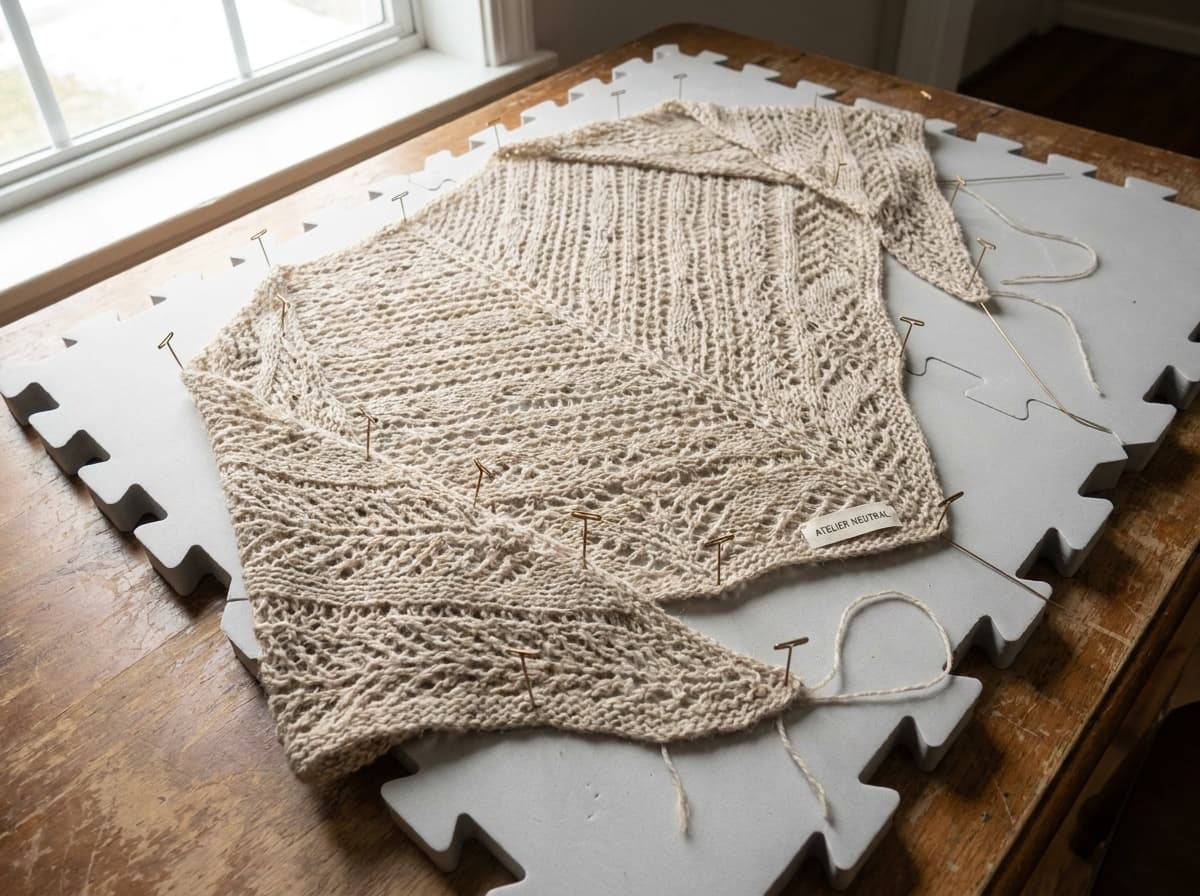
Blocking is the finishing step that wets or steams a finished piece, shapes it to its intended dimensions, and lets it dry — and it is the single most transformative thing you can do to handmade fabric. It evens out uneven stitches, opens up lace, flattens curling edges and granny squares, sets the final measurements, and improves drape. There are three methods: wet blocking (soak, squeeze out, pin to shape, dry), steam blocking (pin, then hover a steam iron above without touching), and spray blocking (pin, mist, dry). Choose by fibre: animal fibres like wool block beautifully and can be reshaped again after each wash, while acrylic must be steam-"killed" to hold a shape and that change is permanent, so test first. Never let a hot iron touch the yarn — use only its steam.
Blocking is the step beginners skip and experienced makers never do, because it is the difference between fabric that looks handmade and fabric that looks finished. It relaxes the stitches into place and sets the shape.
Three methods
| Wet blocking | Soak the piece in cool water (with a little wool wash if you like), lift it out supporting its weight, and press the water out in a rolled towel — never wring. Pin it to shape on a mat and let it dry completely. The most thorough method and the best for a big transformation, such as opening lace. |
| Steam blocking | Pin the dry piece to shape, then hold a steam iron just above the surface and let the steam penetrate without the soleplate touching the yarn. Faster than wet blocking and strong for setting shape, but demands care with heat. |
| Spray blocking | Pin the piece to shape and mist it with water until damp, then let it dry. The gentlest method, good for light evening-out and delicate or hard-to-soak pieces. |
Choose the method by fibre
Fibre decides everything. Animal fibres such as wool, alpaca, and most protein yarns block superbly and are re-blockable: every time you wash and reshape them, they settle again, so wet blocking is ideal. Acrylic and many synthetics do not relax the same way — they are "killed" with steam, which permanently changes the fibre to hold the blocked shape and drape. That can be exactly what you want (crisp, flat granny squares) but it cannot be undone, and too much heat can flatten or melt acrylic, so always test on a swatch first. Superwash wool and cotton block well but can grow and need reshaping. Because behaviour is so fibre-dependent, follow the yarn's ball band for heat and washing, and block a gauge swatch the same way you will block the finished piece.
Tools and shaping
You need something to pin into — foam blocking mats or a thick towel — and rust-proof pins. For straight edges on shawls, blankets, and garment pieces, blocking wires threaded through the edge give a cleaner line than pins alone. Pin to the pattern's finished measurements (or a schematic), easing lace open and squaring up corners, and let the piece dry fully before unpinning, or it will spring back. Blocking is also when you can gently even out issues like laddering from knitting in the round and settle a crochet gauge swatch before measuring.
This applies across the knitting stitch library and crochet stitch library; lace and textured stitches in particular only reach their intended look after blocking.
Sources and decision boundaries
The wet, steam, and spray methods, tools, and fibre-dependent behaviour here follow references including Gathered on how to block crochet, KnitPal on blocking hand knitting and crochet, and Briana K Designs on blocking crochet projects. The right method and heat depend on the specific yarn's fibre and ball band and are confirmed on a swatch; this guide does not prescribe a method for a specific yarn, and acrylic steam-blocking is permanent, so test first.
FAQ
What does blocking actually do?
It wets or steams a finished piece, shapes it to the intended dimensions, and lets it dry, which evens out uneven stitches, opens lace, flattens curling edges and motifs, sets the final measurements, and improves drape. It is the single most transformative finishing step and is what makes handmade fabric look finished rather than homemade.
Can you block acrylic yarn?
Yes, but differently and permanently. Acrylic does not relax like wool; it is 'killed' with steam, which permanently changes the fibre to hold the blocked shape and drape. That can give crisp flat results, but it cannot be undone and too much heat can flatten or melt it, so always test on a swatch and never let the iron touch the yarn.
What is the difference between wet, steam, and spray blocking?
Wet blocking soaks the piece, then you squeeze out water and pin it to dry — the most thorough, best for opening lace. Steam blocking pins the dry piece and uses a hovering steam iron to set the shape quickly. Spray blocking mists a pinned piece lightly and is the gentlest, good for delicate items or light evening-out.
Do I need special tools to block?
At minimum, something to pin into (foam blocking mats or a thick towel) and rust-proof pins. Blocking wires help get clean straight edges on shawls, blankets, and garment pieces. Pin to the finished measurements, ease lace open, and let the piece dry completely before unpinning so it holds its shape.