Herringbone
Listed uses: Suiting, coats, and jackets after evaluation
Review covers fibre and construction records, mass, thickness, drape or stiffness, seam and edge trials, tensile or seam-slippage screening where applicable, colourfastness to water, cleaning, and dimensional change; it does not verify fibre content, patterned twill performance, care, sewing setup, or end-use fitness for every article.
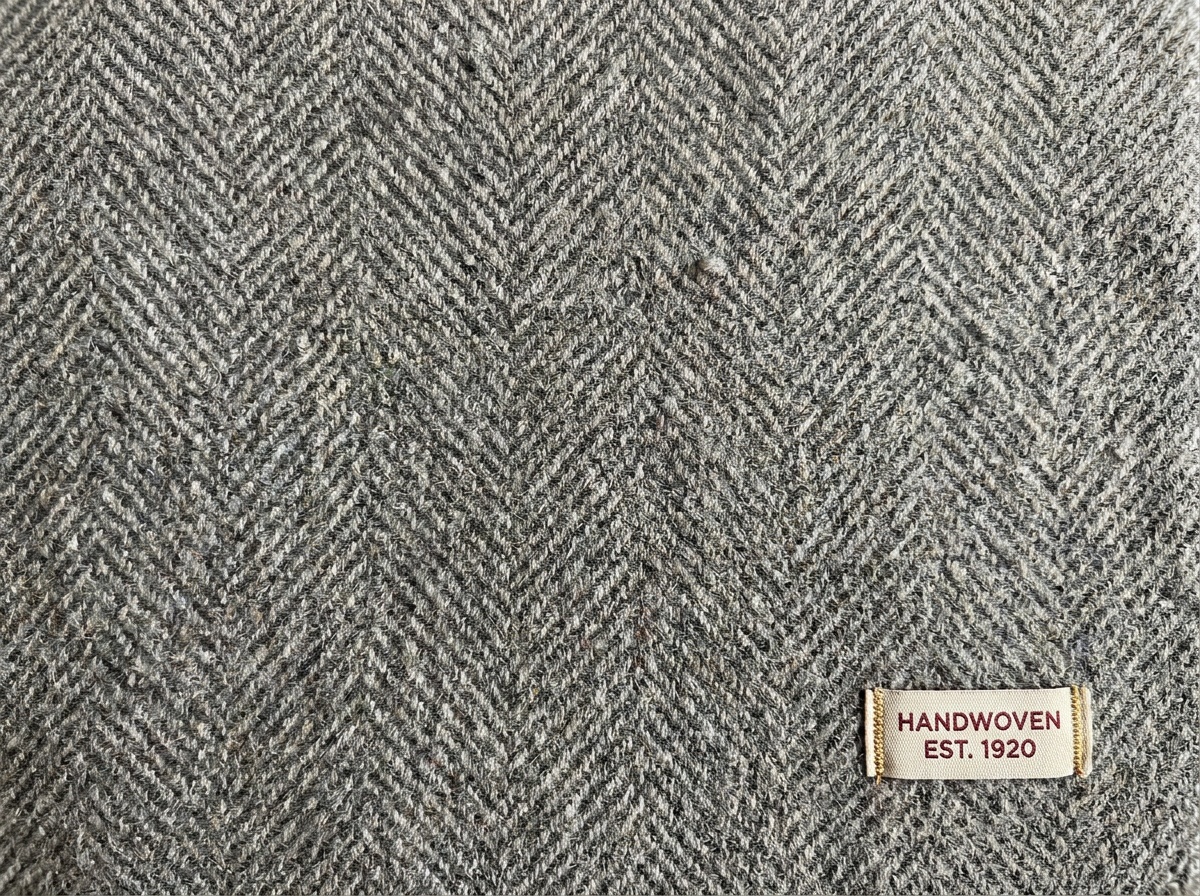
"Herringbone" names a twill woven in reversing chevrons, often wool or cotton. It does not independently prove the fibre content, weight, any nap, or suiting or coat suitability.
Build the article record
Keep the exact article or style number, supplier, mill when known, lot or roll, colour, and source documents. Record:
- represented fibre names and percentages, country of origin when relevant, responsible business, and evidence source;
- actual construction, designated face and reverse, usable width, selvedge, finish, dye state, coating, and any treatment;
- seller-stated mass and its basis, or measured g/m² with the specimen route;
- chevron direction and matching, any nap, weight, and drape;
- intended role (suiting, coats, jackets, and trousers), panel direction, layer or seam context, closures, trims, and skin-contact areas;
- care basis and limits for colour transfer, water response, dimensional change, surface change, and appearance.
A market name, a seller weight, and a family description are discovery descriptors. They do not establish performance in the supplied product.
Verify the cloth before you commit it
- Match the cloth to the article and lot record, and photograph face, reverse, selvedge, and a controlled cut edge over light and dark backings.
- Measure only decision-critical properties, keeping the mass specimen route, thickness pressure, and conditioning state with each result. The chevron reads directionally, so confirm layout so panels run the same way.
- Build seams, edges, and intersections with the actual machine, needle system and condition, thread, feed, tension, and plies, and record feed shift, yarn damage, holes, puckering, seam opening, edge stability, and repairability. The name does not prescribe a needle size, seam finish, feed aid, or support material.
- Where seam opening, tensile, or abrasion behaviour controls the decision, choose a method that fits the construction and product consequence, and record direction, preparation, conditioning, and acceptance criteria.
- Trial the intended cleaning route and pressing on marked assemblies, then recheck the whole piece after the required repetitions, including seams, hang, surface, colour, and any skin-contact appearance.
Repeat when the article, supplier, mill, lot, colour, finish, dye state, direction, seam, trim, machine setup, cleaning route, or product requirement changes.
Sources and decision boundaries
- FTC textile and wool labeling guidance supports applicable U.S. fibre-content, origin, and responsible-business records; it does not authenticate a lot or test performance.
- ASTM D3776/D3776M-20(2025), Mass Per Unit Area distinguishes specimen routes and limits what a small swatch represents.
- ASTM D1388-23, Stiffness of Fabrics measures bending length and flexural rigidity.
- ISO 5084:1996, Thickness of textiles measures thickness under a specified pressure and was confirmed in 2025.
- ISO 13934-1:2013, Maximum force and elongation by the strip method is mainly applicable to woven fabrics.
- ISO 13936-1:2004, Slippage resistance at a seam in woven fabrics supports a fixed-opening method for applicable woven articles.
- ISO 105-E01:2013, Colour fastness to water covers colour response to water immersion, not water rings or washability.
- ISO 6330:2021, Domestic washing and drying, ISO 3175-1:2017, Assessment after professional cleaning, and ISO 5077:2007, Dimensional change support controlled cleaning evidence rather than a family care rule.
This page does not establish fibre content, a weight, a handle, performance limits, a care rule, a sewing setup, or product fitness for the supplied article.