Wool Tweed
jackets, blazers, skirts, caps
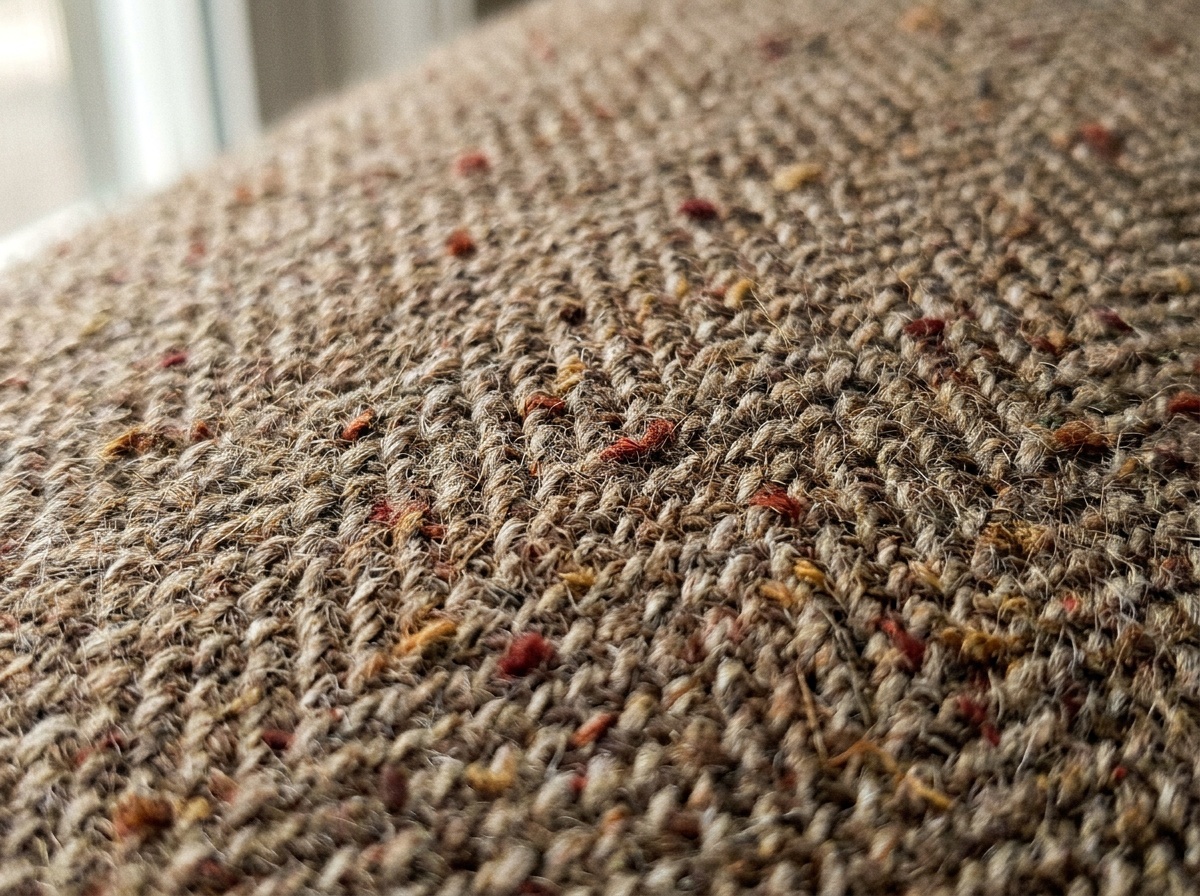
Wool tweed is a woolen-spun cloth, usually a twill and sometimes a plain weave, made from yarns spun with a lofty, uneven twist that traps air and shows a slightly hairy surface. The classic versions are flecked or heathered, dyeing the fibers before spinning so several colors read as one broken tone. Harris Tweed, hand-woven in the Outer Hebrides from Scottish wool, is the reference point for the type. At 250 to 400 g/m², tweed is a mid-to-heavy cloth that insulates well and resists wind, and the springy woolen yarn gives it body without stiffness.
Tweed frays a moderate amount, so finish seam allowances with an overlock or a Hong Kong bind, especially in a loosely woven plain weave. The cloth holds shape and takes a tailored form well, which is why it has been the default for country jackets and blazers for over a century. It responds to steam, and the woolen yarn can be shrunk and molded slightly over a ham to build shape into a collar or shoulder. Press under a cloth to avoid flattening the surface texture.
For sewing, a size 90/14 needle and a walking foot handle the bulk of a 300 g/m² tweed cleanly. Grade and press seam allowances open to keep them from telegraphing through the face, and underline or line jackets to control the slight scratch against the skin. Tweed is forgiving of small errors because the busy surface hides stitching irregularities. It suits jackets, blazers, skirts, and caps, and the heavier weights make durable outerwear that softens with wear rather than breaking down.