Melton
overcoats, peacoats, structured jackets, uniforms
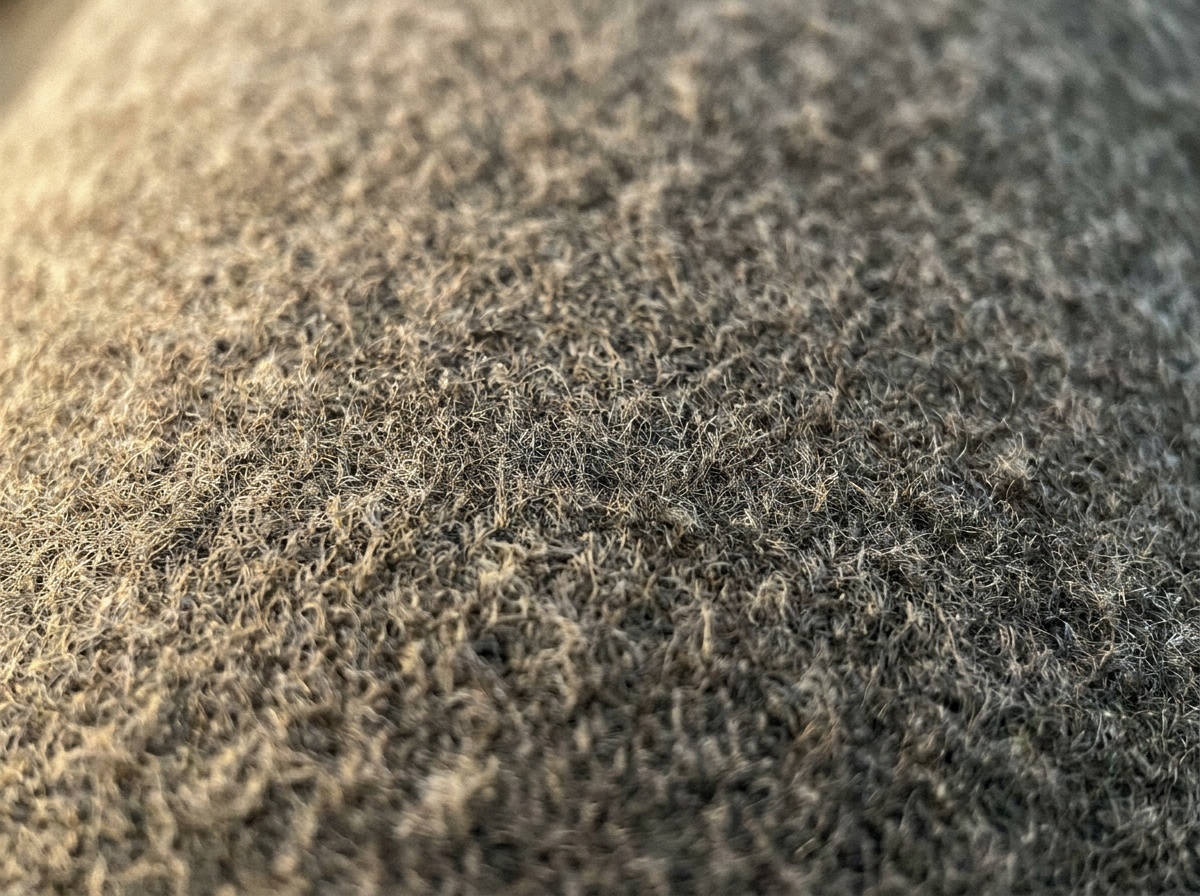
Melton is a wool cloth woven as a twill and then fulled hard, a wet-and-heat process that mats the fibers until the weave disappears under a dense felted surface. At 400 to 600 g/m², it is among the heaviest cloths a home sewer will handle. The felting closes the structure so the cloth blocks wind and holds heat, which is why it has served as the standard for military and naval coats for two centuries. Cut edges do not fray, because there is no open weave for yarns to pull from, so seam allowances and even some hems can be left raw.
The weight and density change how the cloth behaves under the machine. Melton has no stretch and almost no drape in the fluid sense; it stands away from the body and takes a molded shape rather than falling into folds. It presses well with steam and a press cloth, but the surface will flatten and glaze if you run a dry iron over it directly, so protect the nap. Pins struggle to pass through two or more layers, and a walking foot helps feed the bulk evenly.
Bulk at the seams is the main tailoring problem. Standard practice is to sew the seam, then trim, layer the allowances to different widths, and press them open flat so no ridge shows through the face. Collars, lapels, and welt pockets are often built with the melton pared back and the under layers cut from lighter cloth to reduce thickness. Buttonholes are usually bound or worked by hand, since machine buttonholes fight the density. Reserve melton for overcoats, peacoats, structured jackets, and uniforms where the warmth and firm shape earn the effort.