Seed Stitch
alternating knit and purl stitches offset every row, giving a bumpy reversible surface that never curls
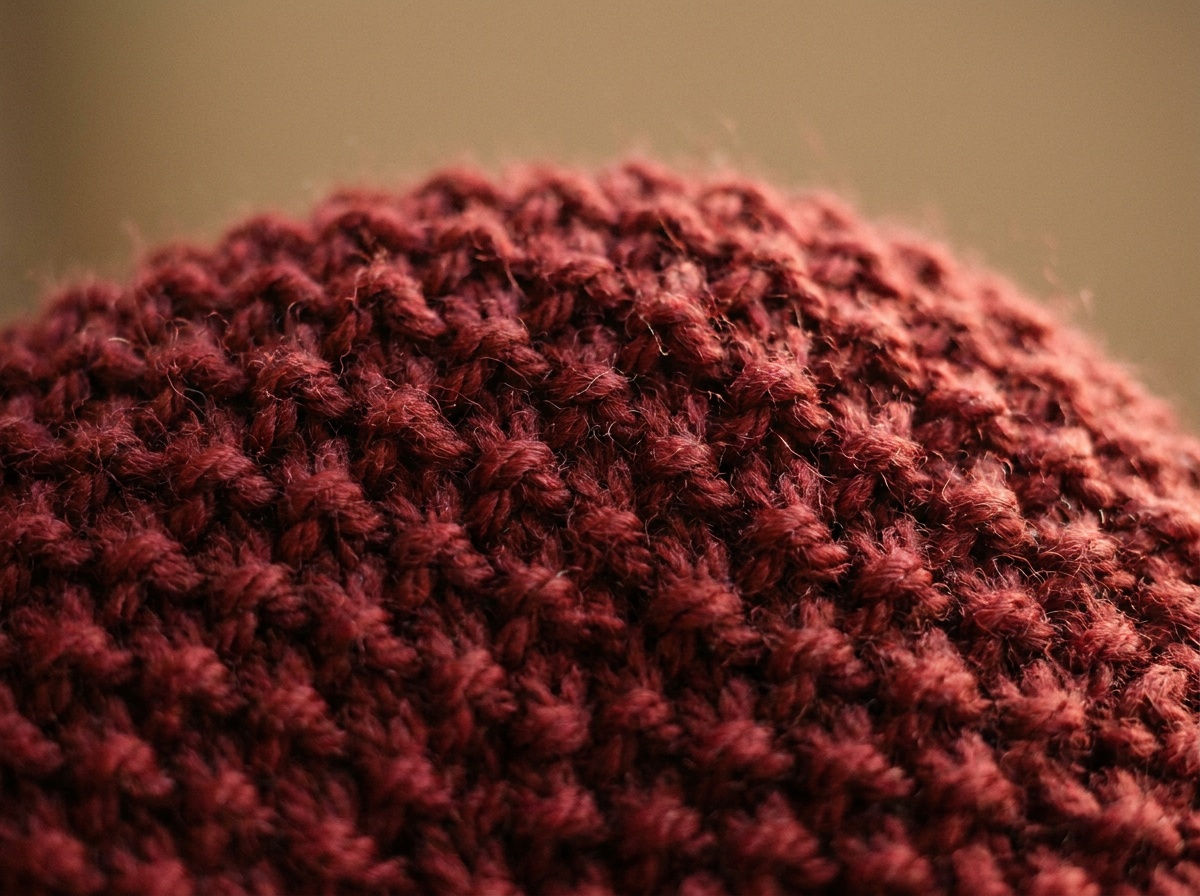
Seed stitch is a two-stitch pattern that alternates knits and purls across a row, then shifts the sequence by one stitch on the next row so every knit sits on top of a purl. The result is a field of tiny raised bumps, evenly scattered, the same on both faces. It reads as a texture rather than a picture, which is why it turns up on borders, scarf bodies, and any panel that wants a bit of grain without a motif to track.
How it is built
You work it over an even number of stitches: knit one, purl one, repeat to the end. On the return row, you knit the purls and purl the knits. In practice that means the row still starts with a purl if the last stitch you worked was a knit, so the offset lands on its own once you learn to read the fabric. Knit into the bump, purl into the smooth V, and the pattern corrects you when you drift.
The move that trips beginners is the yarn position. To go from a knit to a purl you bring the working yarn to the front between the needles, and to go back you move it to the rear. Miss that and you get accidental yarn-overs or a stray stitch count. Once the front-back rhythm is automatic, seed stitch is one of the most portable patterns there is: no chart, no row counter, only the last stitch telling you the next one.
What the fabric does
Because knits and purls are balanced across both faces, the fabric lies flat. It will not curl at the edges the way stockinette does, so you can use it with no border and no blocking wrestling match. It is reversible, identical front and back, which makes it a fair choice for anything seen from both sides: a scarf, a blanket edge, a cowl.
It is denser and less stretchy than ribbing, and it eats more yarn and time per inch than stockinette because every stitch alternation firms the fabric up. Expect a squishy, substantial hand and a row gauge that runs shorter than your stockinette swatch at the same needle. Swatch before you commit yardage.
If you lose your place, look at the stitch on the needle: a bump facing you means purl it, a smooth V means knit it. Seed stitch is self-correcting once you trust that read.
When to use it
Reach for seed stitch when you want flat, reversible texture with no curl to fight: scarf and blanket bodies, button bands, collars, pocket edges, and the border on an otherwise plain piece. It also frames cables and colorwork well, giving a quiet textured ground that keeps the main motif from floating.
What is the difference between seed stitch and moss stitch?
In seed stitch the columns switch every row, so knits sit on purls one row later. Moss stitch (British usage) holds each column for two rows before switching, which stretches the bumps into short vertical dashes. American 'moss stitch' often means the same thing as seed stitch, so check the pattern's source.
Why does my seed stitch look like ribbing?
You are stacking knits on knits instead of offsetting them. On each new row you must knit the purls and purl the knits. If the columns line up, you are working one-by-one rib, not seed stitch.
Does seed stitch need blocking?
It benefits from a light block to even out the bumps, but it will not curl unblocked, so a finished edge is usable straight off the needles.