Garter Stitch
the simplest knit fabric, knit on every row, dense and squishy and reversible, with ridged rows that lie flat
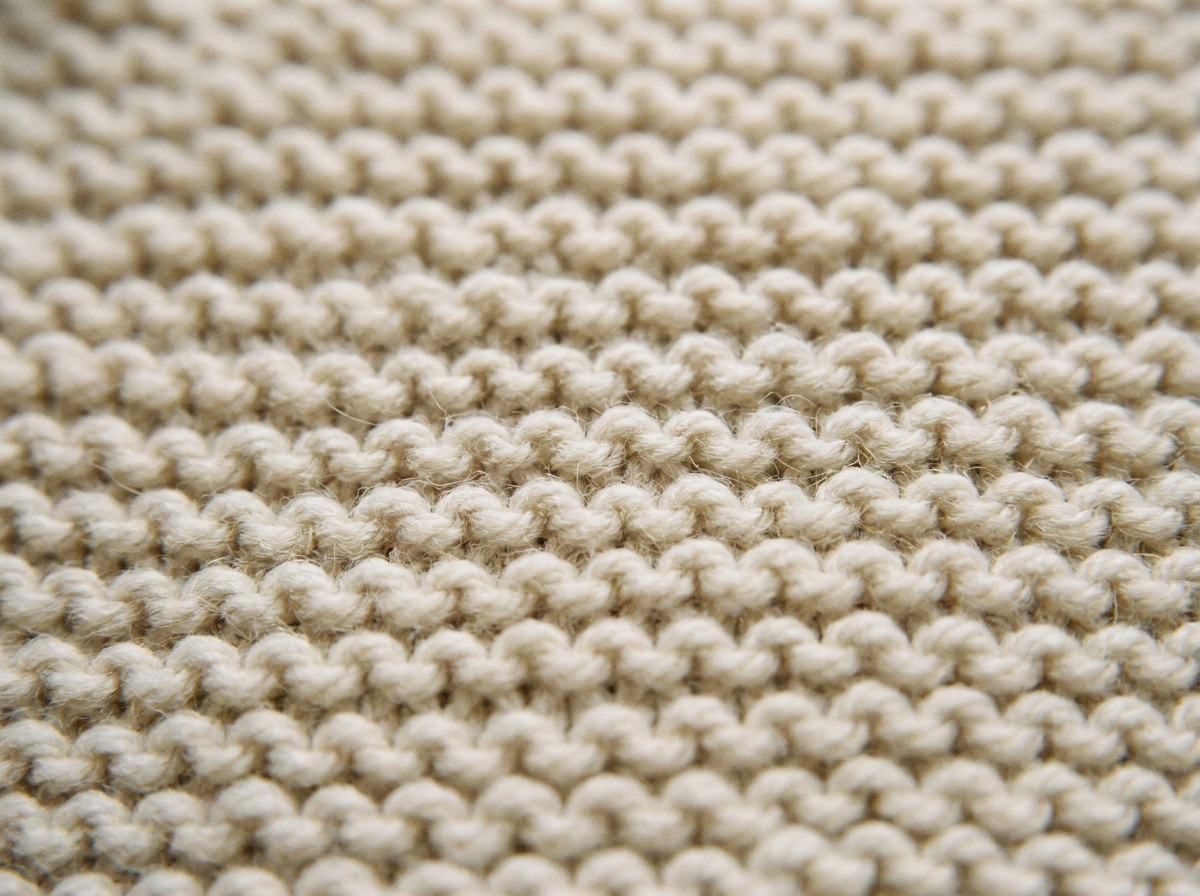
Garter stitch is the first fabric most knitters make, and the one they keep coming back to. Worked flat, it is nothing more than the knit stitch repeated on every row: no purling, no counting a pattern, no right side to keep track of. The result is a thick, springy fabric of horizontal ridges that lies flat instead of curling, which makes it forgiving for a beginner and useful for edges even after you know every stitch in the book.
How it is built
Work every row in knit stitch. That single instruction is the whole pattern.
The ridges come from what a knit stitch looks like from the back. When you knit a row, the far side of that row shows up as a bumpy purl row. Turn your work and knit back, and you push another bumpy row to the far side. Two knitted rows stack into one raised ridge, so a ridge equals two rows. Counting ridges is faster than counting rows: five ridges means ten rows.
Knitting garter stitch in the round is different. If you knit every round on circular or double-pointed needles, you get stockinette, not garter, because you are always working from the same side. To make garter in the round you alternate: knit one round, purl the next. Flat garter needs no such trick.
What the fabric does
Garter is dense, squishy, and reversible. Both faces look the same, so there is no wrong side to hide, which is why it suits scarves, dishcloths, and anything seen from both sides.
It lies flat. Stockinette curls at every edge and usually needs a border or blocking to behave; garter has no curl, so a garter panel or a few garter stitches along each edge is the standard fix for stockinette's roll.
It stretches, mostly vertically, and it eats yarn. A garter square uses noticeably more yarn than a stockinette square of the same size because the fabric is shorter and thicker per stitch. It is also wider than it is tall for a given stitch and row count: the ridges compress the height. Expect fewer rows per inch than stitches per inch.
What to use it for
Reach for garter when you want a flat, sturdy, reversible fabric with no shaping fuss: garter-stitch scarves, baby blankets, washcloths, and simple cowls. It is also the workhorse edging for other fabrics, whether as a border around a stockinette blanket or a few stitches at each side of a scarf to stop the curl. Because it is worked entirely in knit stitches, it is the fabric to practice on while you get your tension and your hands settled.
Why does my garter stitch curl?
True garter stitch does not curl. If yours does, you are probably knitting stockinette by mistake, meaning you are knitting on one side and purling on the other. Garter is knit on every row when worked flat.
How many rows make one garter ridge?
Two. Each raised ridge is the front of two knitted rows, so ridges are a quick way to measure and count your progress.
Can I knit garter stitch in the round?
Yes, but you cannot knit every round. Alternate a knit round with a purl round; knitting every round in the round produces stockinette instead.