Stockinette Stitch
smooth V-columns on the front and bumpy purl rows on the back, the most common knit fabric, and it curls at the edges
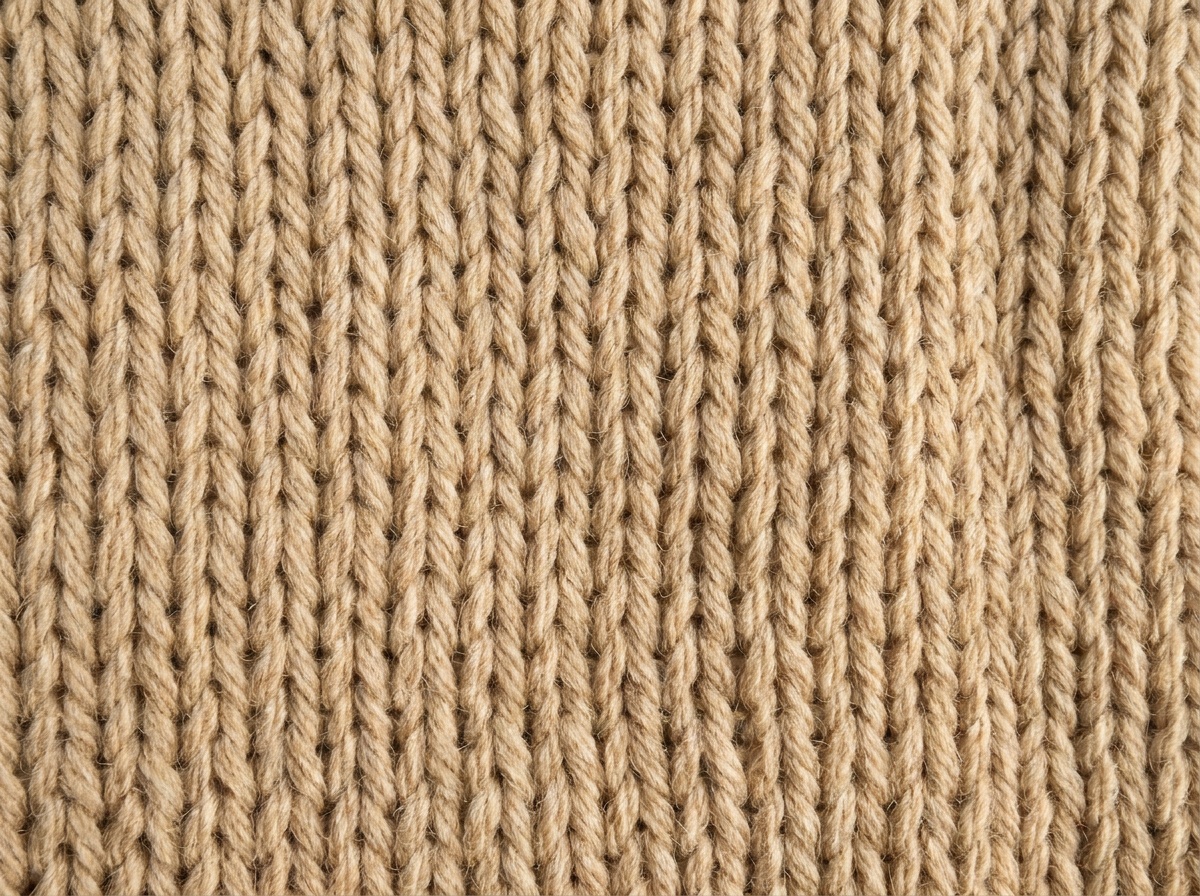
Stockinette is the fabric most people picture when they picture knitting: rows of smooth, interlocking V-shapes marching up in neat columns. It's the plainest structure you can make from the two knit stitches, and it's the ground that most sweaters, hats, socks, and cardigans are built on. Learn to read stockinette and you can read most knitted fabric.
How it's built
Worked flat, stockinette is knit on the right-side rows and purled on the wrong-side rows. That's the whole pattern: knit a row, turn, purl a row, turn, repeat. A purl is a knit worked from the back, so purling the return row means every stitch presents the same face forward. The smooth Vs pile up on one side and the bumps land on the other.
Worked in the round, it's simpler still: knit every round. Because you never turn the work, the right side always faces you, so there are no purl rows to track. This is why sock and hat patterns lean on stockinette so heavily. The V side is the right side (the public face); the bumpy purl side is the wrong side. That bumpy side has its own name, reverse stockinette, when a pattern wants it facing out.
What the fabric does
The two faces look and behave differently. The knit side is flat, even, and slightly stretchy in both directions, with good drape for its weight. The purl side reads as rows of horizontal bumps, closer to garter but not as lofty. Stockinette is not reversible: the two sides are distinct, and patterns will specify which one shows.
The catch every new knitter meets is curl. A plain stockinette swatch rolls: the top and bottom edges curl toward the purl side, and the left and right edges curl toward the knit side. This is structural, not a mistake, and it doesn't block out flat on its own. That's why garments almost never end a raw stockinette edge. They add a border that lies flat, usually ribbing, garter, or seed stitch, or the edge gets seamed, picked up, or folded into a hem.
What to use it for
Reach for stockinette when you want a smooth, unfussy surface: the body of a sweater, the leg of a sock, the crown of a hat, the background behind colorwork or cables. It shows off hand-dyed and variegated yarns well, since there's no busy stitch texture competing with the color. It's also the standard fabric for gauge: most patterns give their stitch and row counts "in stockinette," so a stockinette swatch is how you check that your gauge matches before you commit.
Why does my stockinette curl at the edges?
It's built into the structure. The knit and purl faces pull the fabric in opposite directions, so top and bottom edges roll toward the purl side and the side edges roll toward the knit side. Add a flat border like ribbing or seed stitch, or block and seam the edge.
What's the difference between stockinette and reverse stockinette?
They're the same fabric seen from opposite sides. Stockinette shows the smooth V columns; reverse stockinette shows the bumpy purl side. A pattern tells you which face it wants out.
Is stockinette reversible?
No. The two sides are clearly different, one smooth and one bumpy, so patterns specify the right side. Garter stitch is the reversible plain fabric if you need both faces to match.