Linen Stitch
slipped stitches with the yarn carried in front build a dense woven-looking fabric that mimics linen cloth and shows color well
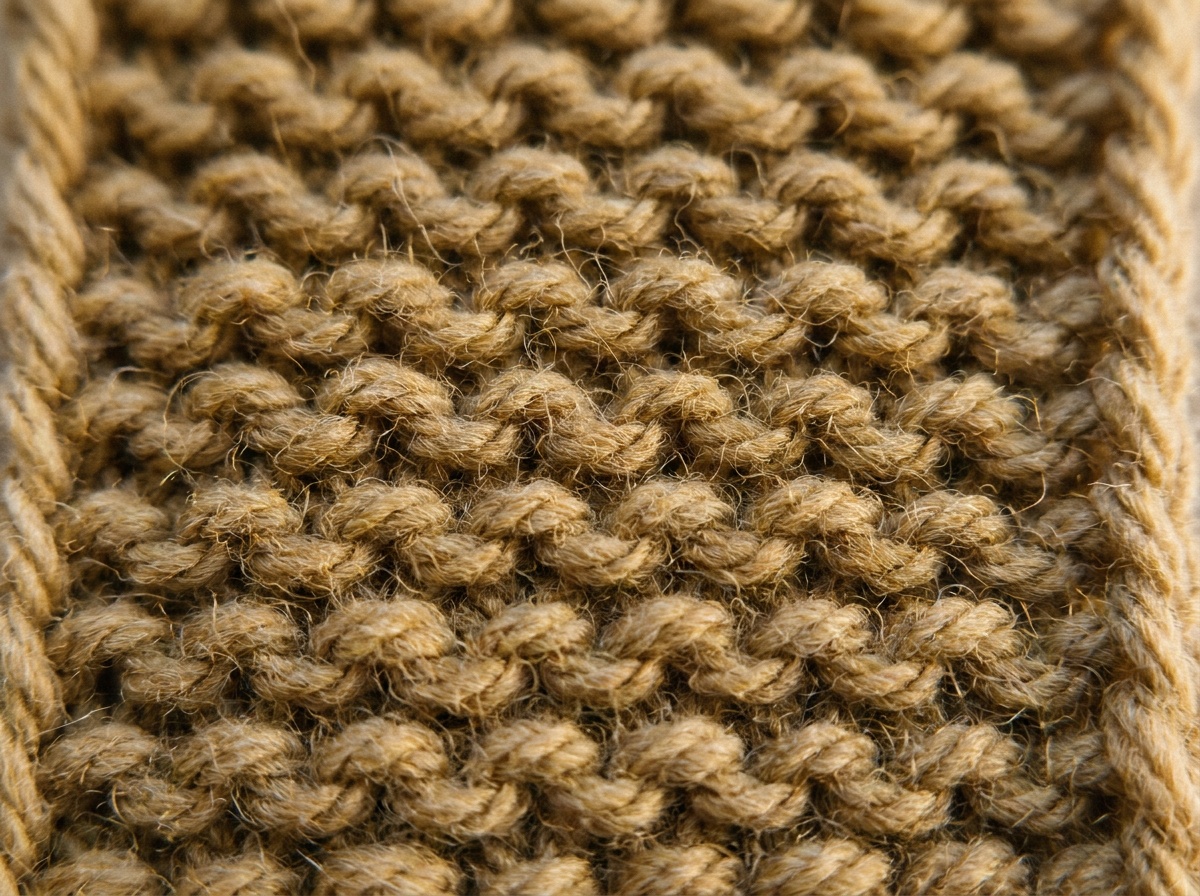
Linen stitch is a slip-stitch pattern that produces a flat, tightly woven-looking fabric closer to cloth than to most knitting. The face is covered in short horizontal floats that sit like the weft of woven linen, which is where the name comes from. It reads as intermediate not because any single move is hard, but because you carry the working yarn to the front and back on nearly every stitch and have to keep track of which stitches you knit and which you slip.
How it is built
The pattern is knit stitches and slipped stitches, worked over a two-row repeat on an even number of stitches. On the right-side row you knit one, then bring the yarn to the front, slip one purlwise, take the yarn to the back, and repeat. On the wrong-side row you purl one, then bring the yarn to the back, slip one purlwise, bring the yarn to the front, and repeat, offsetting the slipped stitches so they stagger against the previous row. The slipped stitch is never worked; it waits a row while the yarn strands across its front, and that strand is the horizontal bar you see on the surface. Slipping purlwise matters: it keeps the waiting stitch untwisted so it sits flat when you finally knit it.
What the fabric does
The floats pull the stitches together, so linen stitch runs denser and narrower than stockinette at the same gauge, and it eats yarn faster than plain knitting for the same finished size. It lies flat off the needles with almost no curl, which makes it a rare stitch that needs no border to behave. There is little vertical stretch and only modest give across, so it holds its shape and drapes with weight rather than springing back. The two sides look different but both are usable: the front shows tidy horizontal dashes, the back a more broken, tweedy texture.
Color is where linen stitch pays off. Because each surface float comes from the row below, a variegated or hand-dyed yarn breaks into small speckles instead of pooling into stripes or blotches, and self-striping yarn softens into a heathered blend. Working two colors, one per row, throws a fine woven-tweed pattern with none of the stranding or floats-on-the-back that colorwork usually demands.
What to use it for
Reach for linen stitch when you want a firm, flat, fabric-like result: scarves, cowls, shawls, washcloths, placemats, bags, and anything where you want a taming pattern for a busy hand-dyed skein. Skip it when you need drape or stretch, for example ribbed cuffs, sock legs, or a garment that has to move with the body. Fingering to DK weight suits it best; heavier yarns can turn the dense fabric stiff.
Why is my linen stitch curling or puckering?
Usually the needle is too small. The floats already compress the fabric, so go up a size or two from your stockinette needle. If edges pull in, check that you are slipping purlwise, not knitwise, which twists the waiting stitch.
How much extra yarn does linen stitch use?
Plan for roughly a third to a half more yarn than stockinette for the same finished dimensions. The horizontal floats and the dense gauge both add yardage, so buy accordingly for larger projects.