Herringbone Stitch
stitches worked together through the back loop lean into a tight dense herringbone weave with a slanting woven texture
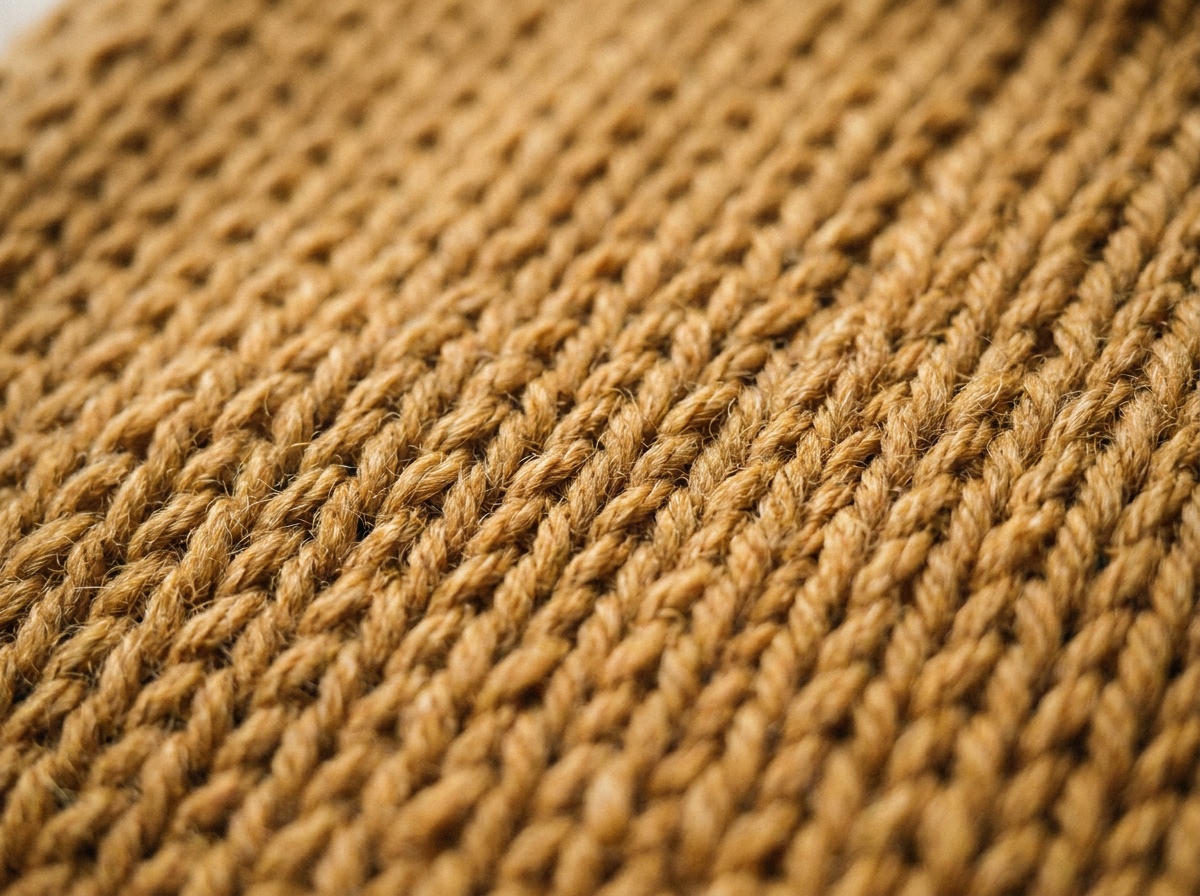
Knitted herringbone is a dense, close fabric that mimics the slanting weave of herringbone tweed. It does not look knit at all: the surface reads as a set of interlocking diagonal columns leaning one way, then reversing, the way woven herringbone does. You get that look by working pairs of stitches together and offsetting the pairs each row, so no single stitch stands on its own.
How it is built
The fabric comes from knitting and purling two stitches together, but only halfway. On a knit row you knit two together through the back loop and slip only the first stitch off the left needle, leaving the second stitch on to pair with the next one. On a purl row you purl two together, again dropping only the leading stitch. Because every stitch is consumed by two different decreases across the two rows, the count stays constant even though it reads like a running series of k2tog and p2tog.
That "work two, drop one" rhythm is the whole trick. Each stitch leans against its neighbor, and the lean flips direction between the right-side and wrong-side rows, which builds the zigzag. Work it over an even number of stitches and keep tension even: because you are pulling two loops together every time, herringbone is slow and easy to work too tight.
What the fabric does
The result is thick, firm, and stable, with little of the stretch you expect from stockinette. The doubled stitches take up yarn, so a herringbone swatch is denser and uses more yardage than a plain-knit one of the same width. Gauge runs tight, and the fabric barely curls, which is unusual for something built on knit stitches and part of why it holds an edge well.
It is not reversible. The right side shows crisp diagonal chevrons; the back is a muddier woven texture that some makers like in its own right but is clearly the wrong side. Solid or lightly variegated yarn shows the pattern best. Busy self-striping yarn fights the diagonal lines and buries them.
What to use it for
Reach for herringbone when you want structure over drape: cowls that stand up on their own, bags and pouches that hold shape, pillow fronts, and blankets with body. The firm, low-curl fabric suits anything that benefits from a stiff, tweed-like hand. Skip it for garments meant to skim the body or for projects where yardage and knitting speed matter, since it eats both.
Is knitted herringbone reversible?
No. The front shows clean diagonal chevrons; the back is a woven-looking texture that reads as the wrong side.
Why does my herringbone keep getting narrower?
Tension is creeping tighter as you pull two loops together each stitch. Loosen your working yarn and cast on extra stitches to hit your target width.
Does it use more yarn than stockinette?
Yes. Working stitches two at a time makes a denser fabric, so expect noticeably more yardage for the same finished size.