Basketweave Stitch
alternating blocks of knit and purl stitches that read like woven basket squares, flat and substantial
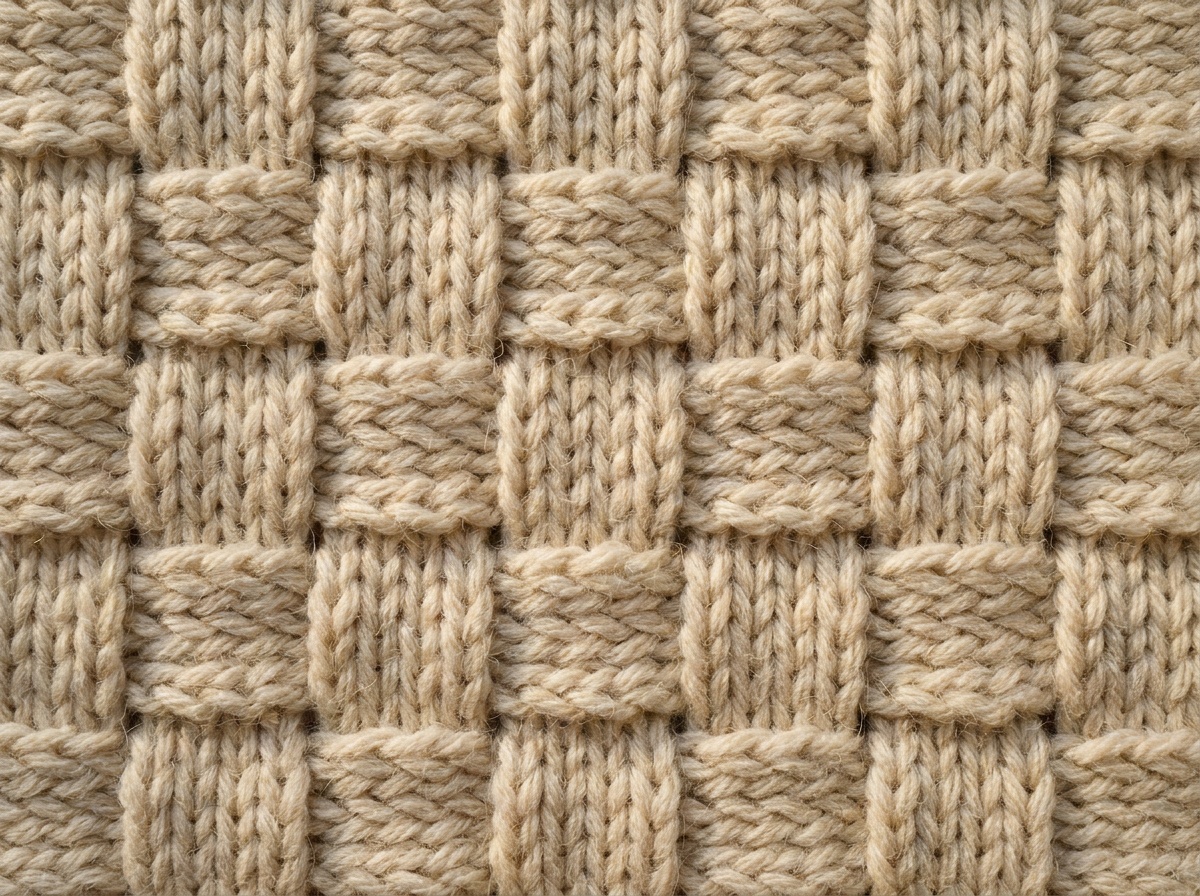
Basketweave is a knit-purl texture that arranges knits and purls into squares, so the surface reads like the over-under weave of a basket. It uses no cables, no yarn overs, and no special tools: if you can knit and purl in the same row, you can work it. The trade-off for that simplicity is counting. The pattern lives in blocks, and you have to keep track of where one block ends and the next begins.
How it is built
The fabric is a grid of stockinette and reverse-stockinette blocks. Within a block you knit the knits and purl the purls for several rows, then switch: the columns that were knit become purl, and the purl columns become knit. A common setup is a 4x4 block on a multiple of 8 stitches. Over the first four rows you work (knit 4, purl 4) across; over the next four rows you work (purl 4, knit 4), shifting the blocks by half a repeat. That offset is what turns straight ribbing into staggered squares.
Because the raised and recessed blocks alternate on both axes, the count matters in two directions at once: which stitches you knit or purl across a row, and how many rows before you flip. Place a marker at each block boundary until the rhythm sets in, and read the fabric as you go. A knit column below the needle wants a knit; a purl bump below wants a purl, until the row where you deliberately reverse them.
What the fabric does
Basketweave lies flat. The alternating knit and purl blocks pull against each other and cancel the curl that plain stockinette has, so edges stay put without a separate border. It is close to reversible: the front and back are not identical, but both sides show clear woven-square texture, which suits blankets and anything seen from both faces.
The fabric is thick and stable with modest widthwise stretch, less than ribbing and more than garter. All those purl bumps eat yarn and add loft, so a basketweave piece is denser and warmer than the same yarn worked in stockinette, and it uses more yardage for the same dimensions. Expect it to knit up somewhat narrower than a stockinette swatch on the same needles, so swatch before you commit to a size.
When to use it
Reach for basketweave when you want a flat, substantial, reversible fabric with visible texture and no lace or cables to manage: blankets and afghans, dishcloths and washcloths, placemats, tote and market bags, cushion fronts, and scarves that should look finished on both sides. It is a strong step up from garter or stockinette for someone learning to read their knitting, since the whole pattern is knits and purls placed on purpose.
Does basketweave curl at the edges?
No. The alternating knit and purl blocks balance the fabric, so it lies flat without a separate border. That is one of its main advantages over stockinette.
Is it reversible?
Close to it. The two sides are not identical, but both show clear woven-square texture, so it works well for blankets and scarves seen from either side.
Why does my basketweave use more yarn than expected?
The purl bumps add loft and density, and the fabric pulls in narrower than stockinette. More stitches sit in the same space, so it takes more yardage for the same size.