Waffle Stitch
a grid of knit and purl stitches that pops into raised squares like a waffle, thick and textured and absorbent
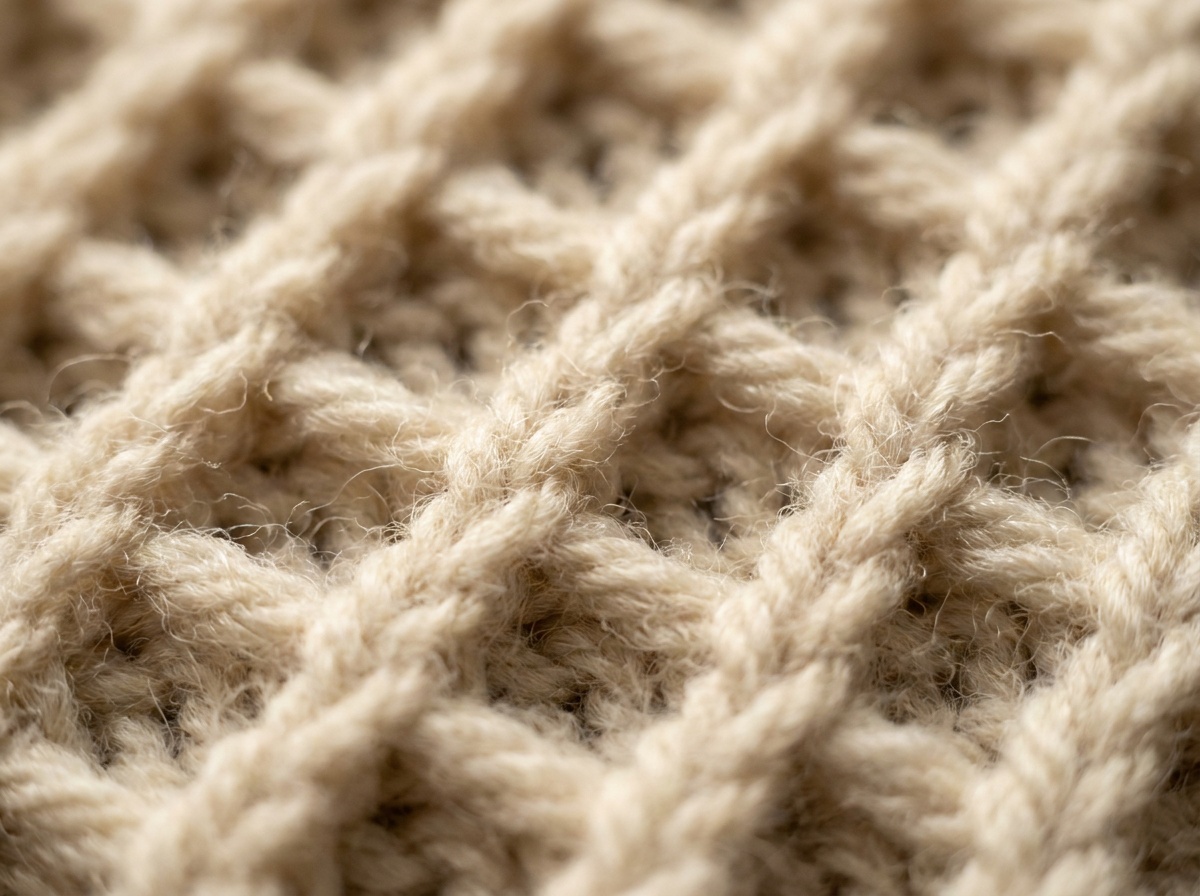
Waffle stitch is a knit-and-purl texture that pushes the knit columns forward and lets the purls sink back, so the fabric reads as a grid of raised squares with recessed lines between them. The name is literal: it looks like the surface of a waffle, and it traps air the same way, which is why it works so well for anything meant to soak up water or hold in warmth.
How it is built
Waffle is worked flat over a multiple of three stitches plus a couple of edge stitches, on a repeat of a few rows. The core idea is a small grid: on some rows you alternate knits and purls (k2, p1 or k1, p2, depending on the version), and on others you knit or purl straight across the row that sets the ridge. The knit stitches stack into vertical columns while the purl stitches form the wells between them. Because the pattern shifts which stitches are knit and which are purled across the repeat, the columns get interrupted at regular intervals, and that interruption is what breaks the surface into discrete squares instead of plain ribbing.
You read the fabric as you go: knits look like flat Vs, purls look like bumps. If a raised square is not popping, check that your knits are landing on your purls from the row below on the ridge rows. Most waffle variations are not reversible; the front shows the crisp waffle grid and the back shows a softer, muddier version of the same texture.
What the fabric does
The trapped-air structure makes waffle thick and cushiony for its yarn weight, and it has real widthwise stretch from all the knit-to-purl transitions, so it hugs rather than hangs. It lies flat without much of the roll you get from stockinette, which makes it friendly for edges. The tradeoff is that it eats yarn and works up slower than a plain knit fabric, and it is a touch fiddly to keep track of until the repeat is in your hands.
What to use it for
Waffle earns its keep anywhere absorbency and body matter. In cotton it makes dishcloths and hand towels that pull water off your hands, and washcloths with a bit of gentle scrub to them. In wool or a wool blend it gives blankets, cowls, and hats a plush, insulating hand. The sturdiness also suits bags and baskets that need to hold their shape. Worsted or DK on a needle a hair smaller than the ball band suggests keeps the squares tight and defined.
Is waffle stitch reversible?
No. The front carries the crisp raised grid; the back shows a softer, less defined version of the same texture. Plan the right side to face out.
Why do dishcloths so often use waffle stitch?
The recessed purl wells hold water and give the cloth a light scrub, and the thick fabric wrings out and dries without going limp. Cotton or a cotton blend is the usual choice.
How is it different from basketweave?
Basketweave alternates larger blocks of knits and purls into a woven-looking checkerboard, flatter and blockier. Waffle uses a finer grid that pops into rounded squares with more depth.