How to Sew with Canvas and Heavy Fabric
Sew thick canvas on a home machine without breaking needles or jamming: the needle, thread, and stitch length for heavy cloth, how to feed the bulk, and how to cross thick seams.
Established sewing references reviewed for needle and thread choice, stitch length, feeding and managing bulk, and crossing thick seams when sewing canvas and heavy fabric on a domestic machine; no universal settings are prescribed and are confirmed on a scrap of the specific cloth.
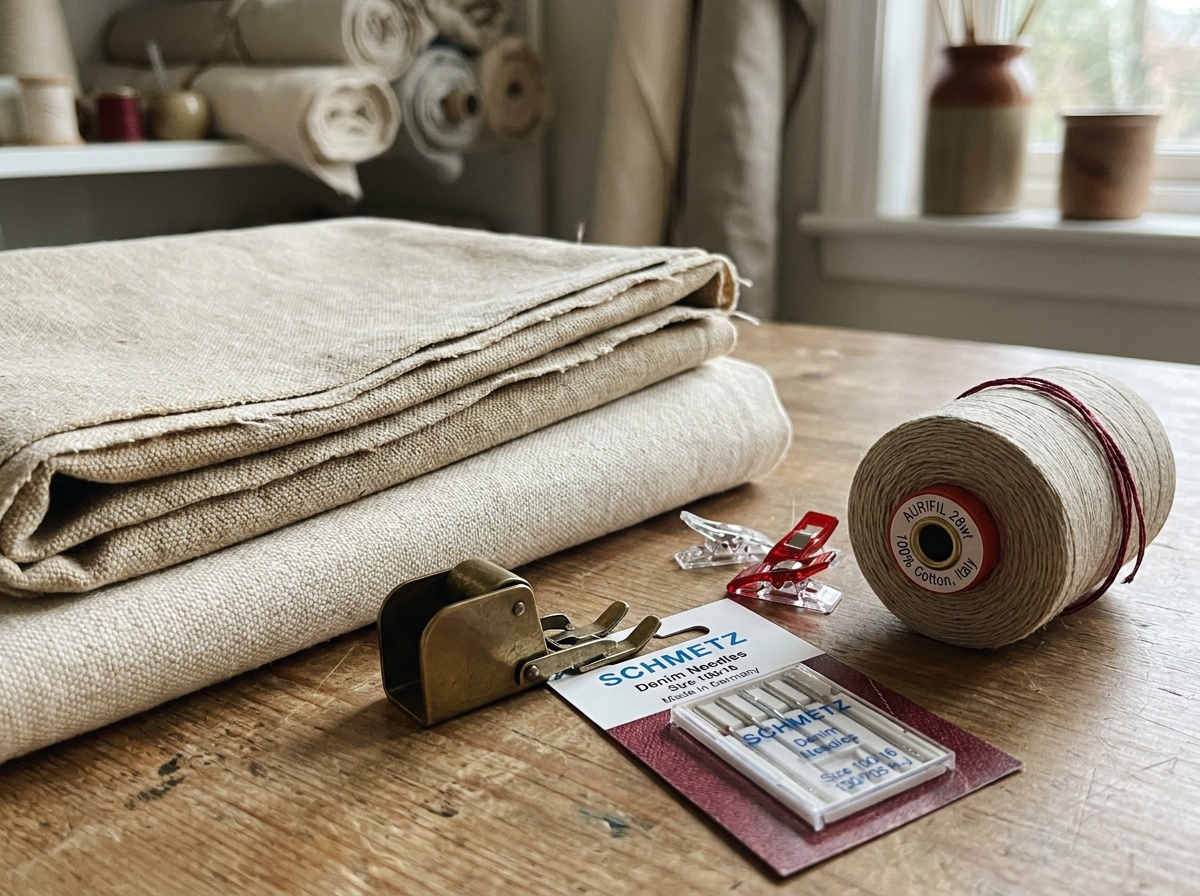
Canvas is heavy and dense, so it defeats a machine set up for cotton. Fit a denim or heavy-duty needle in a large size (90/14 to 100/16), use a strong thread, and lengthen the stitch to about 3.5 to 4 mm, since short stitches perforate and pucker thick cloth. Feed it with a walking foot so the layers move together, slow the machine down for control, and support the weight of the project so it does not drag. The hardest points are where seams stack: grade and hammer thick intersections flat, use a hump-jumper or fold to keep the foot level, and hand-walk the wheel over the thickest spots. Test on the actual layers first.
Canvas, duck, and other heavy cloths are straightforward to sew as long as the machine is set up for the weight and you plan for bulk. Most trouble, broken needles, skipped stitches, and jams, comes from asking a light setup to punch through thick layers.
Needle, thread, and stitch
| Needle | A denim or heavy-duty needle in a large size, roughly 90/14 for lighter canvas up to 100/16 for heavy duck. A sharp strong point penetrates the dense weave without deflecting or snapping. |
| Thread | A strong all-purpose or heavy-duty polyester (often a thicker weight such as Tex 40 / topstitch). Polyester resists the abrasion bags and outdoor gear take. |
| Stitch length | Lengthen to about 3.5 to 4 mm. A short stitch punches a dense line of holes that weakens and puckers heavy cloth; a long stitch feeds smoothly and looks right on the scale of the fabric. |
| Tension | Thick layers often need a slightly higher tension to balance the stitch. Adjust on a scrap of the actual layers, not a single thickness. |
Feed the bulk
A walking foot is the biggest single help: it feeds the top and bottom layers together with its own dogs, so thick canvas does not shift, pucker, or stall. Slow the machine down for control rather than powering through, and support the weight of the project on the table or your lap so the bulk does not drag against the needle and skew the stitches. Clips hold heavy layers better than pins where the cloth is too thick to pin easily.
Cross thick seams without jamming
The moment a canvas project fights back is where several layers meet, such as a bag boxed corner or a folded hem crossing a side seam. Grade the seam allowances so the layers step down instead of forming a solid block, and hammer or firmly press the intersection flat before sewing over it. Keep the presser foot level with a hump-jumper (a shim placed behind or in front of the foot), or a folded scrap of the same thickness, so the foot does not tip and jam. Slow right down and hand-walk the flywheel over the thickest point. If the machine strains, that layer count may be beyond it, so redesign the seam rather than forcing it.
Because canvas frays, finish interior seams with an overlock, zigzag, or a bound Hong Kong finish, or use flat-felled seams for strength on bags and workwear. See the seam finishes visual guide for the options, and the heavier utility cloths in the Cloth Library for how weight and finish vary.
Sources and decision boundaries
The needle, thread, feeding, and thick-seam methods here follow established references such as WeAllSew on sewing bulky fabrics, Longan Craft's tips for sewing canvas, and Silver Bobbin on how to sew canvas. Exact needle, thread, and stitch settings depend on the specific cloth and the number of layers and are confirmed on a scrap, which this guide does not replace.
What needle and thread do I need to sew canvas?
A denim or heavy-duty needle in a large size, roughly 90/14 for lighter canvas up to 100/16 for heavy duck, with a strong all-purpose or heavy-duty polyester thread. The strong sharp point penetrates the dense weave without deflecting or breaking, and polyester resists abrasion.
What stitch length is best for heavy fabric?
About 3.5 to 4 mm. A short stitch punches a dense line of holes that weakens and puckers thick cloth, while a longer stitch feeds smoothly and suits the scale of the fabric. Confirm the length and tension on a scrap of the actual number of layers.
Do I need a walking foot for canvas?
It helps a great deal. A walking foot feeds the top and bottom layers together with its own feed dogs, so thick canvas does not shift, pucker, or stall. Combined with slowing the machine down and supporting the project's weight, it is what makes heavy cloth sew cleanly on a domestic machine.
How do I sew over thick seams where layers stack up?
Grade the allowances so the layers step down, hammer or firmly press the intersection flat, and keep the presser foot level with a hump-jumper or a folded scrap of equal thickness. Slow right down and hand-walk the flywheel over the thickest point; if the machine strains, redesign the seam rather than forcing it.