Worked Example: US Flammability Testing and GCC for an Imported Blouse
An illustrative US flammability record for a fictional lightweight rayon blouse, showing why it is not exempt under 16 CFR 1610, how the flammability classes work, and what the General Certificate of Conformity must contain.
Current CPSC guidance and eCFR 16 CFR Part 1610 (flammability of clothing textiles) and Part 1110 (certificates), plus the CPSC enforcement-discretion statement and the certificate eFiling rule, reviewed for a fictional imported lightweight rayon woven blouse sold in the United States; no product is tested, certified, filed, or declared compliant.
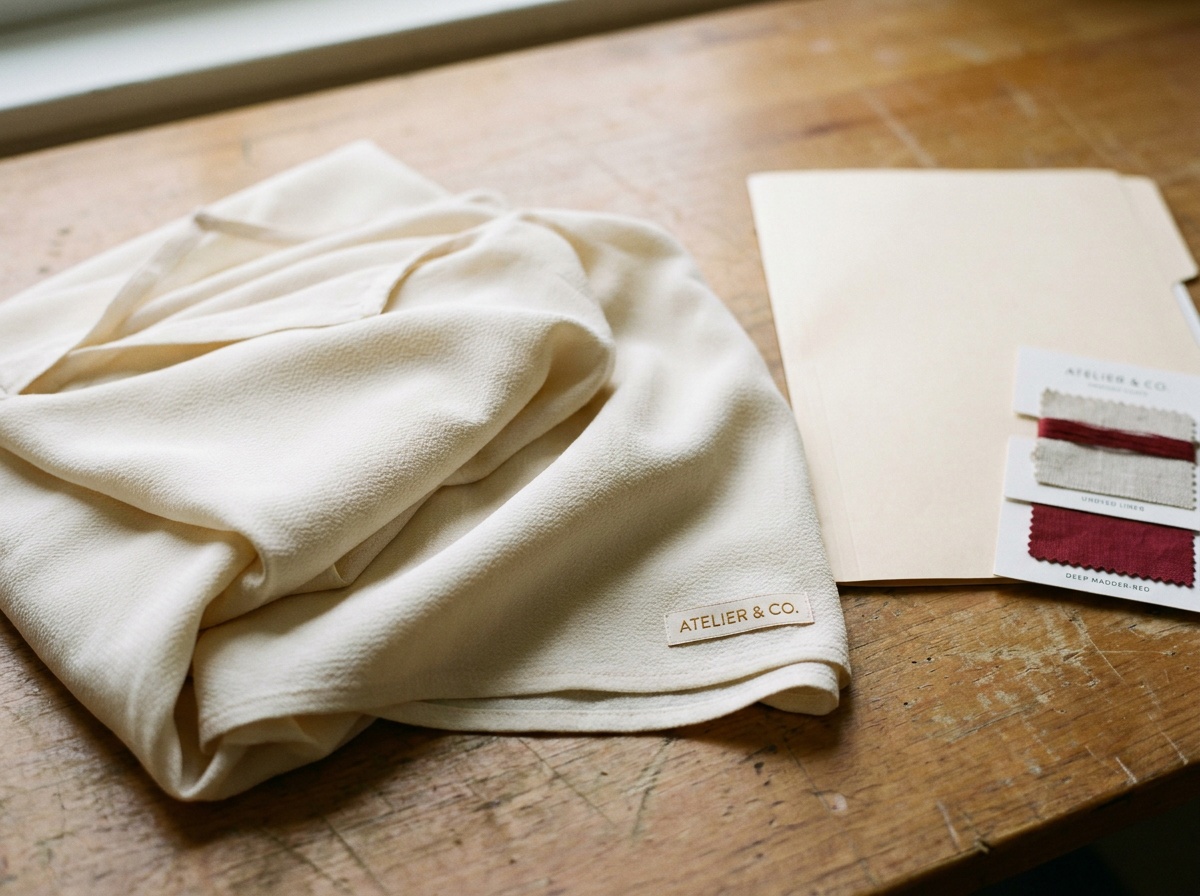
A lightweight, plain-weave 100% rayon blouse is not exempt from US flammability testing, because rayon is not one of the always-exempt fibers and the fabric weighs under the plain-surface weight cutoff. So it must be tested to 16 CFR 1610 and must reach Class 1 normal flammability, and the US importer must issue a General Certificate of Conformity based on a test or a reasonable testing program. General adult apparel does not need third-party testing at a CPSC-accepted laboratory; that is a children's-product requirement. This is an illustrative record, not legal advice or a compliance determination.
Freeze the regulated scenario before developing it
| PRODUCT | Women's woven short-sleeve blouse, adult general apparel; not children's and not sleepwear |
| FABRIC | Illustrative plain-weave 100% rayon (viscose) under 2.6 oz per square yard; final article open |
| MARKET | Cut and sewn abroad, imported for United States retail sale |
| RULE | Flammability under 16 CFR Part 1610; certification under 16 CFR Part 1110 |
| DECISION | Confirm the fabric is not test-exempt, test to reach Class 1, and issue and file the GCC |
The general wearing-apparel flammability standard is 16 CFR Part 1610, summarized in the CPSC Flammable Fabrics Act guidance and clothing FAQ. It sets a 45 degree angle test that measures how easily a fabric ignites and how fast the flame spreads, and it sorts results into three classes. Certification is separate: under 16 CFR Part 1110, the domestic manufacturer or importer issues a General Certificate of Conformity.
This is general information for an illustrative product, not legal advice and not a compliance determination. A qualified product-safety and legal owner must confirm the current eCFR text, the fabric's exemption status, the flammability class result, the testing basis, the certificate content, and the import filing. If any fact changes, for example a heavier fabric, a different fiber or blend, a raised or napped surface, a children's product, or added treatments, the outcome changes with it.
Why this blouse is not test-exempt
Some fabrics are exempt from flammability testing because experience shows they consistently pass. The exemptions are narrow, and this fabric misses both.
| Weight exemption | Plain surface fabrics that weigh 2.6 ounces per square yard or more, about 88.2 grams per square metre, regardless of fiber. The blouse fabric is lighter, so it does not qualify. |
| Fiber exemption | Fabrics made entirely from acrylic, modacrylic, nylon, olefin, polyester, or wool, or a combination of only those fibers, at any weight. Rayon is not on that list, so the 100% rayon fabric does not qualify. |
| Raised surface note | The weight exemption is for plain surface fabrics only. A raised or napped surface, such as fleece or flannel, is never exempt by weight and is exempt only if made entirely from the listed fibers. |
| Result for this fabric | Not exempt on either route, so it must be flammability tested and must reach Class 1 before it is used in apparel. |
These exemptions are testing exemptions, not exemptions from the standard. Even an exempt fabric still may not be dangerously flammable. The weight exemption applies to plain surface fabrics only, so a heavy cotton flannel or fleece is not weight-exempt. And the fiber exemption needs the fabric to be made entirely from the listed fibers, so a polyester and rayon blend or a poly-cotton blend is not fiber-exempt. When in doubt, test.
The three flammability classes
The test result places the fabric in one of three classes. Only the passing classes may be used in clothing.
| Class 1, Normal flammability | Acceptable for use in clothing. This is the target for the blouse. |
| Class 2, Intermediate flammability | Applies only to raised-fiber surface textiles and is still acceptable for clothing. It does not apply to plain surface fabrics. |
| Class 3, Rapid and intense burning | Dangerously flammable and may not be used for clothing. A lightweight plain-weave that burns the test length too quickly falls here. |
The test holds a specimen at a 45 degree angle, applies a flame for one second, and times how long the flame takes to travel a set distance. A shorter burn time means faster spread and a more hazardous fabric. Lightweight, sheer, or napped constructions in non-exempt fibers are the ones that most often fail, which is why this fabric has to be checked rather than assumed.
The General Certificate of Conformity
Because the fabric is not exempt, the importer must issue a GCC certifying that the blouse complies with 16 CFR 1610. For general adult apparel the certificate is based on a test or a reasonable testing program, and it does not require third-party testing at a CPSC-accepted laboratory. That third-party requirement, and a Children's Product Certificate, apply to children's products, not to this adult blouse.
| 1. Product | Identification of the product the certificate covers. |
| 2. Rule cited | Each CPSC rule the product is certified to, here 16 CFR Part 1610, wearing apparel. |
| 3. Certifying business | Name, full mailing address, and telephone of the US importer or manufacturer issuing the certificate. |
| 4. Records contact | Name, address, email, and telephone of the person keeping the test records. |
| 5. Manufacture | Date and place the product was manufactured, at least month and year and the city, region, and country. |
| 6. Testing | Date or dates and place or places the product was tested for compliance. |
| 7. Third-party lab | Identity of any third-party lab that tested it. For general apparel this may read not applicable, since third-party testing is not required. |
Three points get missed. A GCC is furnished to distributors and retailers and made available to CPSC and Customs on request; it does not have to physically travel inside every carton. As of 8 July 2026, importers of most regulated products must also electronically file the certificate data with Customs at entry, so an imported blouse has an eFiling step. And CPSC has said it will not pursue firms that fail to issue a GCC for adult apparel that is exempt from testing under 16 CFR 1610.1(d), which means an exempt fabric may need no GCC at all, while this non-exempt blouse still does.
Edit the worked flammability record
Apparel flammability and GCC decision record
Keep the fabric identity, exemption determination, flammability test result, testing program, certificate content, and import filing traceable to the same configuration.
Edits stay in this browser only and are not sent anywhere. This record does not test, certify, file, or declare compliance for any product.
Product and fabric identity
Flammability turns on the fabric, so define it before deciding anything.
Exemption determination
Decide, and record, whether the fabric is test-exempt before you rely on it.
Flammability test and class
A non-exempt fabric needs an actual result, not an assumption.
Reasonable testing program and change control
One passing report is not a permanent license to ship.
GCC content and issuance
Complete every required element; do not leave a field blank.
Import filing and release
For an imported product the certificate data has a customs step.
Keep the standard, the test, and the certificate separate
Three things are easy to blur. The standard is the rule the fabric must meet, that it not be dangerously flammable and that it reach an acceptable class. The test is the evidence that a specified sample met the standard on a given date. The certificate is the responsible business's written statement, based on that evidence or a reasonable testing program, that the product conforms. A certificate with no supporting test or program behind it is a statement without evidence, and a passing report on one fabric does not certify a different fabric, weight, surface, or finish. Keep each as its own record and reconcile them to the actual production article.
For the live program, gather fabric facts with the Material Sourcing Request, screen the maker with the Supplier Screening Brief, record proofs with the Sample Review and Approval Record, and hold the callouts in the tech pack. For the separate labeling regime on the same blouse see the care and content label worked example, and for children's routes see the children's sleepwear example.
Sources and decision boundaries
The flammability prompts use the CPSC Flammable Fabrics Act guidance, the clothing FAQ, and 16 CFR Part 1610, including the classes at 1610.4 and the exemptions at 1610.1. The certificate prompts use the CPSC General Certificate of Conformity guidance, the GCC FAQ, and 16 CFR Part 1110. The enforcement-discretion point uses the CPSC statement on GCCs for exempt adult apparel, and the import step reflects the current certificate eFiling requirement. These sources support the record structure and dated questions only. Stitch Authority does not test a product, determine exemption, assign a flammability class, issue a certificate, file import data, or declare compliance. Verified against these sources on 18 July 2026.
Does adult clothing need flammability testing in the US?
All clothing textiles are covered by the general flammability standard at 16 CFR 1610, but not every fabric has to be tested. Plain surface fabrics that weigh 2.6 ounces per square yard or more, and fabrics made entirely from acrylic, modacrylic, nylon, olefin, polyester, or wool, are exempt from testing. Fabrics outside those exemptions, such as a lightweight rayon, must be tested and must reach Class 1.
What is a General Certificate of Conformity?
A GCC is a written certificate in which the US manufacturer or importer certifies that a general-use product complies with the applicable CPSC rules, here 16 CFR 1610. It lists the product, the rules cited, the responsible business, the records contact, and the dates and places of manufacture and testing. It is furnished to distributors and retailers and made available to CPSC and Customs on request.
Does adult apparel need third-party lab testing?
No. General adult apparel can be certified based on a test or a reasonable testing program, and first-party testing or testing at a non-accepted laboratory is acceptable. Third-party testing at a CPSC-accepted laboratory, along with a Children's Product Certificate, is required for children's products, not for general adult apparel.
How do I know if my fabric is exempt from flammability testing?
Check two routes. A plain surface fabric that weighs at least 2.6 ounces per square yard is exempt by weight, and any fabric made entirely from acrylic, modacrylic, nylon, olefin, polyester, or wool is exempt by fiber. A raised or napped surface never qualifies by weight. If the fabric meets neither route, it needs testing, and the exemption is only from testing, not from the standard itself.
What are the flammability classes for clothing?
Class 1 is normal flammability and is acceptable for clothing. Class 2 is intermediate flammability, applies only to raised-surface fabrics, and is still acceptable. Class 3 is rapid and intense burning and may not be used for clothing. The blouse fabric needs to reach Class 1.
Work with a technical designer.
Flammability exemption calls, testing plans, and General Certificate of Conformity content for teams that need a defensible answer before an imported apparel shipment ships.