Fisherman's Rib
made by knitting into the stitch one row below, producing a plush deep elastic rib heavier and squishier than ordinary ribbing
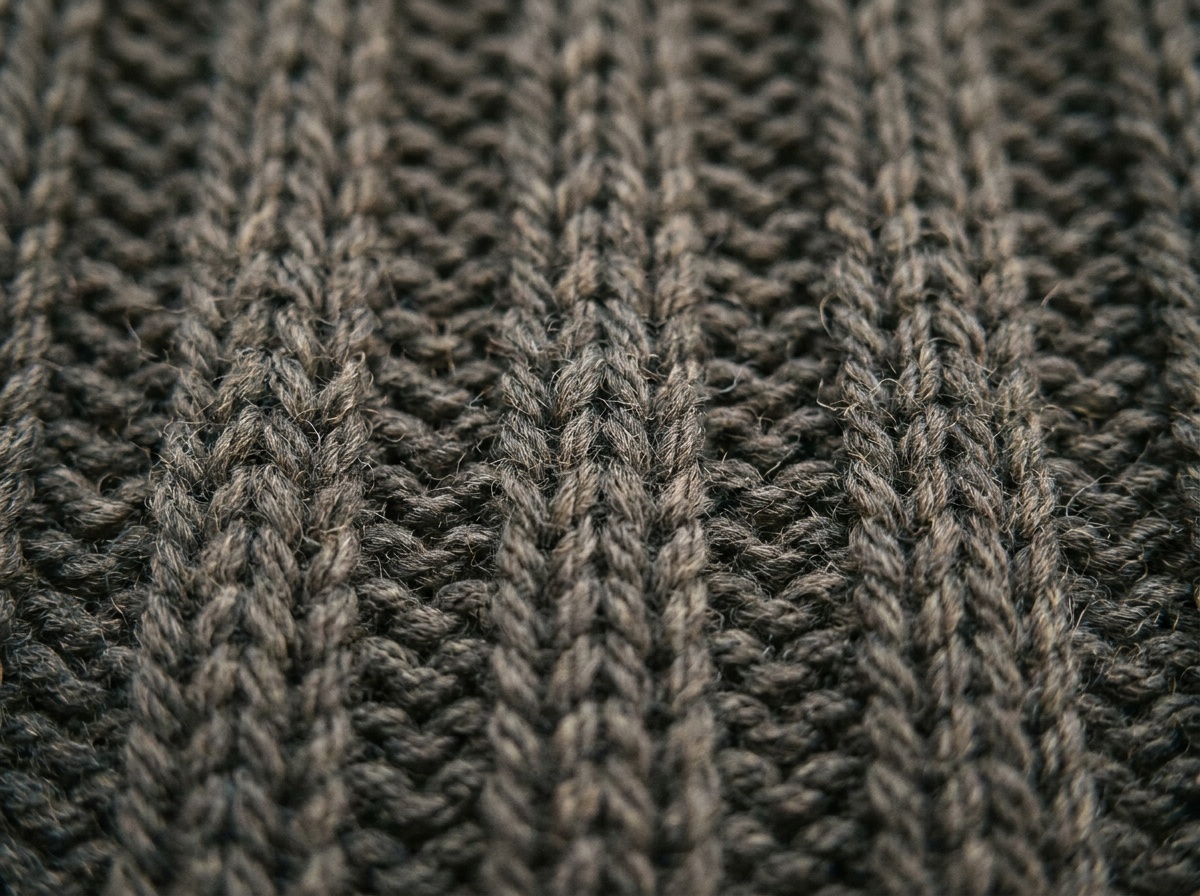
Fisherman's rib is a deep, cushiony version of one-by-one ribbing. Instead of stacking plain knits and purls, you knit into the stitch one row below, which pulls extra yarn up through the fabric and doubles the loft. The result reads like ribbing from a distance but feels twice as thick in the hand, with a bounce ordinary rib never has. It is a close relative of brioche and produces nearly the same fabric, worked with a different set of moves.
How it is built
The fabric is columns of knit and purl, same as one-by-one rib, but the knit columns are worked one row down. On a knit-one-below stitch (often written k1b or KB), you insert the needle into the center of the stitch directly below the next stitch on the left needle, knit it, and let the old stitch drop off the top. That dropped strand doesn't unravel: it wraps the new stitch and becomes part of the column below, which is where the extra depth comes from.
Most versions purl the alternate stitches and knit-below the rest, so a plain row reads "knit one below, purl one" across. Some patterns knit-below on both faces for a firmer fabric. Cast on an even number of stitches, work a plain rib row first to set the columns, then begin the knit-below rows. The first row can feel fiddly because there is no stitch below yet, so many patterns start you on ordinary rib and switch on row two.
What the fabric does
Fisherman's rib is thick, spongy, and heavier than the same yarn worked flat. It eats yarn: expect to use noticeably more than plain stockinette or standard rib for the same dimensions. It is fully reversible, with the same soft raised columns on both sides, which makes it a strong choice for anything seen from both faces.
It stretches wide and springs back, but it grows in length under its own weight, so a long scarf or a heavy sweater body will drop over time. Account for that by knitting shorter than your target length. The fabric lies flat and does not curl at the edges, unlike stockinette, and the deep texture hides uneven tension well, which is forgiving if your knit-below stitches vary a little.
What to use it for
Reach for fisherman's rib when you want warmth and body: cowls, chunky scarves, hats, and sweater bodies that need to feel substantial. Worsted or aran weight suits it best, since the stitch already adds bulk and finer yarn can lose the plush effect. It also makes a handsome band or collar where you want more presence than a plain rib gives.
Is fisherman's rib the same as brioche?
The fabric is nearly identical. Fisherman's rib gets there by knitting into the stitch below; brioche uses yarn-over-and-slip pairs. Brioche is easier to work in two colors, but plain fisherman's rib is simpler to learn.
Why is my piece so much wider and heavier than the pattern says?
The stitch is elastic and dense, so it blocks wider and drops longer under its own weight. Knit shorter than your target length and check gauge in the actual stitch, not in plain rib.
Can I work it in the round?
Yes. Cast on an even number, work knit-one-below and purl-one on every round, and there is no purl-side row to track, which many knitters find easier than working it flat.