Brioche Stitch
worked by slipping stitches with paired yarn-overs and knitting them together, brioche makes a lofty deeply ridged squishy two-sided rib
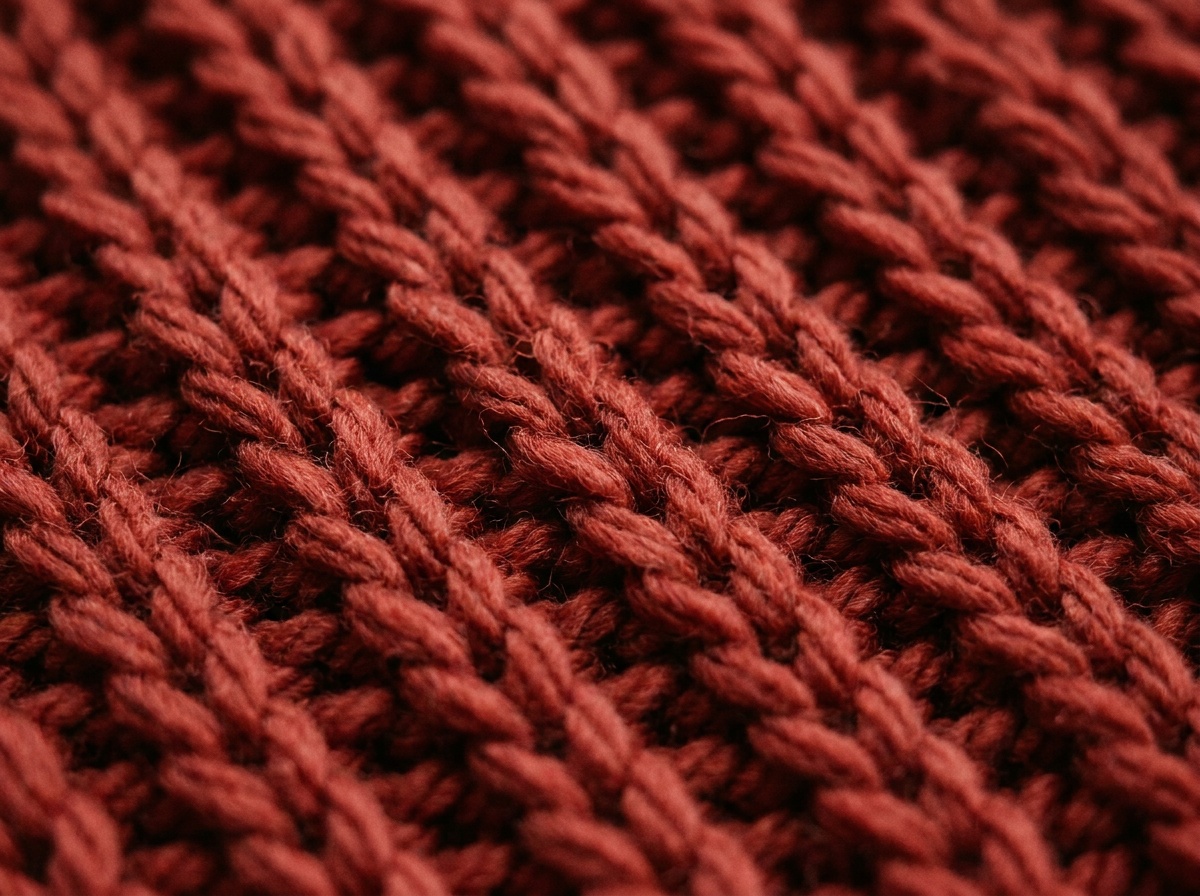
Brioche is a slipped-stitch rib that builds height by stacking yarn-overs. It produces a thick, spongy, deeply columned fabric that looks like an oversized, softened rib and reads the same on both faces. Most patterns count it as advanced, less because any single move is hard and more because the yarn-over pairs are easy to lose track of, and a dropped one is hard to spot until several rows later.
How it is built
Every column in brioche is a slipped stitch carrying a yarn-over on its back, worked together with that yarn-over on the following pass. The two core moves are usually written brk (brioche knit: knit the slipped stitch together with its yarn-over) and brp (brioche purl: purl them together). Between the worked columns you slip a stitch purlwise and lay a fresh yarn-over over it, setting up the next pass.
Because each column is fed by a yarn-over from the row below, brioche eats yarn and takes twice the passes of plain knitting to gain the same height: a two-row repeat only advances the fabric one visible row. That doubling is the source of the loft. Two strands sit in every stitch instead of one.
What the fabric does
The fabric is thick, squishy, and elastic, with more east-west stretch than a standard one-by-one rib and a heavier hand. It is fully reversible: worked in one color, both sides match; worked in two colors (two-color brioche), each face shows a different dominant color, which is most of the appeal. It does not curl, so edges lie flat without ribbing or borders.
The trade-offs follow from the loft. Brioche uses noticeably more yarn than stockinette for the same finished dimensions, and the fabric is warm and dense, closer to a doubled layer than a single one. It blocks open but stays plump rather than crisp.
What to use it for
Reach for brioche when you want warmth, squish, and a fabric that looks good on both sides: cowls, hats, and scarves are the standard trio, since all three show both faces and benefit from the stretch and thickness. Two-color brioche turns a plain accessory into the main event without a colorwork chart. Skip it where you need a thin, flat, or crisp fabric, or where yardage is tight.
Is brioche the same as fisherman's rib?
They look nearly identical and behave alike, but they are built differently. Fisherman's rib knits into the stitch below; brioche slips stitches with paired yarn-overs. Brioche is easier to work flat in two colors.
Why does my brioche have holes or gaps?
A gap usually means a yarn-over slipped off its column or was knit alone instead of together with its slipped stitch. Count your yarn-over pairs across a row before turning.