Cable Stitch
stitches crossed over one another with a cable needle to make raised rope-like twists over a purl ground
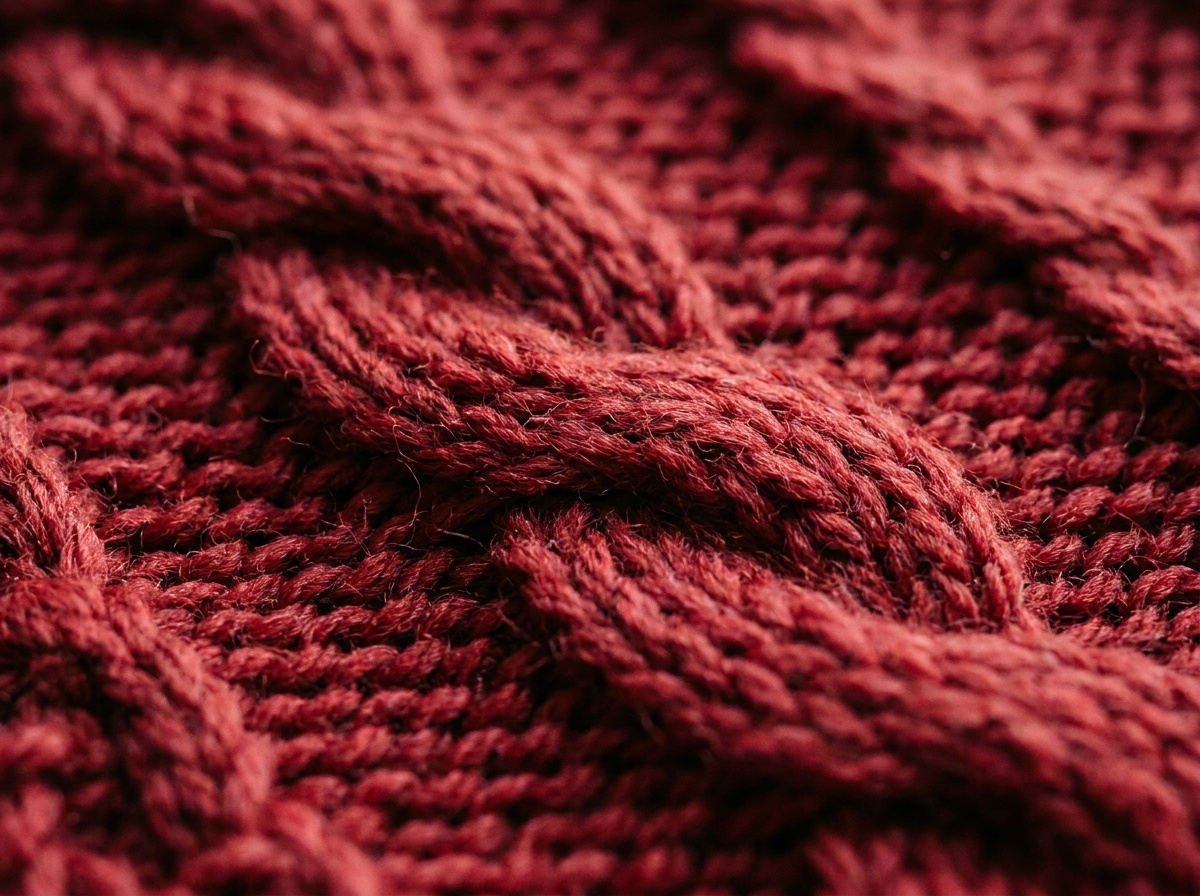
A cable is a group of stitches worked out of order so they cross over one another, forming a raised rope that twists up the fabric. The knit stitches sit forward as a smooth column; the purl stitches around them recede, so the cable stands proud of the ground. It reads as complicated and works up faster than it looks, since the crossing happens on one row and the rest is plain knitting.
How it is built
A cable lives on a column of knit stitches set against a purl background, usually reverse stockinette. The twist itself comes from a cable needle, a short double-pointed tool that holds stitches out of the way while you work the ones behind or in front of them.
To cross a six-stitch cable, slip the first three stitches onto the cable needle. Hold that needle to the front of the work for a left-leaning twist, or to the back for a right-leaning one. Knit the next three stitches from the left needle, then knit the three waiting on the cable needle. The two halves have swapped places, and that swap is the crossing. Patterns abbreviate this as C6F (cross 6 front) or C6B (cross 6 back); the number is the total stitches in the cable, the letter the direction of the hold.
Between crossing rows you knit the knits and purl the purls, keeping the column smooth and the ground bumpy. The gap between crosses, often six or eight rows, sets how tight or open the rope looks.
What the fabric does
Cables pull in hard. Crossing stitches shortens them across the fabric, so a cabled panel is narrower and denser than the same stitch count worked flat. Plan for that in gauge: a sweater front full of cables needs more stitches than a plain one to reach the same width, and swatching in pattern is the only way to know how much.
The fabric is thick and warm because the crossings double the yarn back on itself, which is why cables belong on Aran sweaters, hats, and blankets meant to hold heat. They are not reversible. The front carries the rope; the back shows a muddle of floats and purl bumps. Reserve them for pieces with a clear right side, or frame them so the wrong side stays hidden.
Because the twists lock the fabric, cabled knits resist stretch lengthwise and hold their shape well, though the pull-in means they can feel stiff at high cable density.
What to use it for
Reach for cables when you want texture and structure: the center panel of a sweater, a beanie band, the border of a throw. Worsted or aran-weight wool shows them best, since the crossings need a round, springy yarn and enough body to stand up. Smooth yarns read cleaner than fuzzy or heavily variegated ones, which bury the rope in halo or color noise.
Can I cable without a cable needle?
Yes. For small cables you can slip the stitches off the needle, pinch them, and rearrange them by hand before knitting on. It is faster once practiced but risks dropped stitches on wider cables, so a cable needle is safer for six stitches or more.
Why is my cabled piece narrower than the pattern says?
Cables draw the fabric in. If your width is off, check that you swatched in the actual cable pattern rather than in stockinette, since the two gauges differ.