Care Symbols and Labelling Systems Explained
Tell the ISO/GINETEX and US ASTM care-symbol systems apart, read the five symbol groups in order, and know why a US label still needs words even when it carries symbols.
Reviewed ISO 3758, the GINETEX system, and the US FTC Care Labeling Rule (16 CFR part 423) for the symbol groups, their sequence, and the differing US written-instruction requirement; no care instruction for any specific product is prescribed, and the destination market's rule and validated testing govern.
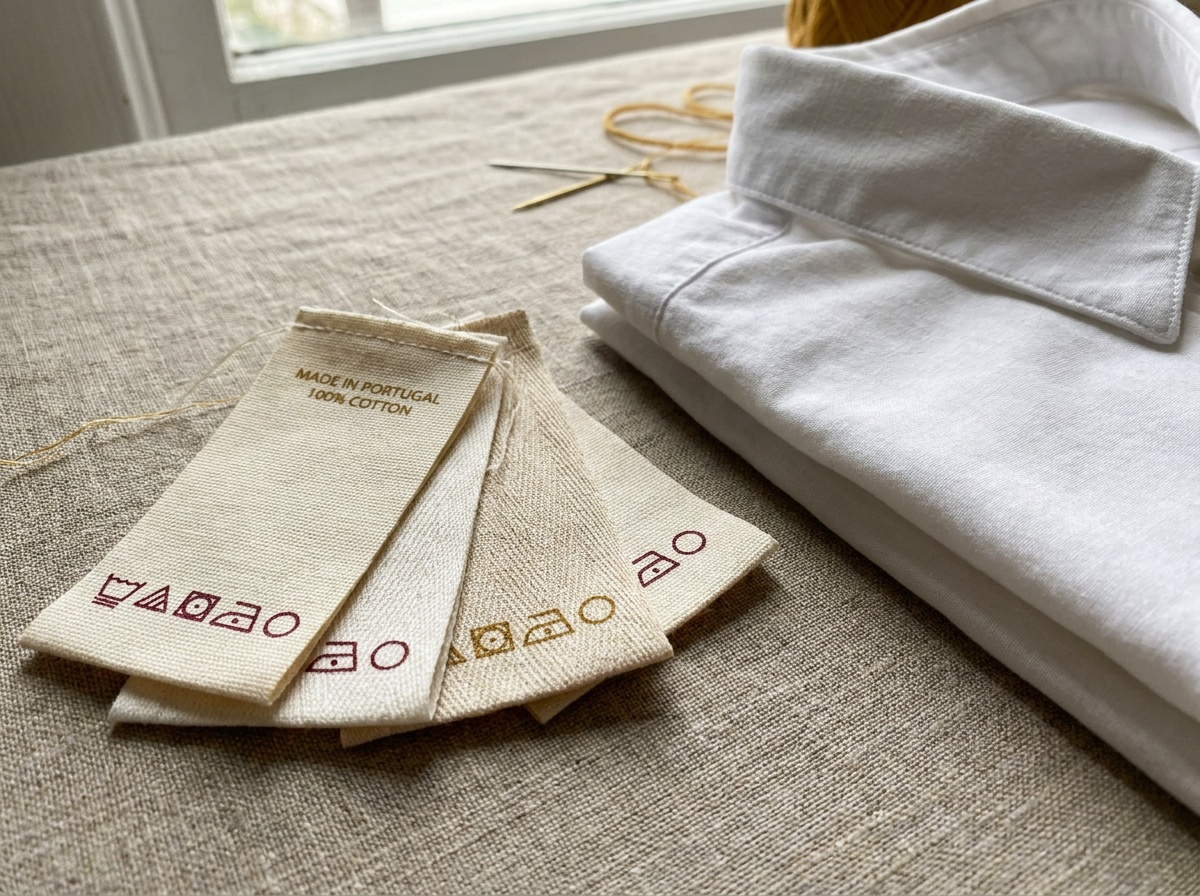
There is no single global care-symbol standard: there are two main systems that look alike but are not identical. The international system is owned by GINETEX and codified in ISO 3758, using five symbol groups always shown in the same order: washing, bleaching, drying, ironing, and professional textile care. The United States uses the ASTM D5489 symbol set under the FTC Care Labeling Rule (16 CFR part 423), and the critical difference is that a US label must give care instructions in words; symbols alone are not sufficient, whereas ISO/GINETEX symbols can stand without words in much of the world. The symbols are registered trademarks, similar-looking symbols can carry different meanings between systems, and any instruction must be backed by testing of the actual product, not copied from a similar style.
Care labelling looks like a small finishing detail, but it is a market-by-market compliance question with two symbol vocabularies that are close enough to be confused and different enough to be wrong. The first job is to know which system the destination market uses.
Two systems, similar symbols, different rules
| International (ISO 3758 / GINETEX) | The five-symbol code owned by GINETEX and standardised as ISO 3758, used across Europe and many of the 50-plus countries that recognise it. The pictograms are registered trademarks and can appear without any words. |
| United States (ASTM D5489 + FTC) | US apparel commonly uses the ASTM D5489 symbol guide, but under the FTC Care Labeling Rule (16 CFR part 423) the label must state care in words. Symbols may be added, but they do not replace the required written instructions. |
| Look-alike but not identical | The wash tub, triangle, square, iron, and circle appear in both systems, but a similar symbol does not always carry the same meaning, so a symbol set cannot simply be moved from one market to another. |
| Other markets | Canada requires care information and is bilingual; other markets vary. Confirm the destination market's rule rather than assuming one label satisfies all. |
The five symbol groups, always in this order
| 1 — Washing | A wash tub gives the method and maximum temperature (a number in the tub, or dots representing temperature in the US system). A hand in the tub means hand wash; a bar under the tub means a gentler mechanical action; a cross means do not wash. |
| 2 — Bleaching | A triangle. Open means bleaching allowed; two diagonal lines mean only oxygen or non-chlorine bleach; a crossed triangle means do not bleach. |
| 3 — Drying | A square. A circle inside means tumble dry (dots for heat level); lines inside represent line or flat drying; a cross means do not tumble dry. Natural-drying lines indicate hang, drip, or flat as appropriate. |
| 4 — Ironing | An iron shape with one, two, or three dots for the maximum soleplate temperature; a crossed iron means do not iron, and a crossed steam symbol means no steam. |
| 5 — Professional textile care | A circle for dry-cleaning and wet-cleaning, with letters (P, F, W) and bars for the process and its severity. A crossed circle means do not dry-clean. |
Showing the groups out of order, or mixing symbol systems on one label, is a common and avoidable error. Keep the five groups in the standard sequence.
The instruction must be tested, not copied
| Words required in the US | Under 16 CFR part 423 a US care label must give a reasonable basis and written instructions covering washing or dry-cleaning as appropriate. Adding ISO symbols is optional and does not satisfy the words requirement. |
| Reasonable basis | The FTC rule requires the marketer to have a reasonable basis for the care instruction before it is on the garment, meaning test evidence or reliable data for that product, not a guess or a borrowed label. |
| Whole product, not just the face fabric | Trims, linings, prints, interlinings, and findings must survive the stated care too. The safe instruction is set by the least tolerant component. |
| Warn when needed | If any ordinary care procedure would harm the product, the label must warn against it. A missing warning can be as much a failure as a wrong instruction. |
For a completed worked example of a compliant US content-and-care label, see the care and content label product example; for the fibre-content side of the same label, the FTC textile rules apply alongside the care rule.
Care-instruction specification record
Care-instruction specification record
Tie every symbol and word to the destination market's rule and to test evidence for the actual product, including its least tolerant component.
Saved in this browser only, never sent to a server.
Product and market
Instruction and evidence
Approval
Sources and decision boundaries
The symbol groups, sequence, and system differences here follow ISO 3758, Textiles — Care labelling code using symbols, the GINETEX international textile care labelling association, and the US FTC Care Labeling Rule, 16 CFR part 423; the US symbol set is defined by ASTM D5489. The applicable rule depends on the destination market, and every instruction must have a reasonable basis in testing of the actual product. This guide does not prescribe a care instruction, symbol, or label for any specific product, and does not provide legal advice on any market's requirements.
Work with a technical designer.
If you sell into both the US and Europe, do not try to make one label satisfy both by symbols alone. The US needs words with a tested basis; the ISO symbols are optional there. Decide the instruction from the least tolerant component first, then express it per market.
FAQ
Is there one global care-symbol standard?
No. The main international system is owned by GINETEX and standardised as ISO 3758, while the United States uses the ASTM D5489 symbol set under the FTC Care Labeling Rule. The symbols look similar but are not identical, and a set built for one market cannot simply be reused in another without checking meanings and the local rule.
Can I use only symbols on a US care label?
No. Under 16 CFR part 423 a US care label must give care instructions in words, with a reasonable basis in testing. ISO or ASTM symbols may be added, but they do not replace the required written instructions. In much of the world outside the US, the ISO/GINETEX symbols can stand alone.
What order do the care symbols go in?
The ISO 3758 / GINETEX order is always washing, bleaching, drying, ironing, then professional textile care. Keeping this sequence and not mixing symbol systems on one label avoids a common labelling error.
How do I decide what care instruction to put?
Base it on the least tolerant component of the whole product, not just the face fabric, and on test evidence such as dimensional change and colourfastness for that product. Copying a similar style's label is not a reasonable basis, and if any ordinary care procedure would damage the item the label must warn against it.