Scuba Knit
structured dresses, skirts, leggings
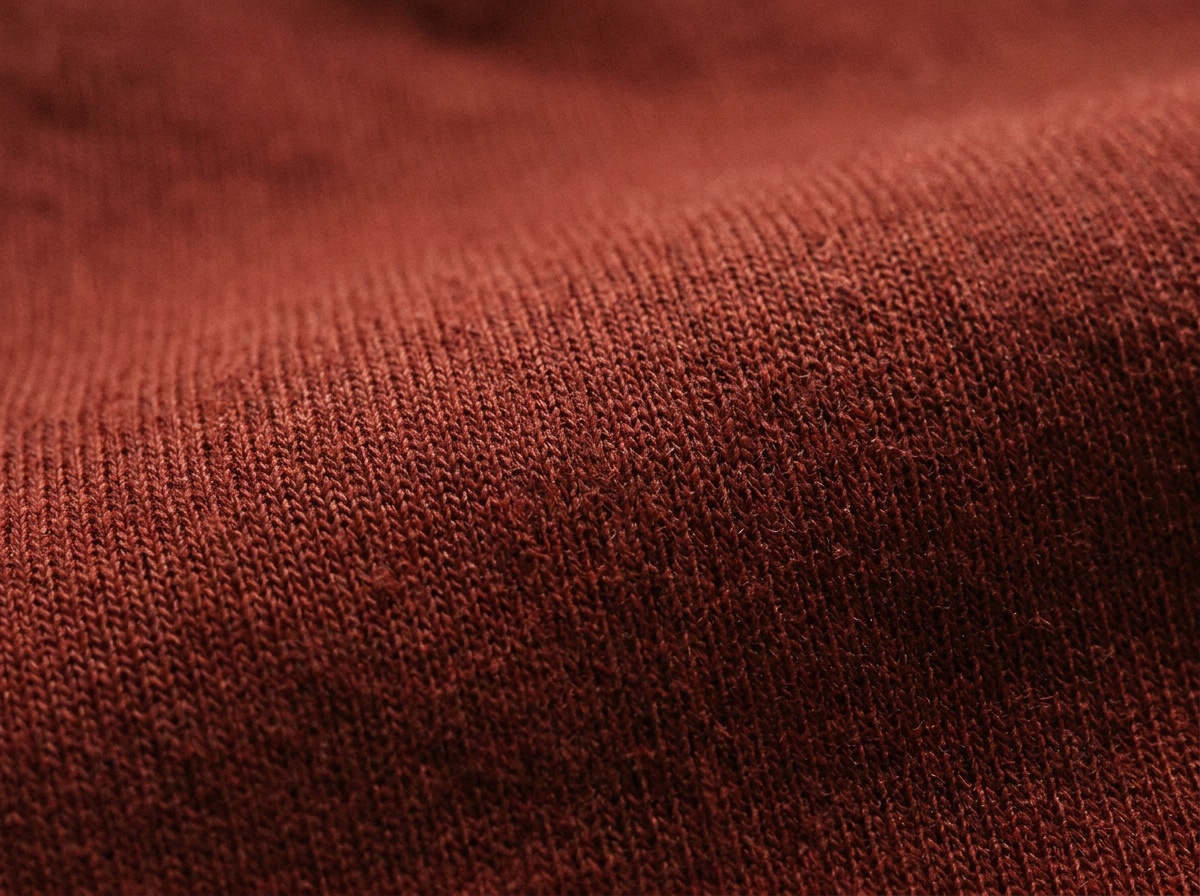
Scuba knit is a polyester-spandex double knit named for its resemblance to neoprene wetsuit fabric, though it carries no foam core. The two knit faces are worked together into one dense, smooth cloth, usually 250 to 350 g/m², with a slightly spongy hand that holds a rounded, structured shape rather than draping. The spandex gives it four-way stretch, and recovery is springy: it snaps back to shape and resists bagging at the knees and seat, which is why it reads as a sculptural knit instead of a soft one.
The cloth is forgiving to cut and sew. Both faces look alike, so there is no right or wrong side to track, and cut edges neither curl nor fray, so hems and facings can be minimal or omitted at raw edges. Use a stretch or ballpoint needle, 75/11 or 80/12, and sew seams with a narrow zigzag, a lightning stitch, or an overlocker so the stitching stretches with the cloth; a straight stitch will pop when the seam is pulled. Because scuba holds its own body, it takes clean structured lines, so simple seaming beats gathers or darts. Press with a cool iron and light pressure only, since polyester glazes and the sponginess flattens permanently under heat. Twin-needle topstitching gives a tidy stretch hem.
Scuba knit suits structured dresses, fit-and-flare skirts, and leggings, garments that want a defined silhouette with movement built in. It is a strong beginner knit because the edges stay put and the body of the cloth hides small handling errors.