Jersey Knit
t-shirts, underwear, loungewear, dresses
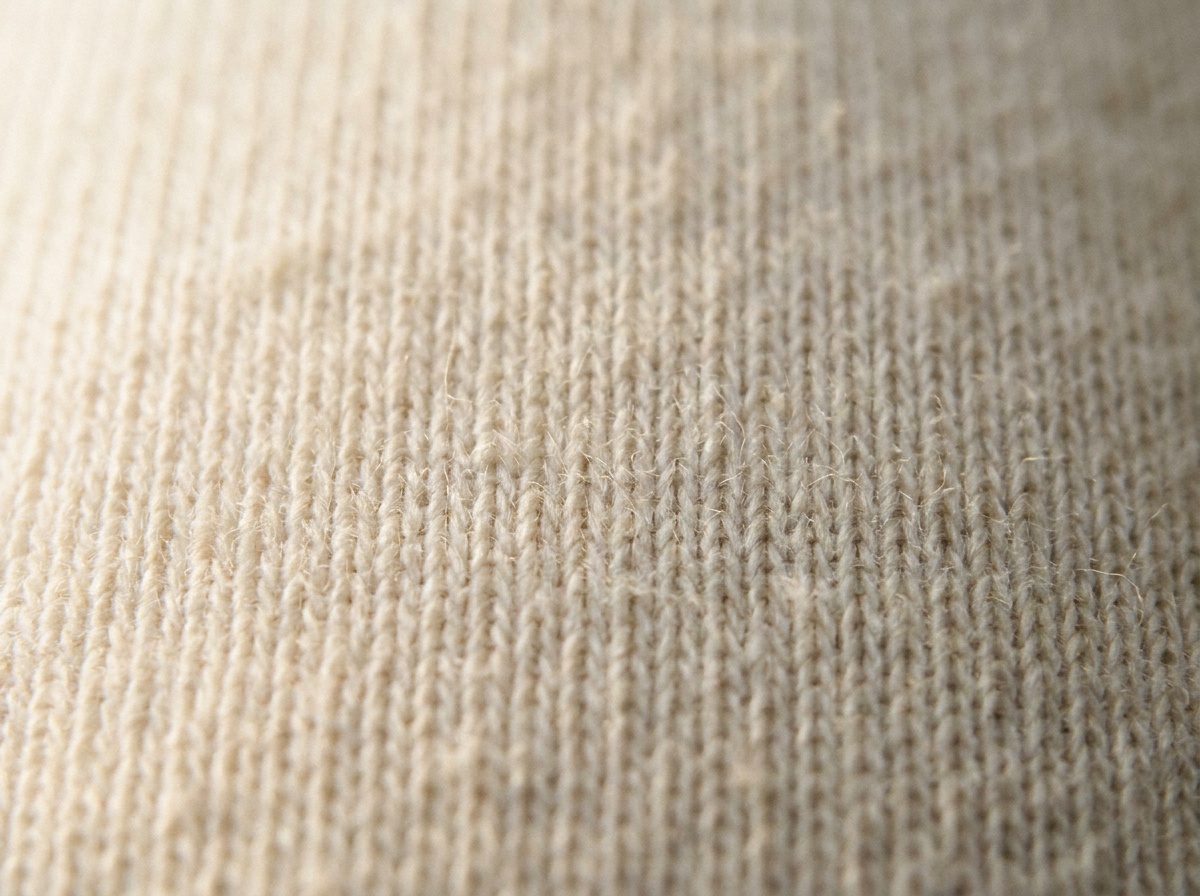
Jersey is a knit, not a weave: a single continuous yarn is looped through itself row after row, the way hand knitting works but done by machine at much finer gauge. That loop structure is why jersey stretches in both directions and has a distinct right side (smooth vertical columns of loops) and wrong side (horizontal bumps). Typical garment-weight cotton jersey runs 140 to 220 g/m², with lighter weights used for t-shirts and heavier weights for sweatshirts and structured knit dresses.
Because it's built from loops rather than crossed threads, jersey has natural give without any elastane at all, though most modern jersey adds a small percentage of elastane for better recovery after stretching. It doesn't fray at a cut edge the way a woven does, which is convenient, but it can curl at raw edges and run (ladder) if a loop breaks, the same failure mode as a knit sweater. It drapes rather than holds a crisp line, so pressed pleats and sharp edges don't work on it the way they do on a woven.
Jersey needs a ballpoint or stretch needle (a sharp needle can pierce and break the loops instead of sliding between them) and either a walking foot, a knit-specific stitch, or a serger to keep seams from popping when the fabric stretches. It's the standard choice for t-shirts, underwear, and anything meant to move with the body, and a forgiving first knit project since it doesn't ravel while you're learning to handle it.