Rib Knit
collars, cuffs, waistbands, fitted tops, tanks
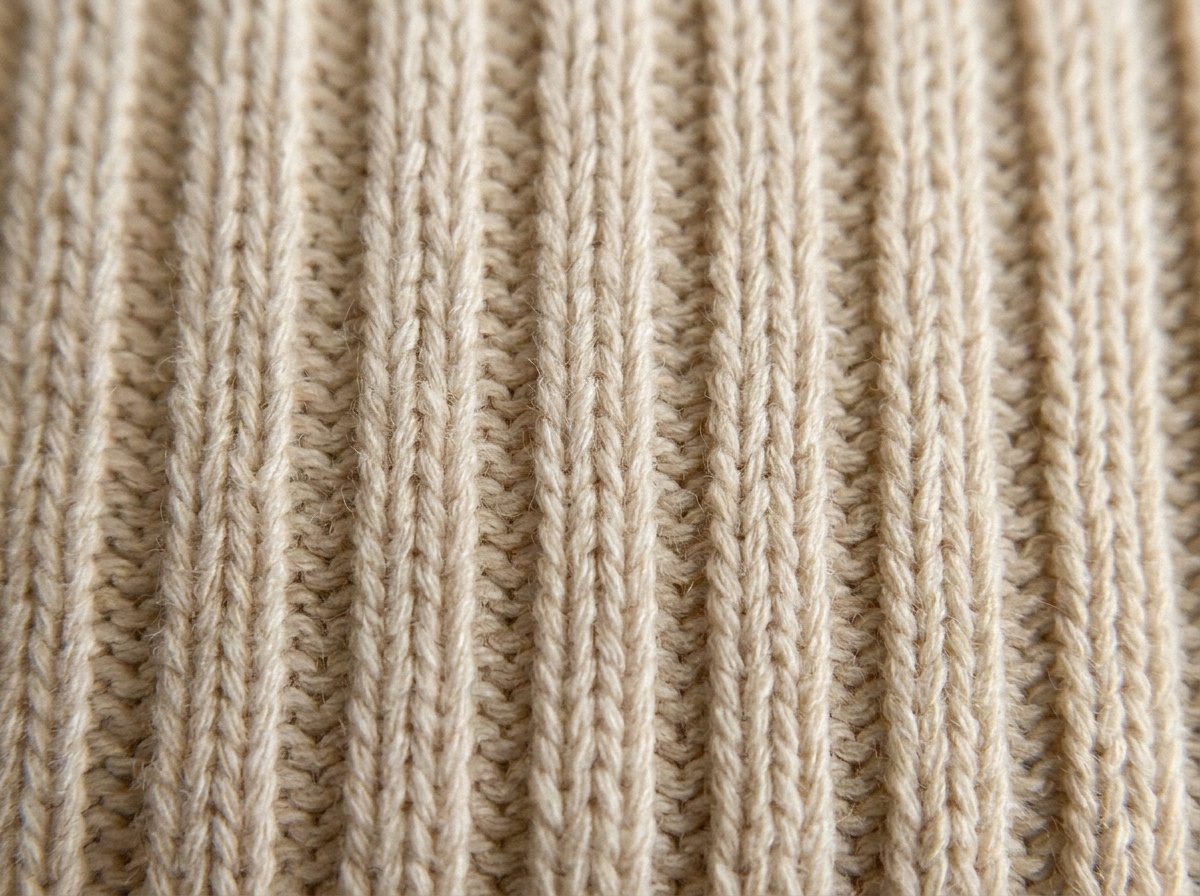
Rib knit alternates columns of knit and purl stitches across the fabric width, instead of the all-knit face of jersey. That alternating structure is what creates the visible vertical ribs and gives rib knit far more crosswise stretch and recovery than plain jersey, since the ribs compress and expand like an accordion. Garment-weight rib knit runs about 180 to 300 g/m², and it's often made with a higher percentage of elastane (up to around 8%) than other knits specifically for that snap-back recovery.
Because both faces of a rib knit look the same (unlike jersey, which has a distinct right and wrong side), it's a natural choice for reversible bands and edges. It stretches significantly in both directions but recovers well, which is why it's the standard for collars, cuffs, and waistbands that need to hug the body and spring back into shape rather than sag. Wider, looser ribs are also used as a main fabric for fitted tops and tank bodies.
Rib knit is the go-to for necklines, cuffs, and hem bands on t-shirts and sweatshirts, and it works as a body fabric for close-fitting tops. It needs a ballpoint or stretch needle like other knits, and bands are usually cut shorter than the opening they're sewn to and stretched slightly while sewing so they pull the edge in and lie flat. It runs (ladders) if a loop breaks, so raw edges need a knit-safe seam finish or a serger.