How to Find Fabric and Yarn Shops That Fit Your Project
Use current regional directories to find fabric, yarn, fibre, haberdashery, artisan, and specialist suppliers, then check the details that matter before traveling or ordering.
Current community-map maintainer notes, association and guild lists, commercial directory funding disclosures, account and correction routes, and Stitch Authority regional evidence records reviewed; no directory completeness, current stock, seller quality, product identity, rights, price, shipping, accessibility, return eligibility, certification, or provider endorsement is established.
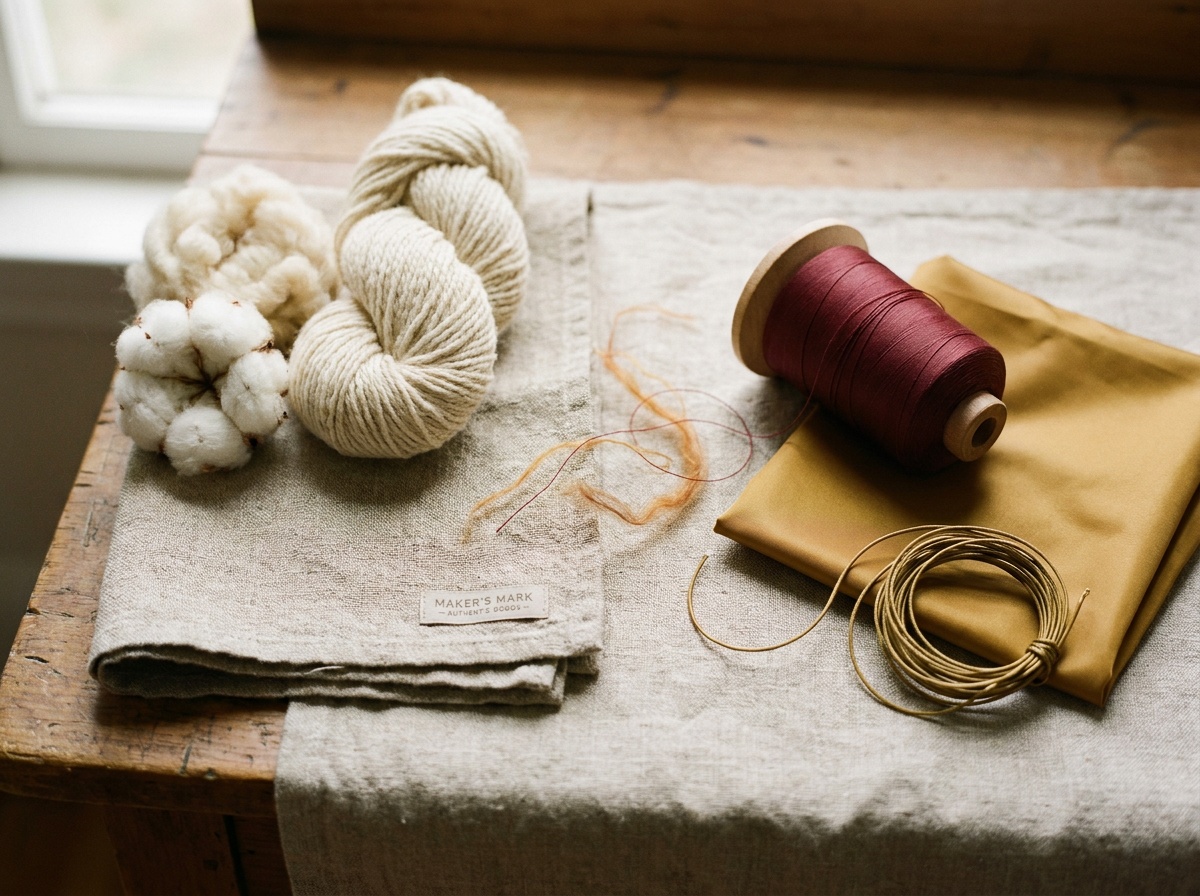
Start with the material and buying job, not a generic search for the “best” shop. Use a current regional directory to make a shortlist, then open the seller's own site and confirm the exact fabric or yarn, minimum cut or quantity, units, stock status, dye lot, swatches, shipping, returns, and opening hours. A directory result proves that someone recorded a shop. It does not prove the shop has what your project needs today.
The hard part is no longer finding one large retailer. It is finding a seller that carries the right type of material, will sell the quantity you need, and can get it to you without a surprise in color, scale, duties, or returns. Community maps and guild directories are often better at surfacing independent shops, but they also depend on corrections. Commercial marketplaces may expose more products, but commissions and premium placement can affect what you see first.
Pick the directory that matches the material
| Garment or mixed-use fabric | Use the r/sewing Fabric Shop Map for location-based discovery. Read each pin because the map does not filter by garment, quilting, upholstery, reuse, or online-only stock. |
| Quilting fabric and services | Use QuiltMap internationally or the Canadian Quilters Association shop list in Canada. These routes also surface guilds, longarm services, repairs, events, or retreats. |
| UK fabric and haberdashery | Use Haberdasheroo to search fabric shops, haberdasheries, yarn shops, suppliers, classes, and online sellers by UK location. |
| Local yarn shop | Use Ravelry's global shop directory if you have an account, the Knitting & Crochet Guild list in the UK, or Take a Yarn Adventure in the United States. |
| Independent yarn or fibre dyer | Use Yarn Database for searchable maker attributes and an EU-specific route, the Knitters' Guild NSW retail list in Australia, or Creative Fibre's merchant directory in New Zealand. |
The r/sewing Fabric Shop Map is the broadest fabric route in this set. In March 2026, the moderators reported reducing more than 4,000 candidate entries to just under 1,500 confirmed locations and reopening a public correction form (maintenance note). It includes more than conventional garment-fabric stores, so read the pin before planning a trip.
QuiltMap currently exposes country routes for the United States, Canada, the United Kingdom, Germany, France, Iceland, Japan, South Korea, and Australia. Basic listings and public search are free, while businesses can pay for enhanced features (about and funding model). In Canada, the Canadian Quilters Association shop list provides a smaller association route with province and territory filters.
Use narrower regional routes for the job they actually do
A guild vendor page, association member list, government artisan catalog, and raw-material supplier association are not interchangeable. The route can still be useful when its constituency and limits are visible.
- South Africa: Good Hope and Jacaranda guild pages surface regional quilt fabric, wool, thread, notions, machines, classes, longarm services, and related vendors. They are participating lists, not national shop censuses.
- Japan: The Japan Hobby Association directory can filter members by sewing, knitting, weaving, quilting, embroidery, retail, online sales, wholesale, manufacturing, and education. Most of the interface is in Japanese.
- Colombia and Mexico: Public cultural directories expose artisan craft, technique, region, organization, and direct-contact routes. They support respectful discovery and collaboration, not anonymous commodity sourcing or supplier approval.
- India: The national handicrafts portal showcases products and sellers across needlework, natural fibre, tribal craft, accessories, and adjacent themes. It is broader than a raw fabric or yarn directory.
- Brazil and Bangladesh: ABRATEX and BANGLACRAFT are industry-member routes for textile raw materials and handicraft production leads. They are more relevant to product teams than ordinary retail makers.
For South Africa, the Good Hope Quilters' Guild record covers Western Cape vendors, while the Jacaranda Quilters' Guild record is concentrated around Gauteng and nearby areas. Both expose useful product and service detail. Neither proves that a listed shop is still open, carries today's stock, or is appropriate for garment fabric.
The Japan Hobby Association record is a searchable association route rather than a location-first shop map. Its business-type and craft filters can narrow a large mixed list, but retail access, language, shipping, and physical location still need confirmation on the member's own page.
The Artesanías de Colombia record, Original Mexico record, and India handicrafts record are strongest when the job is finding artisans, organizations, specialist techniques, cultural craft products, or a starting contact. Direct access should increase care, not reduce it. Ask who owns a design, what collaboration and reproduction are permitted, who is represented in negotiation, how price was set, what material and process claims mean, and whether the requested quantity or deadline changes the work.
For commercial sourcing, the ABRATEX record provides a small Brazilian raw-material association set and the BANGLACRAFT record provides Bangladesh handicraft manufacturer, exporter, and supplier contacts. Use the Supplier Screening Brief before treating either member list as capability, quality, delivery, traceability, or labor evidence.
For professional continental-European material discovery, the European Flax-Linen & Hemp directory follows one fibre chain across activities, countries, sectors, and know-how. The ATP Portugal platform spans yarn, woven and knitted fabric, dyeing, printing, finishing, and other production stages. When an environmental product-label claim matters, the EU Ecolabel textile catalogue is a separate checking route. None of these replaces a current article specification, sample, order-level traceability, or supplier screen.
An artisan profile or phone number does not grant the right to copy a motif, commission a reproduction, use a community name, photograph a process, or publish a collaboration claim. Discuss authorship, collective or cultural authority, permitted use, attribution, payment, samples, changes, cancellation, and future production explicitly. Use qualified local and legal guidance when rights or power imbalances are material.
Check fabric before you buy
A shop page can say “linen,” “jersey,” or “deadstock” and still leave out the information that changes your project. Before ordering fabric, confirm:
- Fiber content and whether percentages apply to the whole fabric or one component
- Woven, knit, nonwoven, coated, laminated, or other construction
- Weight in GSM or ounces per square yard
- Total and usable width, including whether the listed width includes selvage
- Stretch percentage and direction, plus recovery when stretch matters
- Minimum cut, incremental cut, and whether the unit is a yard, metre, half-metre, fat quarter, remnant, panel, or bolt
- Color name, current lot, print scale, repeat, nap, one-way design, and whether screen color is only approximate
- Swatch availability, fee, size, shipping, and whether the swatch is from current stock
- Care guidance, likely shrinkage, opacity, hand, and any test or certification claim you intend to rely on
Use the Fabric Weight Converter when listings use different units, the Fabric Yardage Calculator for an early estimate, and the Cloth Library to compare material families. A product page and swatch still outrank a generic fabric-family description for the actual purchase.
Deadstock can make unusual or lower-quantity material accessible, but the seller may not know the complete upstream history and the same article may never return. Ask how the composition was established, whether the quantity is all one lot, how defects are handled, and whether you can reserve enough for recuts before treating a one-off fabric as reproducible.
Check yarn and fibre before you buy
Yarn shopping adds a different set of failure points. Confirm the maker's stated weight category, metres or yards per unit, grams or ounces per unit, fibre blend, ply or structure, care, suggested gauge, needle or hook range, colorway, and dye lot. Calculate project quantity from length, not the number of balls alone, because put-ups vary.
For hand-dyed yarn, ask whether skeins are ready to ship or dyed to order, whether the listing photo shows one batch, and whether alternating skeins is recommended. For fleece and spinning fibre, confirm preparation, breed or blend, weight, wash state, vegetable matter, dye method, and whether the photo is the exact item or a representative batch. YarnSub can compare substitution characteristics, but it cannot confirm current inventory or make two dye lots match.
Ravelry's Local Yarn Shop Directory connects shop records with declared yarn brands, but search requires a free account and shop owners maintain their own records. The Knitting & Crochet Guild publishes a UK map and regional list with ordering, group, workshop, and discount information where supplied. Take a Yarn Adventure provides state-by-state United States lists, mobile shops, a map, and a correction route.
For direct makers, Yarn Database provides searchable yarn, fibre, accessory, designer, and location attributes with an explicit accessibility policy. It is individually curated and intentionally prioritizes off-Ravelry routes; supporters can receive rotating priority placement. Australia's Knitters' Guild NSW retail list and New Zealand's Creative Fibre merchant directory are useful association paths for yarn, fibre, dyes, spinning, weaving, tools, and workshops.
Know how the list makes money
The business model is decision metadata. It does not automatically make a directory bad, but it changes what inclusion and order may mean.
- Community map: volunteers or users add and correct records. Breadth can be excellent; verification and category consistency can vary.
- Association member list: the business usually joined or paid the organization. The list can be current and specific, but it is not the whole market.
- Free basic plus paid enhancement: every business may claim a basic record while paid members receive more features or visibility.
- Affiliate or marketplace model: the platform may earn from a click, booking, or sale. Search results and editorial picks may have commercial influence.
- Individually curated directory: one person applies a stated method and correction policy. The perspective is useful and necessarily selective.
Haberdasheroo is a clear example: the UK directory is free to browse, business listings have no monthly fee, and the platform says it earns through affiliate relationships and commissions on marketplace sales or bookings. That disclosure is useful. It still means you should separate “listed,” “featured,” and “best for my project.”
Confirm before traveling
For a physical shop, check its own website or contact it on the day you plan to visit. Confirm the location, opening hours, holiday changes, step-free access if needed, parking or transit, whether stock is available to browse, and whether workshops or appointments affect floor access. Ask whether the shop carries garment fabric, quilting cotton, upholstery, yarn, fibre, notions, machines, or only a narrow specialty.
Do not travel because a map pin exists. Several of these directories explicitly invite corrections because shops move, close, change ownership, become online-only, or stop carrying a category.
Confirm before ordering online
Before payment, record the seller identity, item URL, date, material description, quantity and unit, currency, tax, shipping, delivery estimate, duties or import charges, return conditions for cut goods, cancellation rule, and what happens when stock is short. Take a screenshot or save the order confirmation when a claim or specification matters.
Cut fabric is often subject to narrower returns than uncut consumer goods. Custom-dyed yarn, clearance, remnants, and made-to-order products may also have special terms. Read the seller's current policy rather than assuming a directory or marketplace policy covers the purchase.
When the directory has no answer
Use a specific search string that combines material, use, location, and buying unit:
cotton interlock jersey 200 gsm by the metre Manchester
non-superwash wool yarn fingering local shop Chicago
quilting cotton online shop ships within Canada
Then check the seller against the same fields above. A precise independent shop found through search is not less valid than one in a directory; it simply needs the same identity, stock, terms, and correction checks.
If a useful shop is missing or a listing has aged, use the source directory's correction route and submit the same evidence to Stitch Authority. The hub improves when corrections have a URL, a specific changed fact, and a check date rather than a vague recommendation.
FAQ
Does directory inclusion mean a shop is trustworthy?
No. It usually proves only that a shop was added by an owner, member, curator, or community contributor. Check the seller identity, current site, policies, material details, and independent evidence appropriate to the amount you are spending.
Is a local shop always more expensive than an online seller?
Not necessarily. Compare the same material, unit, usable quantity, shipping, tax, duties, swatch cost, returns, and the value of seeing color and hand in person. A lower listed price can cost more after waste or shipping.
Should I buy extra fabric or yarn?
Usually allow for shrinkage, matching, nap, mistakes, swatching, and lot continuity, but the amount is project-specific. Use the pattern layout or project length, check usable width or meterage, and keep dye-lot or batch information with the leftover material.
What if the seller does not offer swatches?
Decide whether the uncertainty is acceptable for the price and project. Ask for a small cut, a current-lot photo with scale, or clearer specifications. For expensive or fit-sensitive work, another seller with sample access may be the lower-risk choice.
Material-seller discovery, shortlist, and purchase-evidence record
Use directories to discover candidates, then verify the seller, exact material, buying unit, current terms, and project decision at the seller's own source.
Nothing entered here is saved or sent.
Project buying job
Define the material and transaction before searching for a shop.
Discovery route
Record why a listing exists and what it can prove.
Seller identity and current access
Move from directory evidence to the seller's current source.
Exact material or service
A shop category is not a product specification.
Comparable transaction
Normalize the complete purchase rather than one headline price.
Comparison and decision
Keep a rejected candidate useful and auditable.
Receipt, correction, and reuse
Close the evidence loop after the listing handoff.
Sources and decision boundaries
- The r/sewing Fabric Shop Map and its March 2026 maintainer update support a broad, corrected community-map route; they do not provide a uniform fabric-use taxonomy or seller assessment.
- QuiltMap's about page discloses basic and enhanced listing structure for its international quilting route.
- The Knitting & Crochet Guild shop list, Knitters' Guild NSW retail-member directory, Creative Fibre New Zealand merchant directory, and Canadian Quilters Association shop list support participating association routes, not national censuses.
- Ravelry's shop directory, Take a Yarn Adventure, and Yarn Database expose different account, correction, curation, and commercial models.
- Haberdasheroo discloses affiliate and marketplace functions alongside UK discovery.
This guide and record do not verify or endorse a seller, artisan, directory, product, service, price, claim, certification, rights position, labour practice, quality, accessibility, delivery, return eligibility, privacy practice, or project fit. A listing supports discovery only. Verify current identity, access, material, lot, unit, terms, rights, and evidence with the responsible source before travel, payment, collaboration, production, or publication.