Ripple Stitch
a chevron pattern of peaks and valleys made by increasing at points and decreasing at valleys across each row
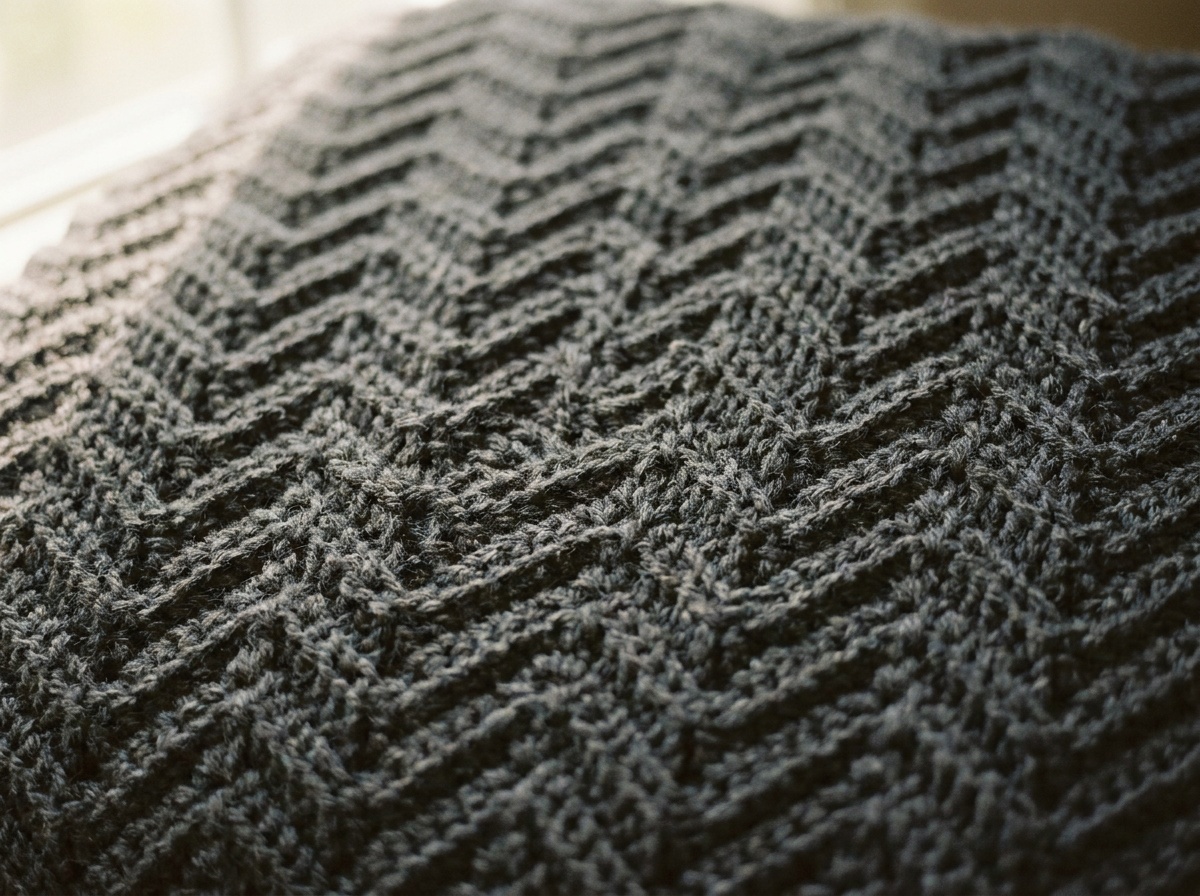
Ripple stitch (also called chevron stitch) is not a single stitch but a pattern built from basic stitches (usually double crochet or single crochet) arranged to peak and dip across a row. Extra stitches worked into one point create a peak, and stitches skipped or worked together at another point create a valley, and repeating that rhythm across the row produces the zigzag "ripple" look classic in afghans.
There's no single abbreviation for ripple stitch since it's a pattern, not a stitch, and it's built from whichever base stitch the pattern specifies. Refer to that base stitch's own US/UK abbreviation (for example dc/tr) when reading a ripple pattern.
How to work it
- Work a multiple of the stitch count the pattern specifies, since ripple patterns repeat in blocks (commonly 12 to 16 stitches per repeat).
- At each peak point, work 3 stitches into the same stitch (an increase) to push the fabric upward.
- Work straight across the "sides" of the zigzag in your base stitch as normal.
- At each valley point, skip a stitch or work 2 or 3 stitches together (a decrease) to pull the fabric down.
- Repeat the peak-side-valley-side sequence across the row, then repeat the same pattern on every row to keep the zigzag stacking vertically.
- Change yarn colors at the start of a row for a striped ripple effect, a common way this pattern is used.
When to use it
Use ripple stitch for blankets, afghans, and scarves where a zigzag or chevron pattern is the point, especially in multi-color yarn. Because the increases and decreases happen at fixed points in every row, ripple patterns are less forgiving of a miscounted stitch than a plain rectangle worked in one stitch, so check your stitch count at the end of each row.