Crocodile Stitch
layered V-stitch scales worked in fan shapes over a foundation row, giving a scaled, dimensional texture
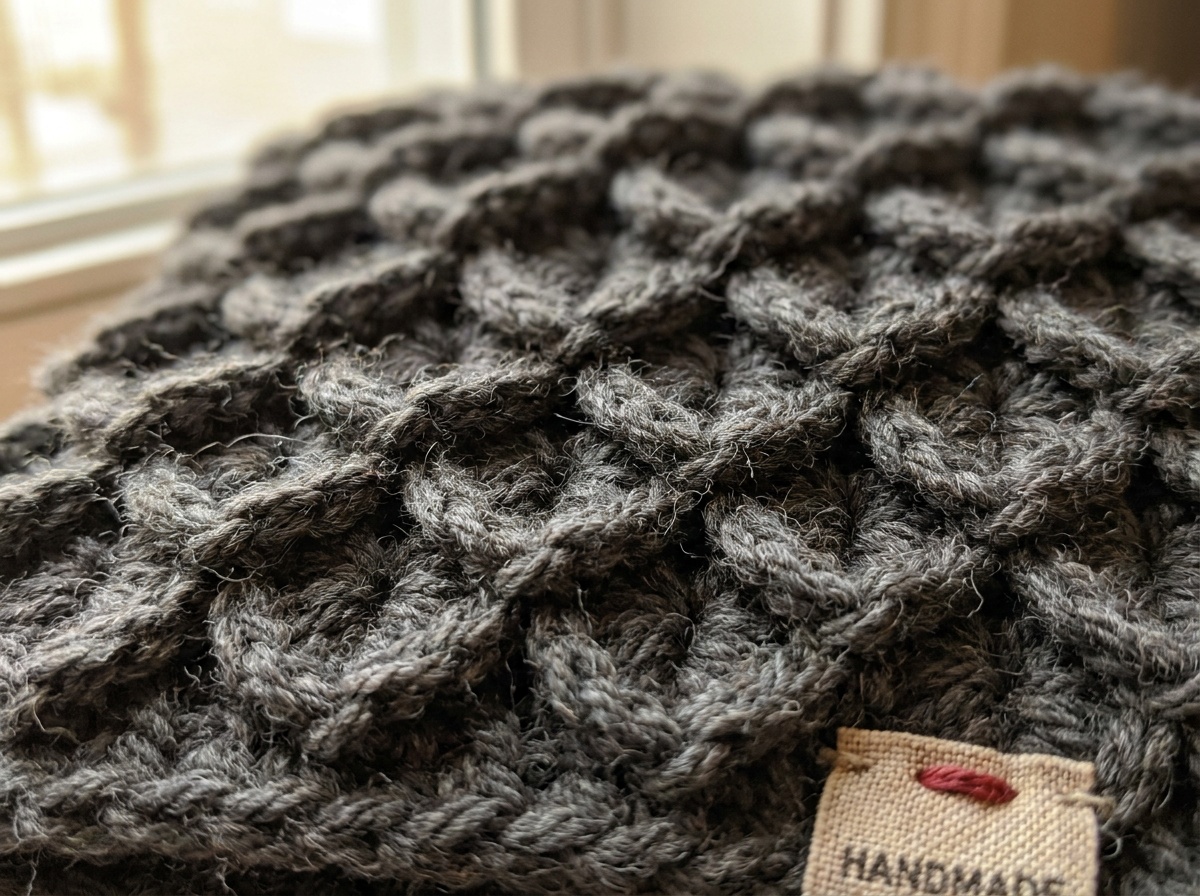
Crocodile stitch builds overlapping scales out of double crochet V-stitches worked in fans over a foundation of chain spaces. Each scale is made by working several double crochets down one side of a V-stitch post and back up the other, and the next row of scales is worked over the foundation in a brick-like offset, so the scales stack and overlap like reptile skin or fish scales. It's slower and more yarn-hungry than a plain stitch, and mostly used where texture is the whole point of the project.
There's no single abbreviation for crocodile stitch since it's a compound technique built from V-stitches and double crochets rather than one named stitch. Patterns spell out the stitch counts in full rather than abbreviating the technique itself.
How to work it
- Work a foundation row of V-stitches (a double crochet, chain 1, double crochet, all worked into the same stitch), spaced evenly across the row, with a chain between each V-stitch.
- To start a scale, turn your work and work double crochets down one side of the post of a V-stitch, working around the post rather than into a stitch top.
- At the base of the post, turn again (without cutting yarn) and work the same number of double crochets back up the other side of the same V-stitch's post.
- Skip to the next V-stitch and repeat step 2 and 3 to build the next scale.
- Continue across the row until a scale has been worked over every V-stitch in the foundation.
- For the next row of scales, work a new row of V-stitches into the chain spaces between the scales below, offset from the row before, then repeat the scale-building steps over the new V-stitches.
When to use it
Use crocodile stitch for statement pieces where a scaled, dimensional texture matters more than speed: scarves, shawls, mermaid-themed appliques, and market bags. It uses significantly more yarn and time per square inch than any plain stitch, so it's rarely used for full-size blankets or garments.