Yarn Weights Explained: The 0-7 Standard Chart
The Craft Yarn Council's 0-7 system in one table, plus how to read wraps per inch when a yarn has no label at all.
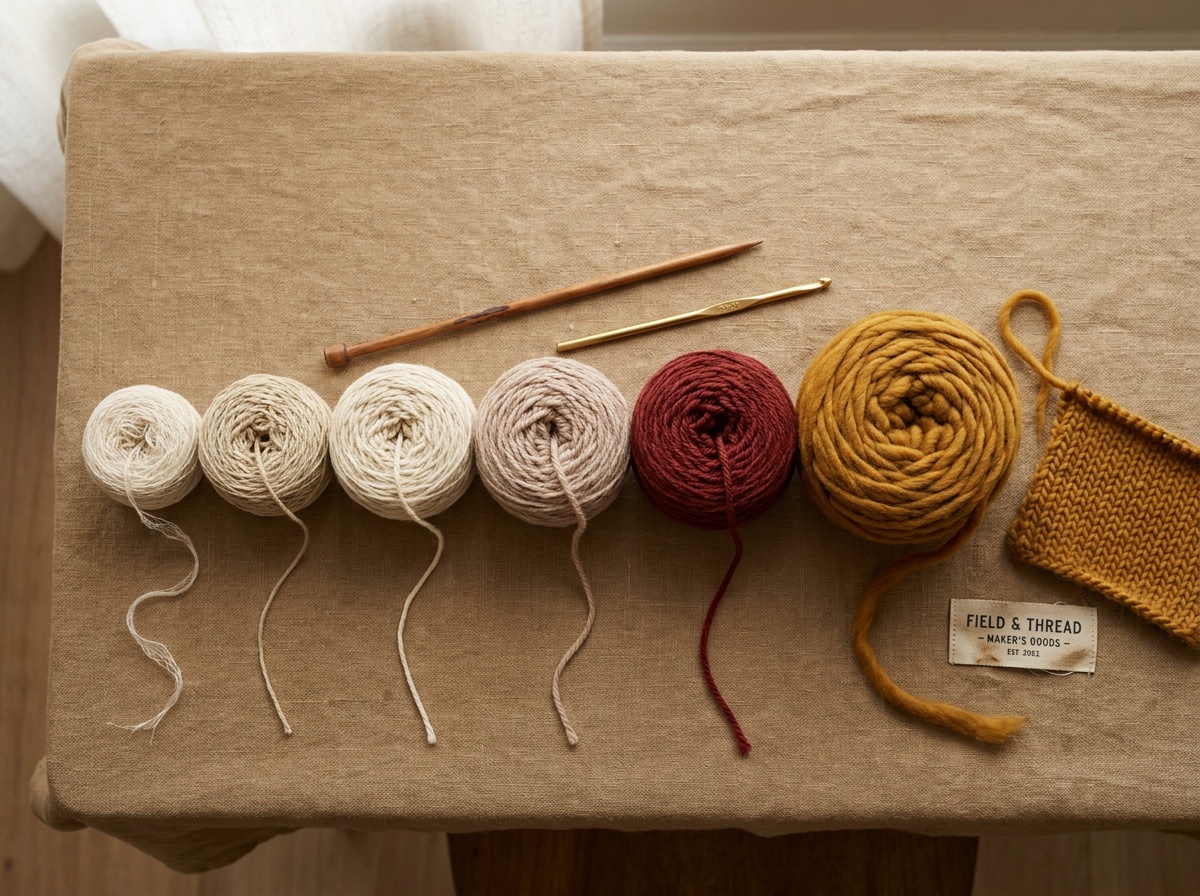
Yarn weight is a number from 0 to 7 that tells you how thick a yarn is, from 0 (lace) to 7 (jumbo). The Craft Yarn Council's Standard Yarn Weight System assigns each number a gauge range, a needle or hook size range, and a set of common names. The number describes thickness only, not fiber or quality.
Pattern says "worsted." Your yarn label says "aran." Are they the same? The Craft Yarn Council's 0-7 system settles this. Every major yarn maker, needle maker, and pattern publisher uses the same numbered bands, so once you know the number, the name stops mattering.
The 8 standard yarn weights
This is the full range, straight from the Craft Yarn Council. Match a yarn's gauge to a row and you know its number, its needle size, and its most common names.
| 0 · Lace | 33–40 sts/4" · US 000–1 · 1.5–2.25mm |
| 1 · Super Fine | 27–32 sts/4" · US 1–3 · 2.25–3.25mm |
| 2 · Fine | 23–26 sts/4" · US 3–5 · 3.25–3.75mm |
| 3 · Light | 21–24 sts/4" · US 5–7 · 3.75–4.5mm |
| 4 · Medium | 16–20 sts/4" · US 7–9 · 4.5–5.5mm |
| 5 · Bulky | 12–15 sts/4" · US 9–11 · 5.5–8mm |
| 6 · Super Bulky | 7–11 sts/4" · US 11–17 · 8–12.75mm |
| 7 · Jumbo | 6 or fewer sts/4" · US 17+ · 12.75mm+ |
| 0 · Lace | Fingering, 10-count crochet thread · 32–42 sc/4" |
| 1 · Super Fine | Sock, fingering, baby · 21–32 sc/4" |
| 2 · Fine | Sport, baby · 16–20 sc/4" |
| 3 · Light | DK, light worsted · 12–17 sc/4" |
| 4 · Medium | Worsted, afghan, aran · 11–14 sc/4" |
| 5 · Bulky | Chunky, craft, rug · 8–11 sc/4" |
| 6 · Super Bulky | Super chunky, roving · 7–9 sc/4" |
| 7 · Jumbo | Roving · 6 or fewer sc/4" |
The Craft Yarn Council's own lace-weight crochet gauge (32-42) is measured in double crochet, while every other row on its chart is measured in single crochet. That's the source's inconsistency, not a typo here. Treat the lace crochet figure as a rougher comparison than the rest of the row.
What wraps per inch tells you
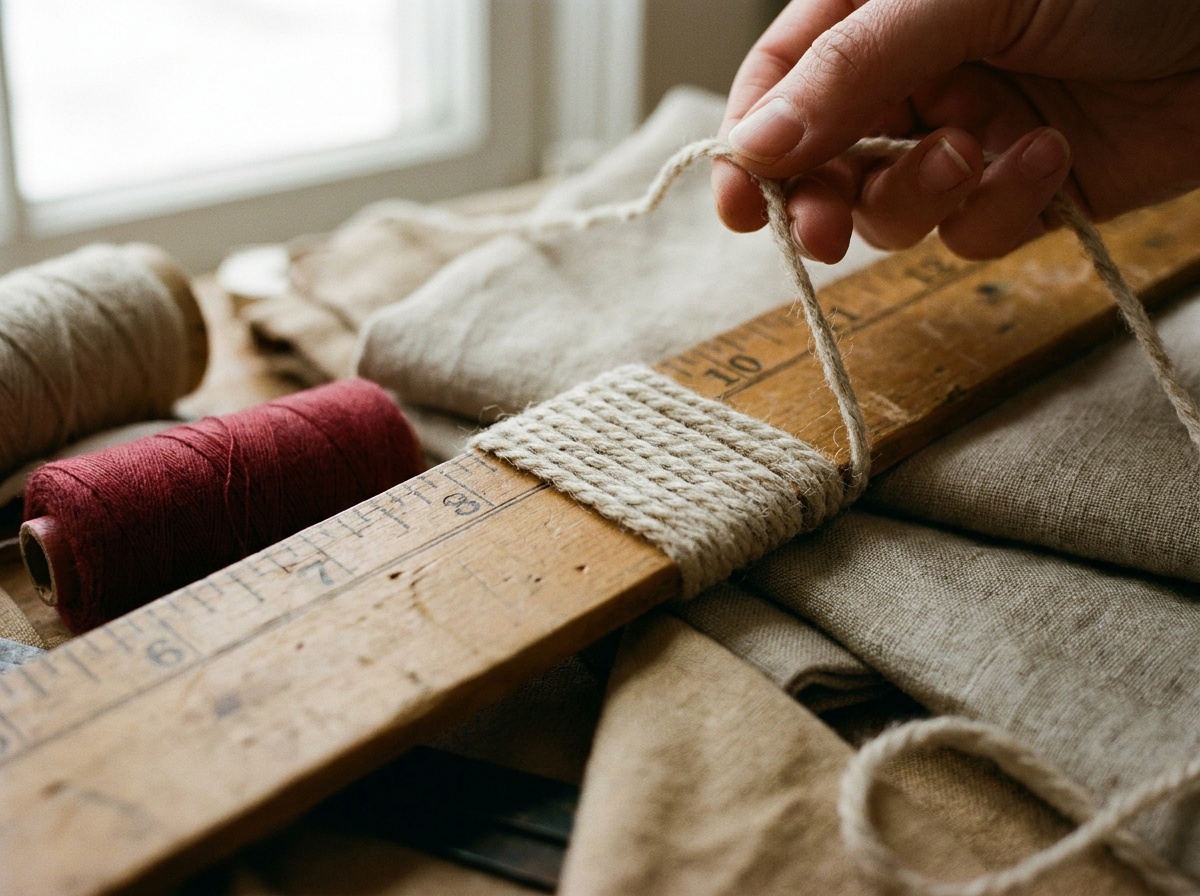
Wraps per inch, or WPI, is a way to identify a yarn that has lost its label. Wrap it snugly around a ruler, no gaps and no stretching, and count how many wraps fit in one inch. Compare the count to the chart below to find the closest weight band.
| 0 · Lace | 30–40+ WPI |
| 1 · Super Fine | 14–30 WPI |
| 2 · Fine | 12–18 WPI |
| 3 · Light | 11–15 WPI |
| 4 · Medium | 9–12 WPI |
| 5 · Bulky | 6–9 WPI |
| 6 · Super Bulky | 5–6 WPI |
| 7 · Jumbo | 1–4 WPI |
WPI is a hand measurement, not a manufacturing spec, and the Craft Yarn Council says so on its own WPI page. How snugly you wrap changes the count. Use it to narrow down a mystery yarn to a likely band, then knit a swatch and check it against the gauge range before you commit to a full project.
Matching weight to a pattern
When a pattern names a yarn weight, match the gauge band, not the name. "Worsted," "aran," and "afghan" all sit in band 4, but yarns sold under those names can still differ slightly in drape and put-up depending on the brand. If you're substituting one yarn for another, knit a gauge swatch in both and compare stitch counts before you start the actual piece. The number on the label is a starting point, not a guarantee.
Some yarn is also sold by ply count instead of a weight name, mostly in the UK, Australia, and New Zealand. Ply doesn't appear on the Craft Yarn Council's own chart, since it's a regional convention rather than a US manufacturing standard, but the common mappings are 2-ply and 3-ply to lace or super fine, 4-ply to fine, 8-ply to medium, and 10-ply to bulky. Treat these as approximate, and check gauge if the pattern gives one.
Is DK the same as light worsted?
They sit in the same band, number 3, with a gauge of 21-24 sts/4". DK is the UK term and light worsted is the US term for the same weight class, but individual yarns sold under either name can still vary slightly by brand.
What yarn weight is aran?
Aran falls in band 4, Medium, alongside worsted and afghan yarn, with a gauge of 16-20 sts/4". The Craft Yarn Council doesn't give aran its own number. In practice it tends to sit at the firmer end of that band.
Does yarn weight tell you the fiber content?
No. Weight describes thickness and gauge only. A wool, an acrylic, and a cotton yarn can all carry the same weight number and behave completely differently in the finished fabric, the same way GSM in woven fabric says nothing about fiber.
How do I find the weight of an unlabeled yarn?
Wrap it around a ruler to get a wraps-per-inch count, then compare that count to the WPI chart above to find the closest band. Confirm with a gauge swatch before starting a project, since WPI narrows down a range rather than pinning an exact number.