What Does a Technical Designer Do? (vs a Fashion Designer)
The technical designer, the fashion designer, and the pattern maker do three different jobs, and knowing where each one starts and stops keeps you from hiring the wrong person.
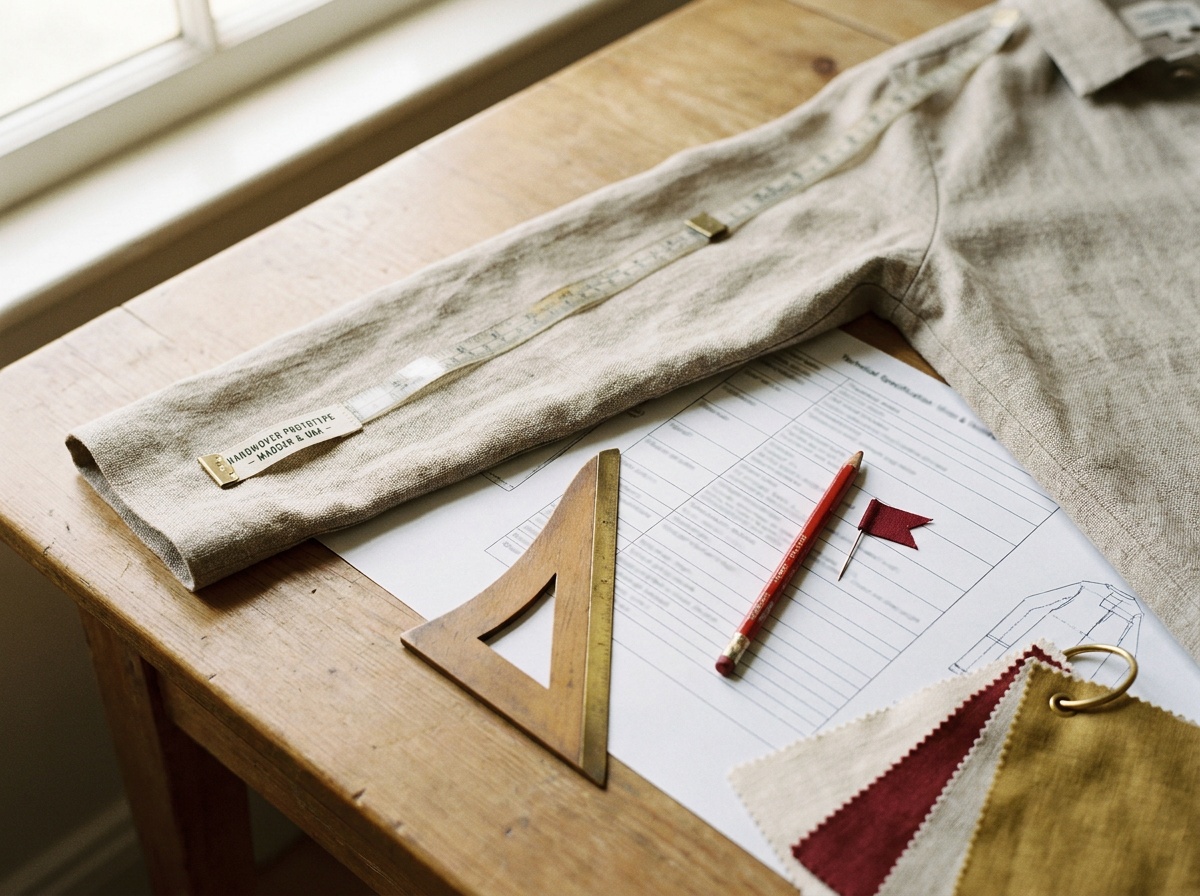
A technical designer turns a design concept into a production-ready spec and owns fit and construction accuracy through sampling. A fashion designer sets the concept, silhouette, and aesthetic direction but doesn't typically build the measurement grid or run fit sessions. A pattern maker builds the physical pattern and executes grading against the technical designer's fit notes. The three roles form a chain, not a set of overlapping jobs, and at a small DTC brand one person or one contractor often covers all three.
If you're hiring your first technical hire and the job postings all sound the same, that's because most role descriptions in this industry are written as HR templates, not as an explanation of what happens between a sketch and a shipped garment. Here's where each role starts and stops.
What a technical designer does
The technical designer is the point of contact between the design side and the factory or pattern maker on everything measurable: fit, construction, and tolerance. Industry references describe the role as the engineer of the design. The fashion designer decides what a garment should look and feel like. The technical designer decides how it gets built to match that, consistently, across every size.
In practice, a technical designer:
- Converts a designer's sketch or mood direction into a technical flat, a proportionally accurate line drawing with construction detail called out
- Builds and maintains the tech pack, including the point-of-measure grid and tolerances
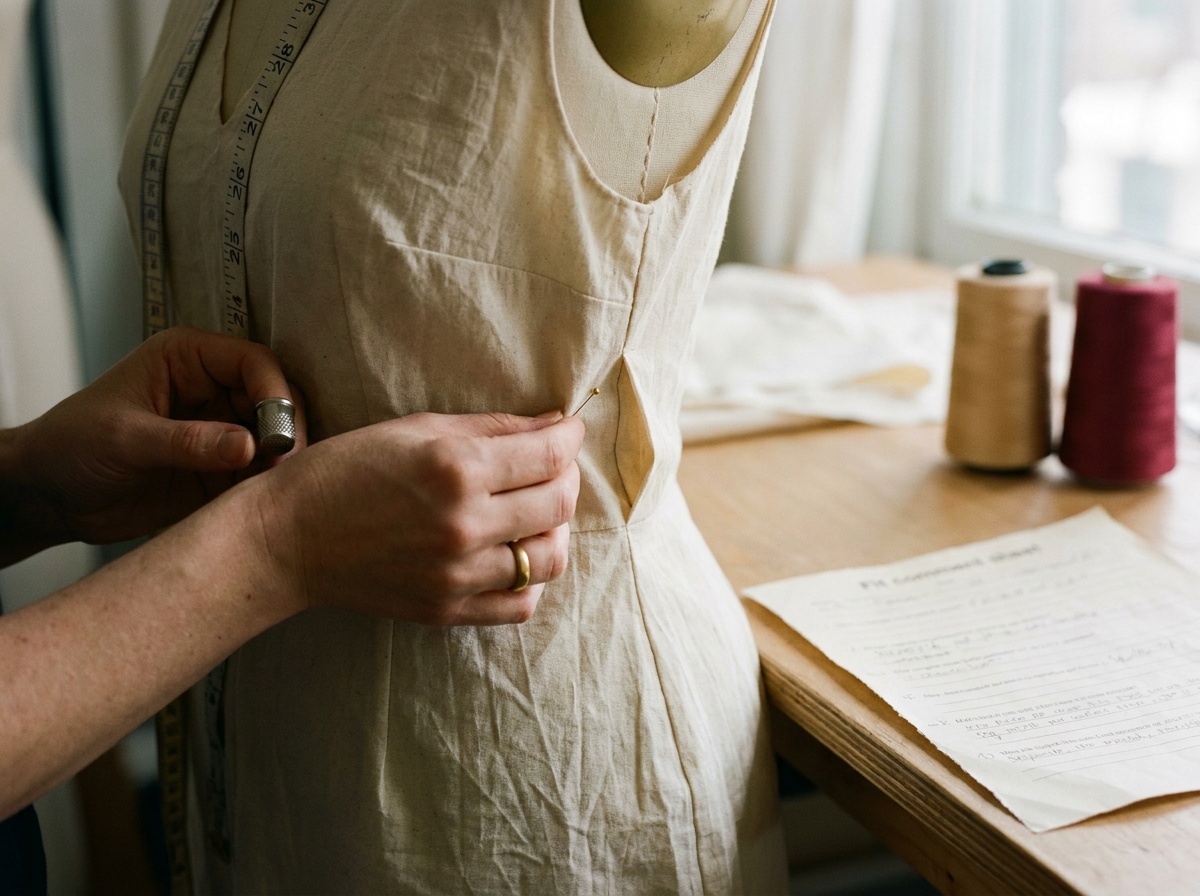
- Runs fit sessions on a form or fit model, marks up a fit comment sheet, and calls each sample pass, reject, or revise
- Writes the fit revisions back to the pattern maker or factory (take in here, let out there, adjust a grade rule)
- Sets the grading logic so the size range scales consistently, even though a pattern maker or factory usually executes the grading itself
- Tracks samples through each sampling stage and signs off at each gate before the next stage starts
- Works primarily in Illustrator or Photoshop for flats and spec sheets, and in a tech pack or PLM platform (Techpacker and BeProduct are common at smaller brands; Gerber AccuMark, Optitex, or Lectra Modaris more common in-house at larger companies)
What a fashion designer does instead
The fashion designer sets the "what" and the "why": trend direction, silhouette, color and fabric story, the initial sketch or mood board. That's a creative and merchandising function, not a measurement function. A fashion designer typically hands off to technical design once the concept is locked, and may sit in on a fitting for an aesthetic call (does this read right, does this line sit where it should) without owning the tolerance decisions or the grade rule.
What a pattern maker does instead
The pattern maker is the hands-on construction role. Given a spec and a fit direction, the pattern maker drafts or drapes the base pattern, marks internal construction detail directly on the pattern (notches, grainlines, dart legs, pocket and placket placement), and executes grading across the size range according to the grade rules the technical designer has set. After each fit session, the pattern maker revises the block per the technical designer's notes. A pattern maker doesn't typically write the tech pack or manage vendor communication; that person executes against someone else's spec.
The chain, in order
| Primary focus | Fashion designer: concept and aesthetic. Technical designer: fit and construction accuracy. Pattern maker: the physical pattern and grading. |
| Owns the tech pack | Technical designer, working from the fashion designer's initial concept sketch |
| Runs fit sessions | Technical designer |
| Builds the pattern | Pattern maker, by draft or drape |
| Executes grading across sizes | Pattern maker, against grade rules the technical designer sets |
| Talks directly to the factory on construction | Technical designer |
| Typical software | Illustrator and a spec or PLM tool for the technical designer; Gerber, Optitex, or Lectra for the pattern maker |
| At a small DTC brand | Often one person, or one freelance contractor, covers all three roles |
Read the table as a sequence: concept moves from the fashion designer to the technical designer, who sets the spec and fit standard, and the pattern maker builds and grades against that standard. None of the three roles substitutes for another. A job posting that bundles all three into one title tends to describe a role that nobody with the right background will apply to.
Where each role touches the sampling process
The core sampling sequence runs roughly: a proto or development sample to validate the pattern and construction logic, a fit sample to dial in fit and drape, a size-set sample to confirm the grade rule holds across the full size range, a pre-production sample to lock construction and fabric before bulk cutting, and a sales sample used for wholesale selling rather than fit accuracy. The technical designer typically signs off at each gate; the pattern maker or factory executes the pattern work and grading behind each stage. Some companies add a stage before proto or fold size-set into pre-production, so treat this as the consistent core rather than a fixed universal count. For more on what goes into the documents that drive this process, see What Is a Tech Pack?.
How someone becomes a technical designer
There's no single required credential. Common paths include a bachelor's degree in fashion design, apparel or textile technology, or apparel engineering; a patternmaking or draping certificate; or moving internally from a design assistant or sample coordinator role and picking up spec and fit responsibility over time. Illustrator fluency for flats and Excel for spec sheets are close to universal expectations. Beyond that, larger companies tend to standardize on Gerber AccuMark, Optitex, Lectra Modaris, or TUKAcad for pattern and grading work, while smaller and mid-size brands are more likely to use a tech pack platform like Techpacker or BeProduct, sometimes alongside CLO 3D or Browzwear for virtual fit review.
On pay, salary aggregators disagree enough by methodology that a single number isn't reliable. Across current aggregator data, entry-level roles tend to land around $50,000 to $65,000, and senior or lead roles in major markets run $90,000 to $110,000 or more, with the wider range shaped heavily by market and company size rather than a single standard scale.
Who reports to whom
Organizational structure varies by company size and isn't consistent enough to state as a rule. At some houses, technical design reports into the design team under a design director. At others, it reports into production or operations, and the technical designer functions as a peer to the fashion designer rather than a subordinate. Neither structure is more correct; it depends on how a given company splits creative and operational ownership.
Work with a technical designer.
Hiring your first technical designer, or trying to figure out if you need one at all versus a freelance pattern maker? A short conversation upfront can save a wrong hire.
Can one person be the fashion designer, technical designer, and pattern maker?
Yes, and at small DTC brands this is the norm rather than the exception. One person or one freelance contractor commonly covers all three functions. The roles stay conceptually distinct even when one person is doing all of them, which is why it helps to know where each responsibility starts and stops.
Do I need a technical designer if I'm working with a full-package factory?
Often yes, at least in a limited capacity. A full-package factory may have its own pattern maker and technical staff, but someone still needs to own your fit standard, review samples against your spec, and catch construction issues before bulk production. Without that, you're relying entirely on the factory's judgment for decisions that affect your product.
Is a technical designer the same as a technical designer at a corporate retailer versus a startup?
The core responsibilities are the same, but the scope differs. At a large retailer, a technical designer usually works within an established PLM system, a defined size range, and a dedicated pattern-making team. At a startup, the same title often absorbs pattern-making, vendor sourcing, and production coordination that would be split across several people at a bigger company.
Reviewed by Karolyn, Technical Apparel Designer · kellyhouse.studio