Natural vs Synthetic Fibers: What the Difference Means for Your Fabric
Natural and synthetic fibers behave differently because of where they come from. Here's how to tell them apart and pick the right one for a project.
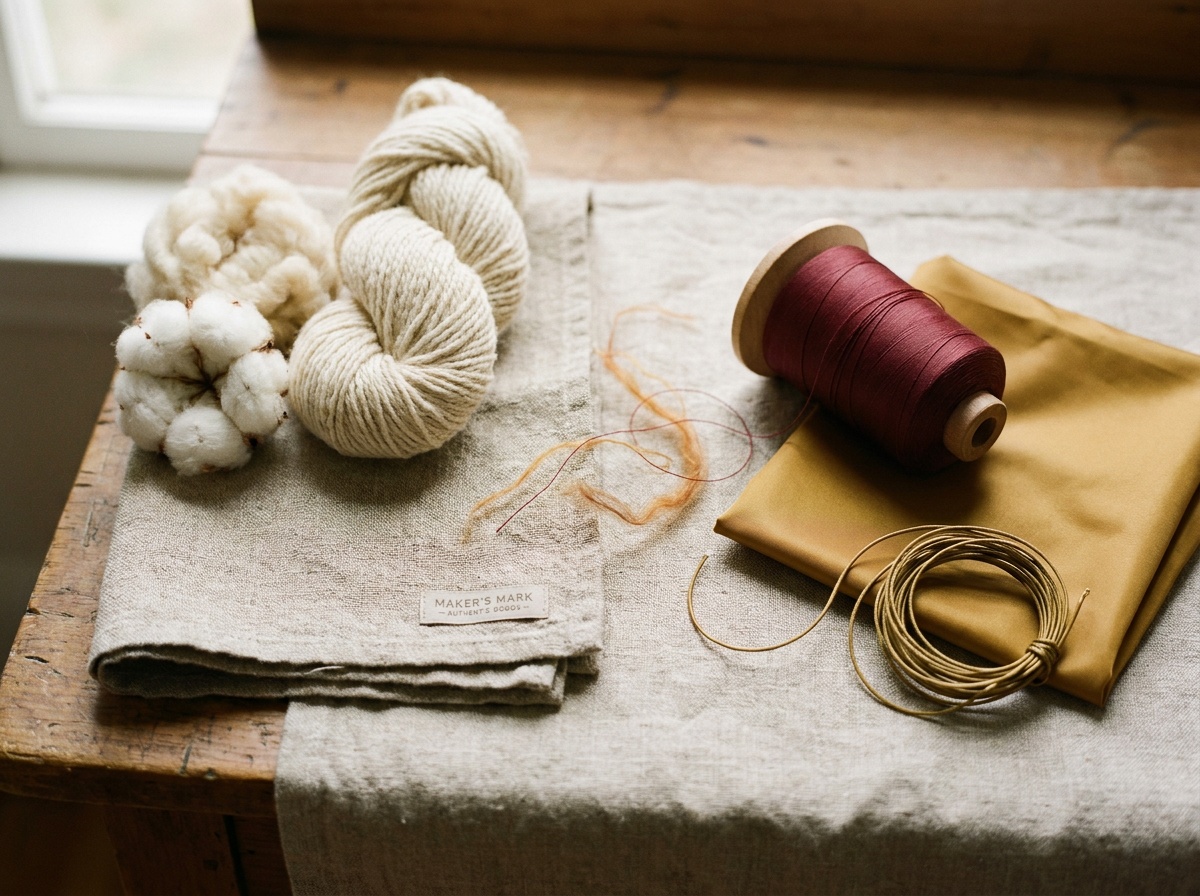
Natural fibers come from plants (cotton, linen, hemp) or animals (wool, silk). They breathe, absorb moisture, and biodegrade, but they wrinkle, shrink, and cost more. Synthetic fibers (polyester, nylon, acrylic, spandex) are made from petroleum-based polymers. They resist wrinkling and shrinking, dry fast, and cost less, but trap heat, hold odor, and shed microplastics when washed. Most fabric on the market blends the two to get a specific result, like cotton-spandex for a woven that stretches. The right choice depends on what the finished piece needs to do.
A fiber's origin decides almost everything else about it: how it feels against skin, how it ages, how it washes, and what it costs. Once you know which family a fabric comes from, its behavior stops being a surprise.
What makes a fiber natural or synthetic
Natural fibers are grown, not manufactured. They split into two families by source:
- Plant (cellulose) fibers: cotton (from the seed), linen and hemp (from the stem), jute and ramie (bast fibers from the stem as well)
- Animal (protein) fibers: wool, alpaca, mohair, and cashmere (from fleece), silk (the filament a silkworm spins for its cocoon)
Synthetic fibers are built from chemistry, not agriculture. True synthetics like polyester, nylon, acrylic, and spandex are spun from petroleum-based polymers, defined and regulated under the US FTC's Textile Fiber Products Identification Act, which sets the generic fiber names required on labels.
There's a middle category makers often miscategorize: semi-synthetic fibers like rayon, viscose, modal, and lyocell (Tencel). These start from plant cellulose, usually wood pulp, but go through heavy industrial processing to become fiber. So-called "bamboo fabric" is almost always this kind of processed rayon, not a fiber spun directly from bamboo. Viscose drapes and feels like a natural fiber but is manufactured like a synthetic one.
If a label says "rayon," "viscose," "modal," or "lyocell," the fiber started as a plant, but the manufacturing step means it doesn't behave like raw cotton or linen. Expect a semi-synthetic hand and drape, not a natural one.
How the two behave
The clearest, most measurable difference is moisture regain: how many grams of water 100 grams of dry fiber will absorb from the air under standard conditions. It's a real textile-engineering number, and it lines up with how breathable a fabric feels against skin. Natural protein and cellulose fibers sit in the 8.5 to 16% range. True synthetics sit under 2%.
| Wool | 16.0% |
| Jute | 13.75% |
| Flax (linen) | 12.4% |
| Hemp | 12.4% |
| Silk | 11.0% |
| Viscose/rayon | 11.0% |
| Cotton | 8.5% |
| Acetate | 6.0% |
| Nylon | 4.0% |
| Acrylic | 1.5% |
| Polyester | 0.4% |
Higher regain means the fiber absorbs moisture into itself and releases it slowly. Lower regain means the fiber resists absorbing water at all, so moisture stays on the surface or gets pushed along the fabric instead, which is why synthetics wick and dry fast but can feel clammy against skin in humid conditions.
Comparison at a glance
| Breathability | Natural: high. Synthetic: low to moderate, traps heat |
| Moisture handling | Natural: absorbs into the fiber. Synthetic: wicks along the surface, dries fast |
| Wrinkle resistance | Natural: poor, wrinkles readily. Synthetic: good, resists creasing |
| Shrinkage | Natural: prone to shrink or felt with heat and agitation. Synthetic: minimal |
| Stretch recovery | Natural: low, except wool's natural crimp. Synthetic: high, especially with spandex |
| Durability | Natural: silk and wool are delicate, cotton and hemp are sturdy. Synthetic: nylon and polyester resist abrasion well |
| Care | Natural: often hand-wash or dry-clean. Synthetic: mostly machine wash and tumble dry |
| Cost | Natural: generally higher. Synthetic: generally lower |
What each is good for
- Next-to-skin summer wear, heirloom garments: reach for natural fibers. Cotton and linen breathe, and silk drapes in a way synthetics only approximate.
- Activewear, swimwear, anything that needs stretch and quick drying: reach for synthetic or a spandex blend. Polyester and nylon hold their shape wet and dry fast between wears.
- Kids' clothes, everyday workwear, anything that gets hard washing: a blend usually wins. Poly-cotton shirting and cotton-spandex wovens borrow the comfort of natural fiber and the wash-and-wear ease of synthetic.
- Cold-weather knits: wool is warm even damp and self-extinguishes rather than melting near heat, which is why it's still standard for outerwear and socks despite the cost.
The sustainability tradeoff
Neither family is the clear sustainable choice. Natural fibers biodegrade at the end of their life, but growing them, especially conventional cotton, uses significant land, water, and pesticide. Synthetic fibers skip the farming footprint but don't break down the same way and shed microplastic fragments in every wash.
One data point that is well-sourced: a peer-reviewed study (Li, Frey, and Browning, published in the Journal of Engineered Fibers and Fabrics) found cotton fabric lost 50 to 77% of its weight after 90 days of composting, depending on finishing treatment. Most of the "polyester takes 200 years to break down" figures circulating online are industry-consensus estimates repeated across secondary sources, not numbers traced to a single controlled study. Treat them as rough ranges, not lab fact. The direction is consistent: natural fibers return to soil in a season to a few years, synthetics persist for decades or longer.
Is rayon a natural fiber?
Not exactly. Rayon (also sold as viscose) starts from plant cellulose, usually wood pulp, but goes through heavy chemical processing to become fiber. It's classed as semi-synthetic or regenerated cellulose, not a natural fiber in the same sense as cotton or linen.
Which fiber is most breathable?
Wool has the highest moisture regain of common fibers at 16%, followed by jute, linen, and hemp above 12%. Polyester sits at the opposite end at 0.4%, which is why it traps heat and moisture against skin compared with natural fibers.
Can you tell natural from synthetic by burning a thread?
A burn test is a real identification method taught in textile courses: natural cellulose fibers like cotton and linen burn steadily and smell like burning paper, wool and silk singe and smell like burning hair, and synthetics like polyester and nylon melt, curl away from the flame, and smell chemical. It's a rough field test, not a lab-grade one, and blended fabrics can give mixed results.
What's the most durable fiber for everyday wear?
Nylon and polyester resist abrasion better than most natural fibers, which is why they're common in blends for sock heels, activewear, and hard-wearing linings. Cotton and hemp are the sturdiest natural options.