MOQ Explained: Minimum Order Quantities for Small Brands
What a factory's minimum order quantity covers, why it's set per style and per color, and the levers that bring it down.
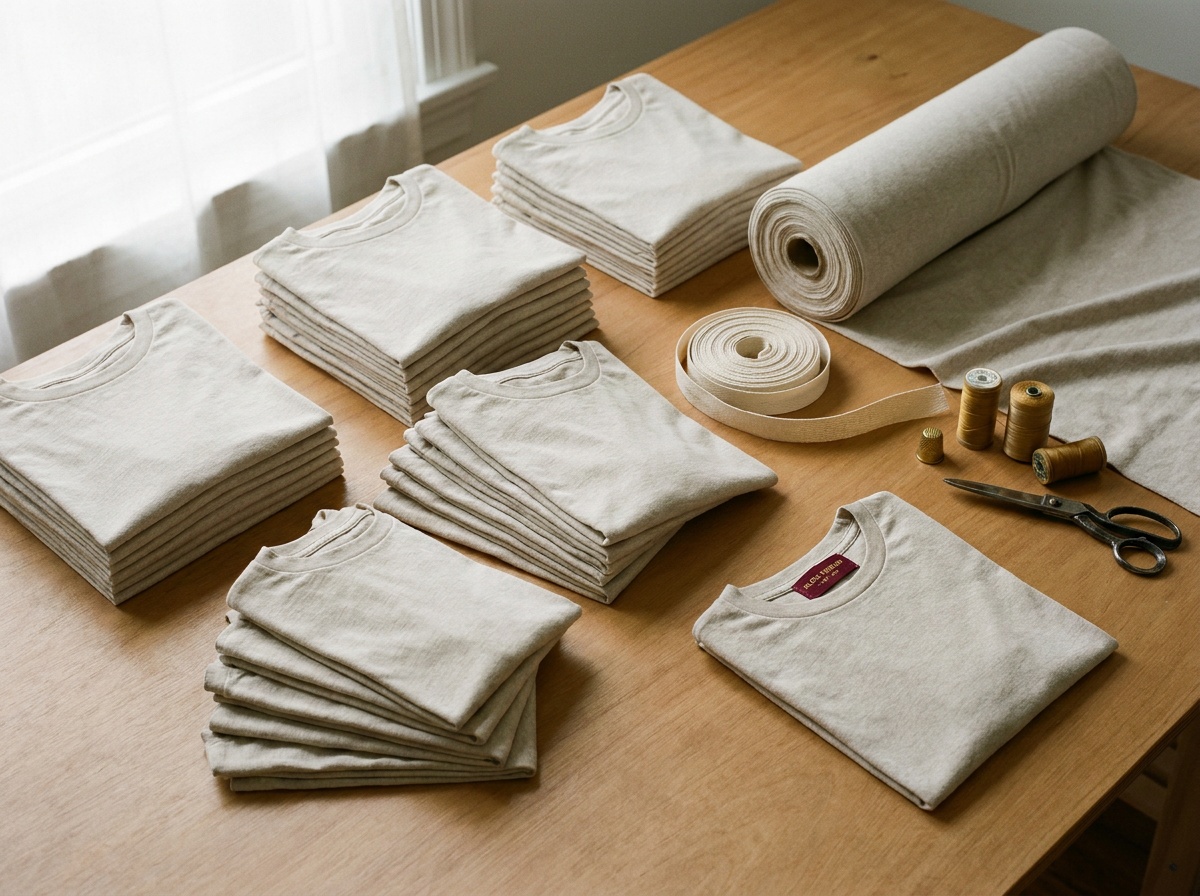
MOQ (minimum order quantity) is the smallest quantity a factory or supplier will accept for one production order. In apparel, it is set per style, per colorway, not as one combined number across an order. A factory quoting "MOQ 200" means 200 units of one style in one color, and a brand ordering three colors of the same shirt is usually looking at three times that minimum. A separate, often larger minimum sits upstream at the fabric mill, and the two minimums stack.
Most first-time founders hear "MOQ" and picture a single gate to get through. There are two: the factory's minimum to cut and sew, and the mill's minimum to produce the fabric in a given color. Knowing which one is blocking you determines whether the fix is a design change or a fabric change.
Why factories set a minimum
Two separate cost drivers push a factory toward a minimum order, and they don't move together.
Factory-side fixed costs. Pattern making and grading, marker making, machine setup and changeover, sample development, and the labor time to plan a cutting run cost roughly the same whether the order is 20 units or 2,000. A factory needs enough units in the run to spread that fixed cost across, or the per-unit price stops making sense for either side.
Upstream minimums passed down. Fabric mills and trim or label suppliers set their own minimums, and a factory cannot buy less fabric than its mill allows. That constraint becomes the factory's floor regardless of how small a brand's order is. A factory that would otherwise happily cut 80 units may still require 300, because that's what it takes to reach the mill's yardage minimum for the fabric and color specified.
Fabric MOQ vs. unit MOQ
This is the distinction most sourcing conversations skip, and conflating the two is the most common way founders misjudge what's achievable.
Unit MOQ is the minimum number of finished garments a factory will cut and sew, per style and per color. This is what most people mean when they say "MOQ."
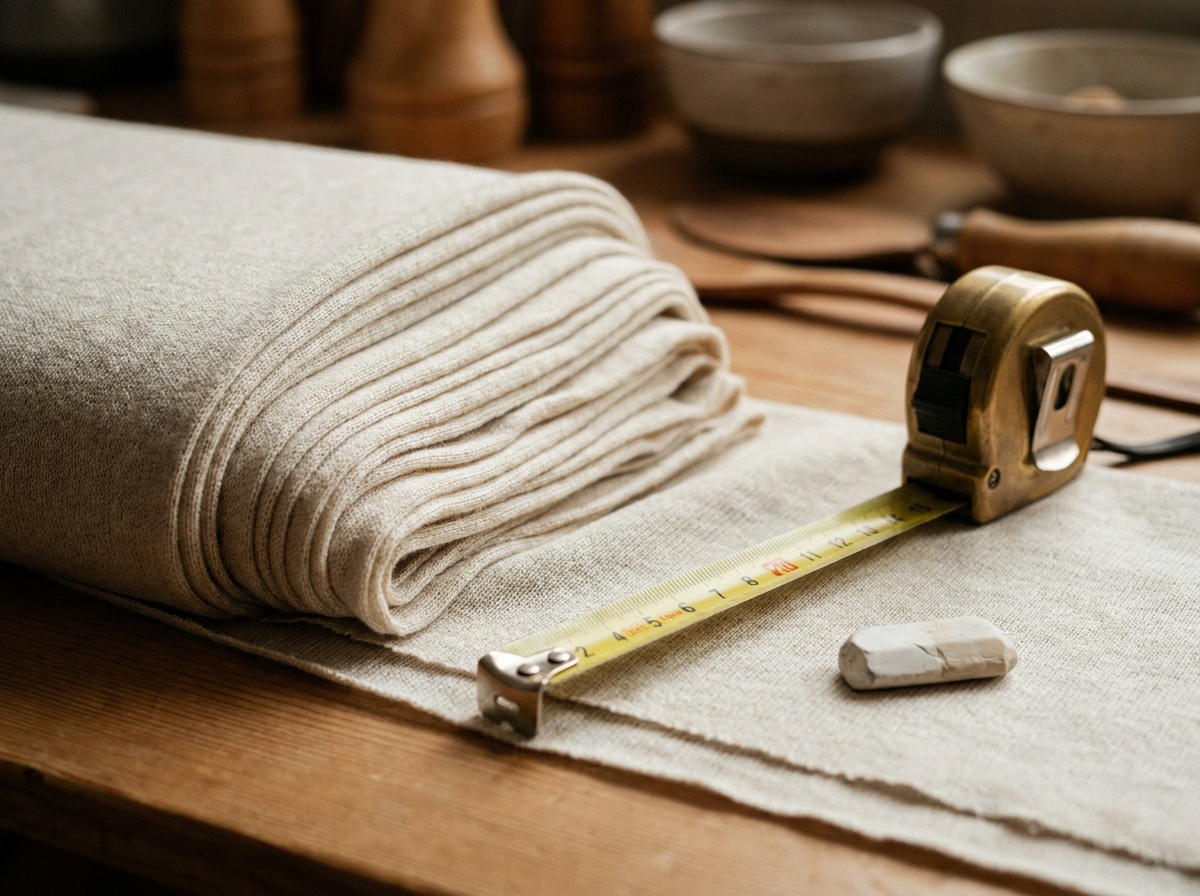
Fabric MOQ is the minimum yardage or meterage a mill will sell of a given fabric quality and color. It's set by the mill, not the garment factory, and it exists independently of anything the factory would otherwise agree to.
| Stock or in-stock fabric | Only the factory's unit MOQ applies, no added mill minimum |
| Custom color, standard fabric | Roughly 500 to 1,000 meters per color, mill minimum |
| Custom color, specialty or printed fabric | Roughly 1,500 to 3,000 meters per color, mill minimum |
| Stockist or jobber fabric | Roughly 50 to 100 meters, priced at a premium over mill-direct |
Treat these as directional ranges. Mills vary by fiber content, weave or knit structure, and region, and exact minimums are negotiated case by case.
A factory can sometimes accept a small unit order, 50 to 100 garments, if the brand uses a fabric already in the factory's stock or sources from a fabric jobber or stockist selling pre-dyed remnant or overrun fabric. That removes the mill's yardage minimum from the equation entirely. Custom colors, custom prints, or a fabric no one else is running push both the fabric minimum and the unit minimum up at the same time. If a target MOQ feels out of reach, check whether the fabric choice is the actual constraint before assuming the factory itself won't go smaller.
Typical MOQ ranges
Ranges vary by factory, region, and product complexity, and any number here should be read as typical, not a rule a specific factory is bound to.
| Small-batch or domestic cut-and-sew | 50 to 150 units per style/color |
| Boutique or low-MOQ specialist factory | 100 to 300 units per style/color |
| Standard mid-size overseas factory | 300 to 600 units per style/color |
| Large-volume overseas factory | 1,000+ units per style/color |
| Trade cutoff for "low MOQ" | Under 500 units per style/color |
| Trade cutoff for "high volume" | Over 5,000 units per style/color |
Product type moves these ranges too. A simple knit t-shirt with no print often clears at 50 to 200 pieces. A hoodie or sweatshirt, with more panels and trims, tends to run 100 to 300. Denim, with more construction steps and more trims per unit, often sits at 200 to 500. Activewear and technical knits are comparable to hoodies, around 100 to 300. These are typical bands, not fixed cutoffs, and a specific factory's quote is the number that matters.
European and boutique factories often quote lower MOQs than large Asian mills, sometimes in the low hundreds, but exact country-by-country figures and per-unit cost breakdowns circulating online are not reliable enough to repeat as fact here. Get a specific quote from a specific factory rather than sourcing decisions from a regional average.
What pushes MOQ up or down
| Custom or dyed-to-order fabric color | Raises MOQ, adds a mill minimum |
| Screen print, sublimation, or embroidery | Raises MOQ, setup cost spread over units |
| Custom trims, hardware, or woven labels | Raises MOQ, supplier minimums apply |
| Complex construction (denim, outerwear) | Raises MOQ, more sewing operations per unit |
| Extended size range | Raises MOQ, more fabric consumption variance to plan for |
| In-stock or greige fabric | Lowers MOQ, no mill minimum added |
| Fewer colorways per style | Lowers MOQ |
| Simple, single-panel construction | Lowers MOQ |
| Small-batch specialist factory | Lowers MOQ |
How to negotiate or lower it
A handful of tactics show up consistently across sourcing conversations, and they mostly trade cost or design flexibility for a smaller run.
- Offer a higher per-unit price for a smaller run. Many factories will go below their stated MOQ if the brand accepts a per-unit premium. The premium varies by factory and isn't a fixed percentage worth quoting as fact, but expect a noticeable increase over the standard-run price.
- Use stock or jobber fabric instead of a custom color or print. This is the highest-leverage move because it removes the mill's minimum, not only the factory's.
- Simplify the design. Fewer colorways, fewer trims, no custom print or embroidery on a first order all lower the floor.
- Look for small-batch or low-MOQ specialist manufacturers rather than large-volume factories: domestic cut-and-sew shops, sample-room-style partners, or marketplaces that filter specifically for low-MOQ makers.
- Combine styles to reach a factory's total-order minimum, where the factory allows blending across styles or colors toward one combined total instead of enforcing the minimum per style.
- Build the relationship. Some factories will lower or waive MOQ on a first small order if the brand shows a credible path to repeat, larger orders.
- Consider a sourcing agent or product-development partner. Their margin or relationship with the factory can sometimes absorb part of the setup-cost risk that drives MOQ up, though this isn't guaranteed and varies by agent and factory.
None of these tactics are free. A lower MOQ almost always means a higher per-unit cost, and it can mean a separate development or sampling fee charged up front. Treat a below-minimum quote as a trade-off to weigh, not a discount.
Print-on-demand and made-to-order models avoid MOQ altogether, since nothing is cut until an order comes in, but that trades away per-unit cost and fulfillment speed. It runs on different economics from cut-and-sew production and is a separate model from what this guide covers.
Work with a technical designer.
Working out which production model puts the fabric MOQ risk on you versus the factory, or whether a quote is competitive for the run size, is easier with someone who reads sourcing quotes for a living.
Production model changes who owns the MOQ
Which production model a brand uses determines whose problem the fabric MOQ is.
| CMT (cut, make, trim) | Brand sources fabric, brand carries the fabric MOQ directly |
| Full-package production | Factory sources fabric, factory MOQ reflects its own mill minimums |
| Private label / ODM | Lowest MOQ path, factory already runs the base pattern and often the fabric |
Under CMT, the brand supplies fabric, trims, and a tech pack, and the factory only cuts and sews. Because the factory isn't sourcing materials, CMT factories often accept lower unit MOQs, but the brand is the one dealing with the mill's fabric minimum. Under full-package production, the factory manages sourcing, patterns, sampling, and bulk production, and its quoted MOQ already includes the mill minimum it has to clear. Private label or ODM, where a brand customizes an existing pre-made style with its own trims and labels, is usually the lowest-MOQ path, since the factory already has the pattern and often the fabric in production for other customers.
Note that FOB (free on board) is a shipping and cost term, not a production model. It marks where cost and risk transfer from factory to buyer, and the trade uses "FOB factory" loosely to mean a quote that bundles fabric, trims, CMT, and delivery to port. It describes pricing and logistics, not who manages sourcing, so it shouldn't be confused with full-package production.
Is MOQ the same for every color?
No. MOQ is typically set per style and per colorway. A factory's stated MOQ of 200 usually means 200 units of one style in one color, so adding colors multiplies the total commitment rather than splitting a single minimum across them.
Can I combine styles to hit one factory's MOQ?
Some factories allow blending multiple styles or colors toward a combined total order minimum instead of enforcing the minimum on each style individually. This isn't universal, so confirm it directly with the factory rather than assuming it.
Does a sourcing agent get me a lower MOQ than going direct?
Sometimes. An agent's relationship with a factory or their own margin can occasionally absorb part of the setup-cost risk that drives MOQ up, but this varies by agent and factory and isn't a reliable guarantee.
What's the smallest MOQ I can realistically find?
Small-batch and domestic cut-and-sew factories commonly quote 50 to 150 units per style/color, and some go lower using stock fabric or simple construction. Below that, print-on-demand or made-to-order models avoid a unit MOQ entirely, at a higher per-unit cost.
Reviewed by Karolyn, Technical Apparel Designer · kellyhouse.studio