Knitting Needle Sizes: Metric, US, and UK Conversion
A full metric-to-US-to-old-UK knitting needle conversion chart, and why the metric millimetre size is the one to trust.
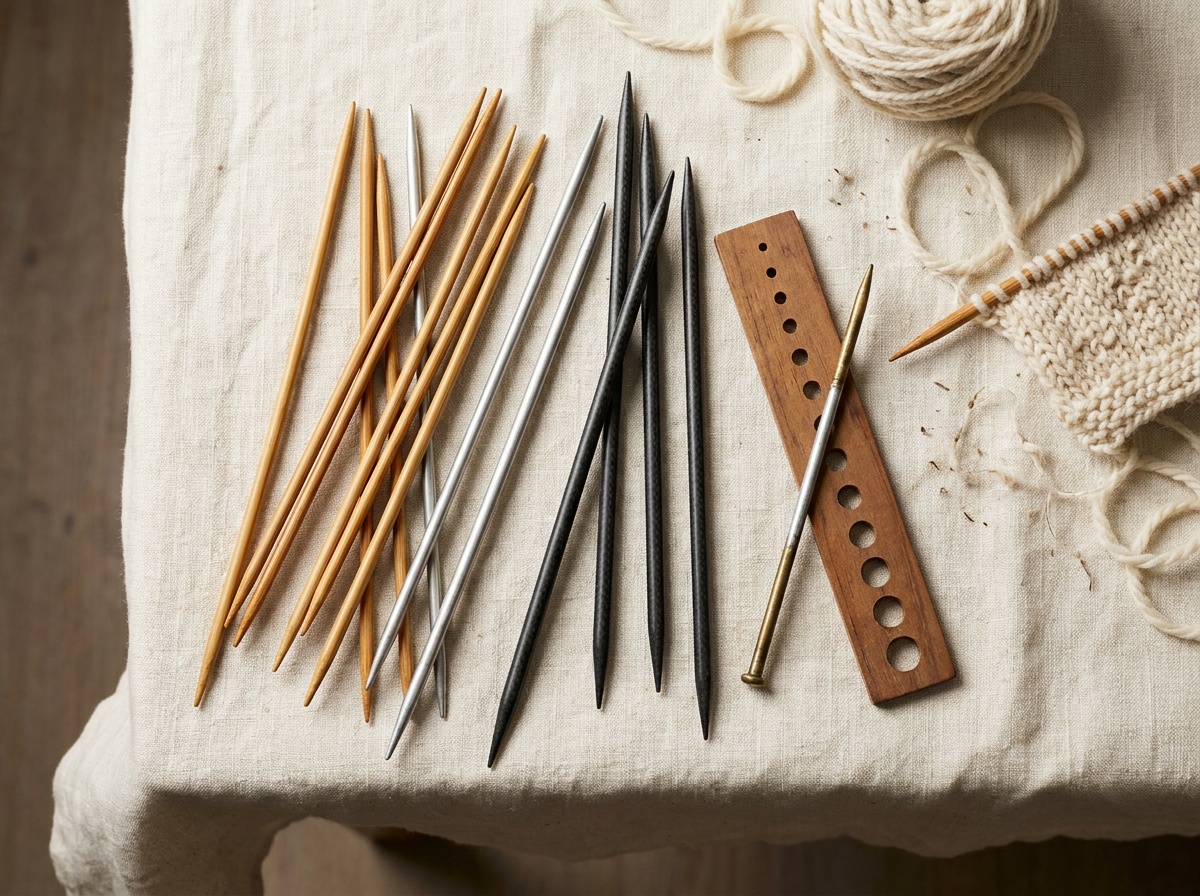
Knitting needle sizes come in three systems: metric (the diameter in millimetres, from about 2.0mm to 25mm), US (numbers that go up as the needle gets thicker, from 0 to 50), and old UK/Canadian (numbers that go down as the needle gets thicker, from 14 to 000). The metric millimetre size is the authoritative one. US and UK numbers are inconsistent between manufacturers and eras, so when a pattern and a needle disagree, trust the millimetre measurement and check your gauge.
A knitting needle's real size is its diameter in millimetres. Everything else is a label sitting on top of that number. US sizing counts up as needles get thicker, the old UK/Canadian system counts down, and neither maps cleanly onto the other or onto metric. That mismatch is the source of most sizing confusion, and it disappears the moment you read the millimetre figure and ignore the rest.
The full conversion chart
| 2.0 mm | US 0 · UK 14 |
| 2.25 mm | US 1 · UK 13 |
| 2.75 mm | US 2 · UK 12 |
| 3.0 mm | US n/a · UK 11 |
| 3.25 mm | US 3 · UK 10 |
| 3.5 mm | US 4 · UK n/a |
| 3.75 mm | US 5 · UK 9 |
| 4.0 mm | US 6 · UK 8 |
| 4.5 mm | US 7 · UK 7 |
| 5.0 mm | US 8 · UK 6 |
| 5.5 mm | US 9 · UK 5 |
| 6.0 mm | US 10 · UK 4 |
| 6.5 mm | US 10½ · UK 3 |
| 7.0 mm | US n/a · UK 2 |
| 7.5 mm | US n/a · UK 1 |
| 8.0 mm | US 11 · UK 0 |
| 9.0 mm | US 13 · UK 00 |
| 10.0 mm | US 15 · UK 000 |
| 12.0 mm | US 17 · UK n/a |
| 15.0 mm | US 19 · UK n/a |
| 20.0 mm | US 36 · UK n/a |
| 25.0 mm | US 50 · UK n/a |
Blanks in the chart are real: some millimetre sizes have no exact US number, and the old UK system stops once needles pass 8.0mm. Where a size is missing, the pattern usually names the nearest available needle instead.
Why the metric size is the one to trust
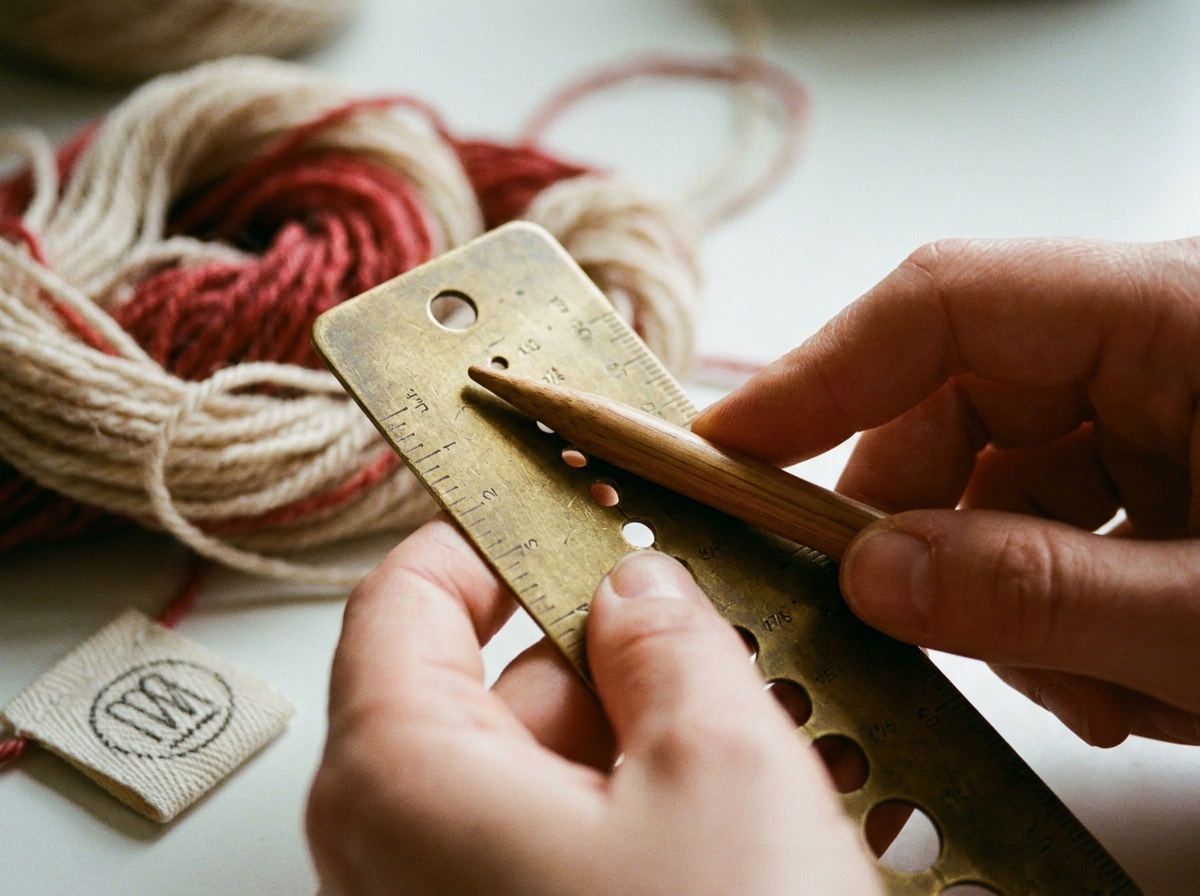
The millimetre figure is a physical measurement of the needle shaft. It means the same thing on a needle made in Tokyo, Toronto, or Texas. The US and UK numbers are naming conventions layered over that measurement, and they were never perfectly standardized.
The classic trap is the two number systems running in opposite directions. In the US system, a bigger number is a bigger needle: a US 10 is thicker than a US 6. In the old UK/Canadian system, a bigger number is a smaller needle: a UK 4 is thicker than a UK 8. Someone raised on one system reads the other backwards. A knitter who thinks "US 15" and reaches for a UK needle marked 15 ends up with the thinnest needle in the case instead of one of the thickest.
If a needle and a pattern disagree, or a vintage needle has no marking you recognize, measure the shaft with a needle gauge. The hole it drops through cleanly, without slop, is its millimetre size. That number settles the argument.
Needle types and when each is used
Needle size and needle type are separate choices. The size sets the fabric; the type sets how you hold and move the stitches. Four types cover almost every project.
| Straight (single-point) | Two needles with a stop at one end. Flat pieces worked back and forth: scarves, dishcloths, blanket panels, sweater backs. |
| Circular | Two tips joined by a flexible cable. Knits in the round for tubes (hats, cowls, sweater bodies) and also handles flat knitting, holding the weight of wide pieces on the cable. |
| Double-pointed (DPN) | Short needles with tips at both ends, used in sets of four or five. Small tubes too tight for a circular: sock cuffs, mitten fingers, hat crowns. |
| Interchangeable | Circular tips that screw onto cables of different lengths. One set covers many size-and-length combinations, so it replaces a drawer of fixed circulars. |
Circulars have absorbed a lot of the work straights once did. Many knitters now use a circular for everything and let the cable hold the stitches, whether the piece is worked in the round or back and forth. Straights still suit short flat pieces and anyone who prefers the feel. DPNs and small circulars both solve small-diameter knitting; which you reach for is preference, though the magic-loop method on a long circular has narrowed the gap.
Material differences
Needles in the same size knit differently depending on what they are made of. The material changes how fast stitches slide and how much control you have.
| Bamboo / wood | Grippy surface that slows stitches down. Holds slippery yarns in place and gives beginners more control. Warms to the hand and flexes slightly. |
| Metal | Fast and slick. Stitches move quickly, which speeds up experienced knitters but lets slippery yarn slide off if you are not watching. Durable and precise at the tip. |
| Carbon fibre | Light and strong with a middle-ground grip: faster than bamboo, less slick than metal. Popular in small sizes where thin metal or wood can bend or snap. |
Match the material to the yarn and to yourself. A slick, plied yarn on metal needles can slide off mid-row, so pair fast yarn with grippier bamboo or wood. A sticky wool that drags on wood moves better on metal. Beginners tend to do best on bamboo or wood, where stitches stay put long enough to work them without a fight.
How size relates to yarn weight and gauge
Yarn weight and needle size are linked. Each weight has a band of needle sizes it was designed for, and patterns and yarn labels both name a suggested range. Heavier yarn wants thicker needles; finer yarn wants thinner ones.
| Lace (0) | 1.5–2.25 mm · US 000–1 |
| Super Fine / sock, fingering (1) | 2.25–3.25 mm · US 1–3 |
| Fine / sport (2) | 3.25–3.75 mm · US 3–5 |
| Light / DK (3) | 3.75–4.5 mm · US 5–7 |
| Medium / worsted, aran (4) | 4.5–5.5 mm · US 7–9 |
| Bulky / chunky (5) | 5.5–8.0 mm · US 9–11 |
| Super Bulky (6) | 8.0–12.75 mm · US 11–17 |
| Jumbo (7) | 12.75 mm and up · US 17 and up |
These ranges are a starting point, not a rule. The number that decides your finished size is gauge: the count of stitches and rows over a 4-inch (10 cm) square. Gauge always overrides the chart. If a pattern's stated gauge asks for worsted-weight yarn at a firmer fabric than the label suggests, you go down a needle size to hit that gauge, even though the size now sits below the yarn's listed band.
Knit a swatch before a fitted project. Work a square larger than 4 inches in the pattern's stitch and needle, wash and block it the way you will treat the finished piece, then measure a clean 4-inch span in the middle. Too many stitches per 4 inches means your fabric is tight, so go up a needle size. Too few means it is loose, so go down.
Gauge matters most on anything fitted: garments, hats, socks, anything worn close to the body. It matters far less on a scarf or blanket, where a fraction of an inch either way changes nothing about whether the piece works. When your needle and the pattern's stated size disagree, match the gauge, not the number stamped on the needle.
Why do US and UK needle numbers run in opposite directions?
They are two separate naming systems built independently. The US system counts up as the needle gets thicker, so a US 10 is bigger than a US 6. The old UK/Canadian system counts down, so a UK 4 is bigger than a UK 8. Neither is right or wrong, but reading one as if it were the other reverses the size, which is why the metric millimetre measurement is the reliable reference.
Which needle size should I use if my pattern only lists a US or UK number?
Convert it to millimetres using the chart, then knit a gauge swatch. The millimetre size gets you to the right starting needle, and the swatch confirms whether that needle produces the pattern's stated gauge. If it does not, change needle size until it does.
Do bamboo and metal needles in the same size knit the same fabric?
The finished gauge should match if the diameter is the same, but the knitting experience differs. Bamboo and wood grip the yarn and slow stitches down, which helps with slippery yarn and beginners. Metal is slick and fast. Many knitters find their personal gauge shifts slightly between materials, which is another reason to swatch on the needles you plan to use.
Can I use a circular needle for flat knitting instead of straights?
Yes. A circular needle works for flat, back-and-forth knitting as well as knitting in the round. You knit a row, turn the work, and knit back, letting the cable hold the stitches. Many knitters use circulars for nearly everything because the cable supports the weight of wide pieces better than straight needles do.