Knit vs Purl: The Two Stitches Everything Is Built From
What the knit and purl stitches are, how they differ, and how combining them makes stockinette, garter, ribbing, and seed stitch.
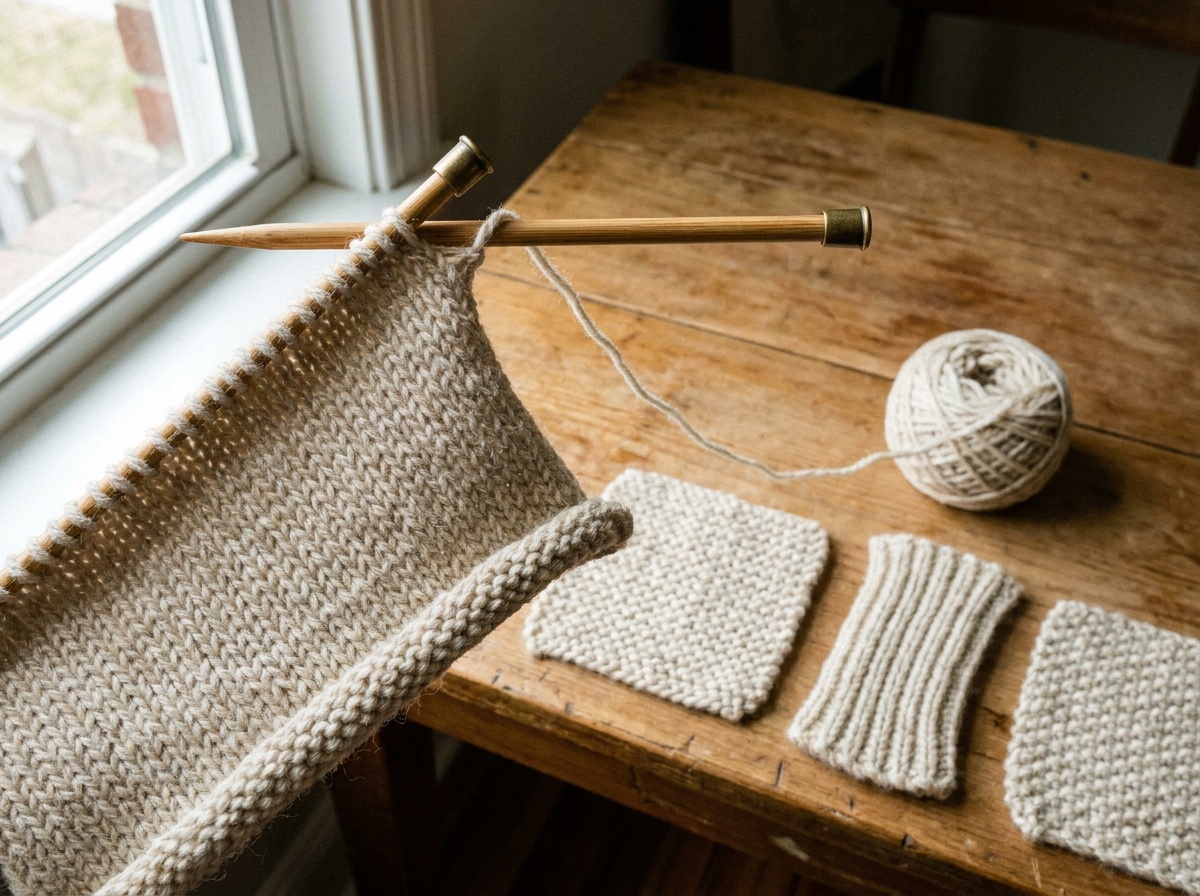
Knit and purl are the only two stitches in knitting, and they are the same motion worked from opposite sides of the fabric. A purl is a knit stitch made from the back: the working yarn sits in front, the needle enters the stitch back to front, and the new loop is pushed through toward you. On the fabric, a knit stitch shows a flat V and a purl shows a horizontal bump. Every knitted pattern, from garter to cables, is some arrangement of these two.
Learn to see the V and the bump, and a knitted fabric stops being a mystery. Stockinette, garter, ribbing, and seed stitch are not four separate skills; they are four ways of ordering knits and purls across rows. Once you can read which stitch is which on the needle and on the fabric, you can read any chart and predict what a pattern will produce before you cast on.
Knit and purl are one motion, two sides
A knit stitch is worked with the yarn held behind the work. The right needle enters the front loop of the next stitch from left to right, the yarn wraps around, and the new loop is drawn through toward the back. The old stitch drops off. The bump that motion creates lands on the far side of the fabric, so the side facing you stays smooth.
A purl is the same action reversed. The yarn is held in front, the right needle enters the stitch from right to left (back to front), and the new loop is pushed through toward you. The bump lands on the side facing you.
| Working yarn | Knit: held in back. Purl: held in front. |
| Needle entry | Knit: front to back, left to right. Purl: back to front, right to left. |
| New loop drawn | Knit: toward the back. Purl: toward you. |
| Bump lands | Knit: on the far side. Purl: on the near side. |
| Face you see | Knit: smooth V. Purl: horizontal bump. |
This is why a purl is often described as a knit worked from the other side. If you knit every stitch of a flat piece, then flip it over, the back of your knit rows is a field of purl bumps. Nothing new was made. You are looking at the reverse of the same stitch.
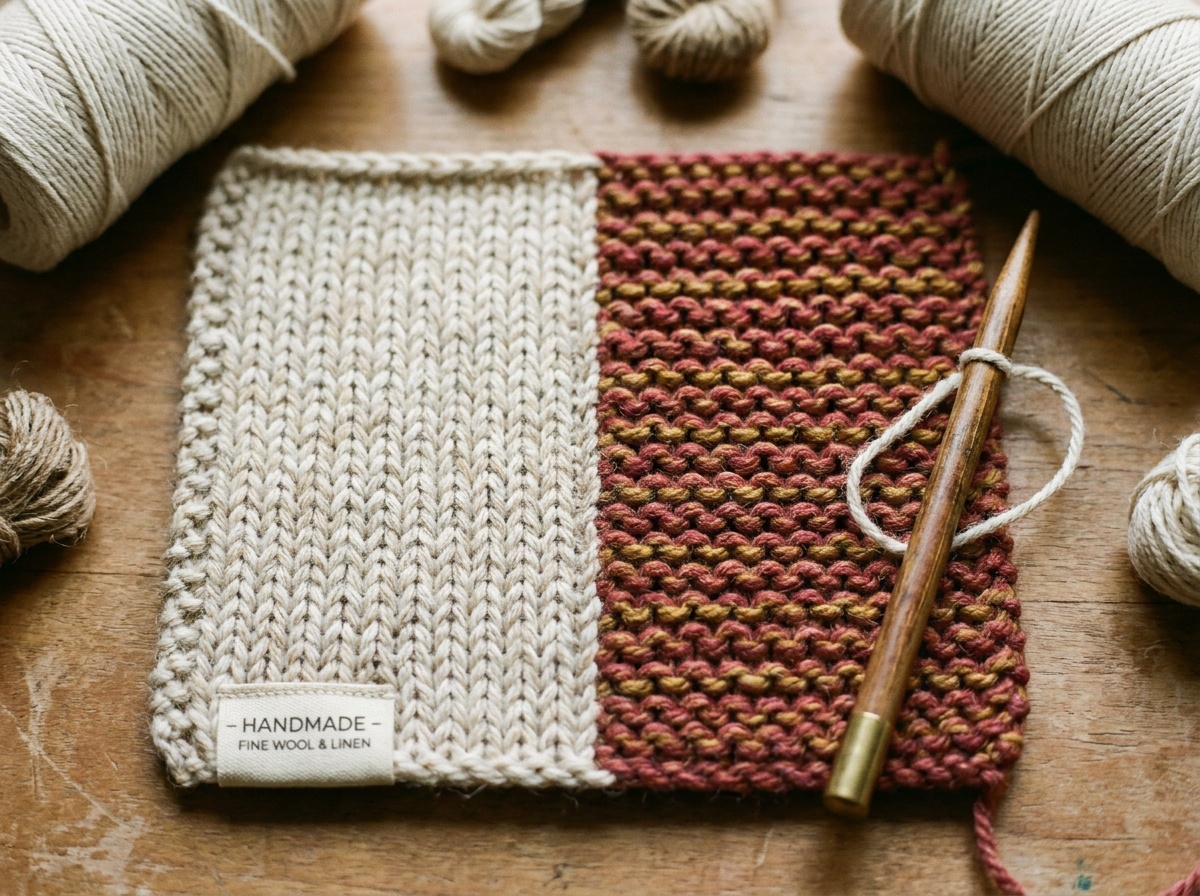
How to tell a knit from a purl on the fabric
A finished stitch has two faces, and each is unmistakable once you know it.
- A knit stitch looks like a flat V, or a stack of Vs running up a column. Smooth and interlocking.
- A purl stitch looks like a horizontal bump or a small dash sitting across the column, like a grain of rice laid sideways.
When you pick up a project mid-row and cannot remember where you are, read the stitches still on the needle. The stitch directly below the next one to work tells you what it is: a V means the last stitch worked was a knit, a bump means it was a purl. This is how you recover a ribbing or seed pattern without a row counter.
The same reading works at the fabric level. Hold any swatch and count Vs versus bumps in a column. All Vs on the front means stockinette. Alternating ridges of bumps means garter. Columns of V next to columns of bump means ribbing.
The four fabrics built from these two stitches
| Garter | Knit every row (flat). Both sides look the same: ridged. |
| Stockinette | Knit on right-side rows, purl on wrong-side rows. Smooth V face, bumpy back. |
| 1x1 ribbing | Alternate k1, p1 across; stack the same stitch in each column up the rows. |
| 2x2 ribbing | Alternate k2, p2 across; wider columns, more stretch. |
| Seed (moss) stitch | k1, p1 across, then offset: work a purl above each knit and a knit above each purl. |
Garter stitch is knit every row when working flat. Because you flip the work each row, alternate rows show their purl bumps on the same face, producing horizontal ridges. Both sides look identical. Worked in the round, garter needs alternating knit and purl rounds to get the same effect, since you never turn the work.
Stockinette (British: stocking stitch) is knit on right-side rows and purl on wrong-side rows. All the Vs collect on one face and all the bumps on the other. The V side is the "right" side, the smooth face used on most sweaters. Worked in the round, stockinette is knit every round, because the right side always faces you.
Ribbing stacks the same stitch in each vertical column: knit stitches sit above knit stitches, purl above purl. In 1x1 rib you alternate k1, p1 across a row, then on the return work the stitches as they present (knit the Vs, purl the bumps) so the columns line up. 2x2 rib does the same with pairs, k2, p2. Ribbing pulls in widthwise and springs back, which is why it edges cuffs, hems, and necklines.
Seed stitch (British: moss stitch) also alternates k1, p1 across, but breaks the columns instead of stacking them. On the next row you purl the stitches that were knit and knit the stitches that were purled, so every knit sits above a purl. The result is a bumpy, textured fabric that lies flat and looks the same on both sides.
Why stockinette curls and garter lies flat
Stockinette curls because its two faces are built differently. The knit face is under one kind of tension and the purl face another; the fabric relieves that imbalance by rolling. The top and bottom edges curl toward the purl (back) side, and the side edges curl toward the knit (front) side. It is a structural property of the fabric, not a mistake in your tension.
Garter, ribbing, and seed stitch lie flat because they balance knit and purl on both faces. Garter alternates knit and purl rows, so each face carries an equal share of bumps and Vs. Seed stitch balances them stitch by stitch. Ribbing balances them column by column. When the two stitch types are evenly distributed, there is no imbalance to relieve, so the fabric stays put. This is why patterns border a stockinette body with a few rows or stitches of garter, seed, or rib: the balanced edge cancels the curl.
Moving the yarn between knit and purl in one row
Ribbing and seed stitch switch between knit and purl within a single row, and that switch has a rule most beginners miss. The working yarn lives in a different place for each stitch: behind the work to knit, in front to purl. To change from one to the other, you move the yarn between the needle tips, not around them.
- Going from a knit to a purl: bring the yarn to the front, passing it between the two needle tips.
- Going from a purl to a knit: send the yarn to the back, again between the tips.
If you carry the yarn over the top of the right needle instead of between the tips, you add an unintended yarn over, which shows up as an extra stitch and a small hole. When a k1, p1 row keeps gaining stitches, this is almost always the cause. Move the yarn between the needles every time and the stitch count holds.
Is a purl stitch harder than a knit stitch?
No. A purl is the same motion as a knit worked from the back of the fabric, with the yarn held in front instead of behind. It feels awkward at first only because the hand movement is new, not because it is more complex. Anyone who can knit already has the muscle memory for a purl reversed.
Why does my stockinette roll up at the edges?
Stockinette curls by design because its knit and purl faces are under different tension and the fabric rolls to balance them. It is not a tension error. Add a border of garter, seed, or ribbing, or block the finished piece, to hold the edges flat.
What is the difference between garter and stockinette?
Garter is knit every row when worked flat, so both faces show horizontal ridges and look identical. Stockinette is knit on right-side rows and purled on wrong-side rows, giving one smooth V face and one bumpy back. Garter lies flat; stockinette curls.
How do I tell knit and purl stitches apart on my needles?
Look at the stitch below the next one on the left needle. A flat V means the stitch was knit; a horizontal bump means it was purled. Reading the stitches this way lets you keep a ribbing or seed pattern correct without counting rows.