How to Fix a Dropped Stitch in Knitting
How to catch, ladder up, and rescue a dropped stitch in stockinette, garter, and ribbing before it runs.
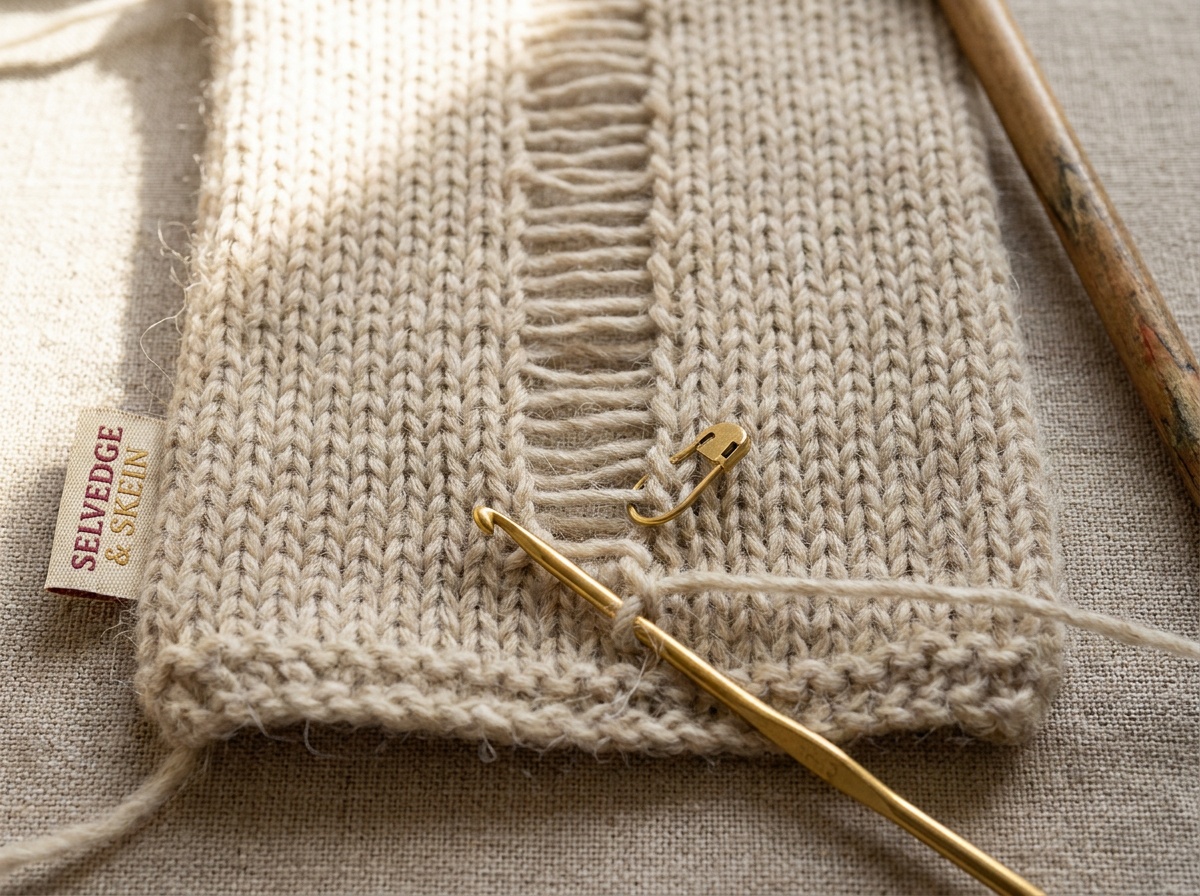
A dropped stitch is a live loop that has slipped off the needle. Left alone it unravels down the column, leaving a ladder of loose horizontal bars where the stitches used to be. To fix it: secure the live loop on a stitch marker or safety pin so it stops running, then use a crochet hook to pull each ladder bar through the loop in order, working from the lowest bar up. In stockinette you pull every bar from the front; in garter you alternate front and back; in ribbing you match the knit and purl columns.
A dropped stitch looks like a disaster the first time you see one open up under your needles. It isn't. The loop is still there, the yarn it needs is still hanging in front of it as a set of horizontal bars, and reattaching it is a mechanical process you can do the same way every time. What matters is stopping the run early and rebuilding the column so each stitch faces the right direction.
What a dropped stitch is and how a ladder forms
Every stitch on your needle is a live loop. When one slides off, nothing holds it closed, so any tension on the fabric pulls the loop open and drops it down to the row below. That freed strand becomes a horizontal bar. Pull again and the next stitch down opens the same way. The result is a ladder: a vertical gap in the fabric crossed by loose horizontal rungs, one rung per row the stitch has dropped through.
The live loop always sits at the bottom of the ladder. Each bar above it is exactly the yarn that stitch needs to be knitted back up, in order, oldest at the bottom. Nothing is missing. The job is to feed those bars back through the loop one at a time.
First move: stop it running
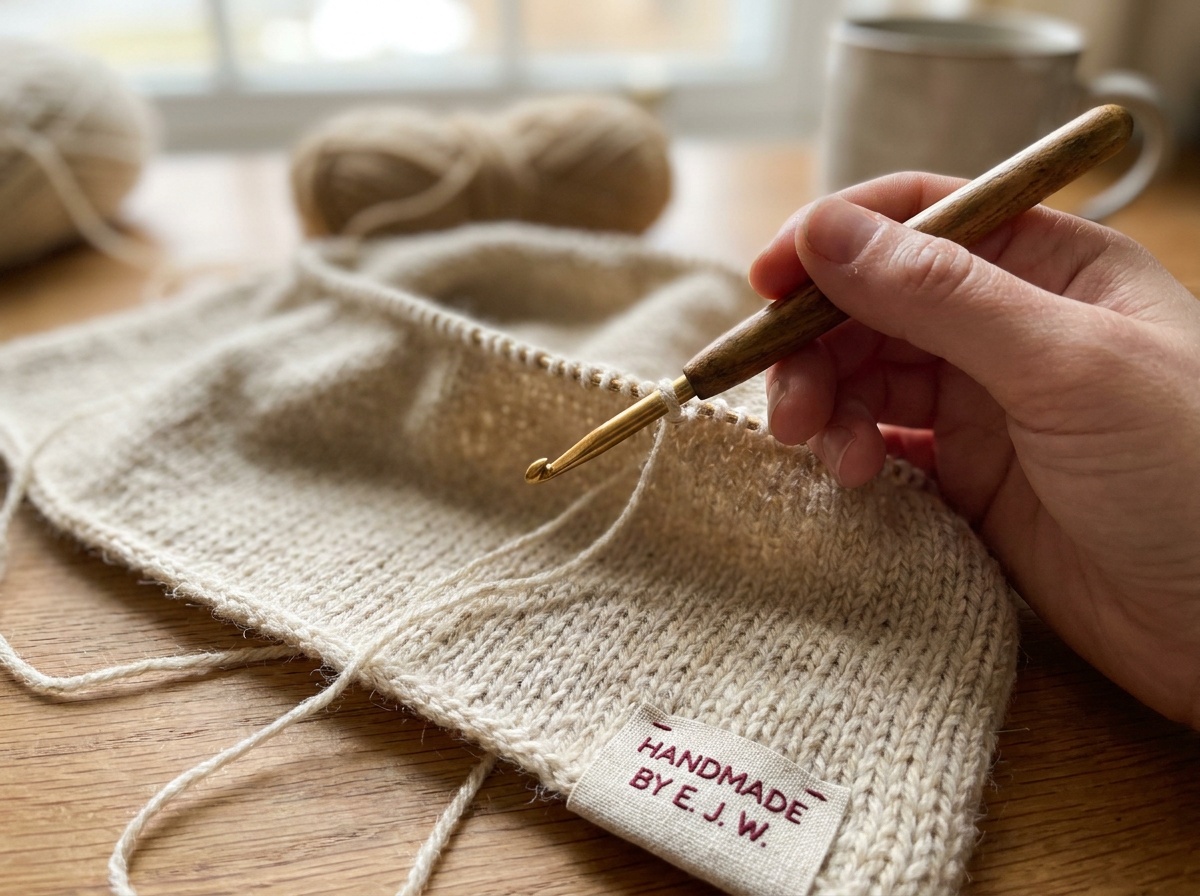
Before you do anything else, secure the live loop so it can't drop further. Slide a stitch marker, safety pin, or spare needle through the loop and set the work down flat. This one step turns an emergency into a repair you can take your time with.
If you notice a stitch starting to slip while you're mid-row, don't tug the working yarn to "fix" it. Pulling tightens the fabric and drives the stitch down faster. Stop, pin the loop, then assess.
Once the loop is pinned, count the bars above it. That count tells you how many rows down the stitch has dropped and how many times you'll work it back up. Lay the fabric flat with the right side facing you so you can read the columns clearly.
Ladder it back up with a crochet hook
A crochet hook a size or two smaller than your knitting needle is the right tool. Too large and it snags the plies; too small and the loop slips off the hook. Insert the hook through the live loop, catch the lowest bar, and draw it through. The old loop drops off the back of the hook, the bar becomes the new loop, and you've rebuilt one stitch. Repeat up the ladder, one bar at a time, always taking the lowest remaining bar.
The only thing that changes between fabrics is which side of the work you pull each bar from.
Stockinette
Stockinette is the simplest case because every stitch on the right side is a knit. Keep the right side (the smooth V side) facing you and pull every bar through from the front, so the hook goes in front to back and catches the bar behind the loop. Each rebuilt stitch shows as a clean V. Work all the way up until the last bar is through, then slip the final loop back onto your left needle, keeping it untwisted.
Garter
Garter stitch alternates a ridge and a valley on each side because you knit every row. On the right side you'll see a row that reads as a knit bump and a row that reads as a purl bump, alternating. To rebuild it you have to alternate which side you pull from: pull one bar from the front, flip the work and pull the next from the front of that side (which is the back of the first), and keep alternating. The tell is the bumps. If a row of garter should show a purl bump on the side facing you and yours shows a smooth V, you pulled from the wrong side and need to undo that bar and redo it.
Ribbing
Ribbing is columns of knit next to columns of purl, so a dropped stitch belongs to one specific column. Identify whether the dropped column is a knit column or a purl column on the side facing you, then treat that single column consistently: pull knit-column bars from the front like stockinette, and pull purl-column bars from the back so the bump sits on the near side. If the drop crosses where a cable or a knit/purl transition happens, work the column by its own rule and ignore the neighbors. A rebuilt rib column should blend into the ribs on either side of it with no smooth patch interrupting the purl valley.
| Stockinette | Every bar from the front (knit side facing you) |
| Garter | Alternate: front, then back, then front, matching the bump on each row |
| Knit column in ribbing | Pull from the front, same as stockinette |
| Purl column in ribbing | Pull from the back so the purl bump sits on the near side |
| Seed / moss stitch | Read each row individually and match its bump; no fixed rhythm |
One row down versus many rows down
A stitch dropped a single row is quick: one bar, one pull, back on the needle. You can often do it without a hook by catching the bar with the tip of your right needle and drawing the loop over it, though check the mount before you knit the next stitch.
A stitch dropped many rows produces a tall ladder, and the risk there is losing track of order or direction. Work slowly, take the lowest bar every time, and check every few stitches that the column reads correctly against its neighbors. If the ladder is long and the yarn is fuzzy or splitty, the bars can be hard to separate; good light and a smaller hook help more than speed.
When a ladder is several rows tall, the loose bars often look tighter than the surrounding fabric once rebuilt. That evens out when you block the piece. Resist the urge to yank the column loose to "match" it before blocking.
Twisted stitches: spotting and fixing a backward mount
A stitch is mounted correctly when its right leg sits in front of the needle and its left leg behind. If a rebuilt or replaced loop goes back on the needle the other way, its legs are reversed and it knits up as a twisted stitch: a tight, crossed-looking V instead of an open one. This happens easily when you rescue a dropped stitch and drop the final loop onto the needle without watching its orientation.
To spot one, look at the base of the stitch. A correct stockinette stitch sits open like an upside-down V with a small gap; a twisted stitch pinches closed and leans. To fix it before you knit it, slip the stitch off, rotate it so the right leg comes to the front, and return it. If you've already knitted past it, you can drop that single column down to the twist, then ladder it back up with the loop mounted correctly.
When to tink or rip back instead
Laddering up is the right fix when a stitch or a few stitches dropped in plain fabric. It's the wrong fix when the mistake is tangled with shaping, a cable cross, or a lace pattern where the bars don't correspond to simple stitches.
- Tink (knit spelled backwards, meaning un-knit stitch by stitch) when the problem is only a row or two back and you want to keep every live stitch on the needle. Insert the left needle into the stitch below the one on the right needle, slip the top stitch off, and pull the working yarn free. Slow, but nothing unravels.
- Rip back to a lifeline when the mistake is many rows down in a pattern you can't reliably ladder, or when several stitches have run at once. Pull the needle out, unravel to the safe row, and pick the live stitches back up.
A lifeline is a length of smooth contrasting waste yarn threaded through every live stitch of one row, left in place as you keep knitting. If something goes wrong above it, you rip down to the lifeline and every stitch is already held, in order, untwisted.
Prevention: lifelines on lace
Plain stockinette forgives a dropped stitch because you can read it and rebuild it. Lace does not: yarn-overs, decreases, and shifting stitch counts mean a run can destroy the pattern in a way that's slow or impossible to reconstruct bar by bar. Run a lifeline every pattern repeat, or before any row you'd hate to redo. Thread it through the stitches on your needle (not the needle itself) with a tapestry needle or the threader hole of an interchangeable tip, and leave it in until you've knitted well past it. It costs a minute and saves an evening.
Can I fix a dropped stitch without a crochet hook?
For a stitch dropped one row, yes: catch the single ladder bar with your right needle tip and draw the live loop over it, then check the mount. For a stitch dropped several rows, a crochet hook a size or two smaller than your needle is far more reliable, because it holds the loop while you feed each bar through in order.
How do I know if my rebuilt stitch is twisted?
Look at its base. A correct stitch sits open like an upside-down V; a twisted stitch pinches closed and leans to one side. The right leg of the loop should sit in front of the needle. If it's behind, slip the stitch off, rotate it so the right leg comes forward, and return it before knitting.
What's the difference between tinking and ripping back?
Tinking means un-knitting one stitch at a time, keeping every live stitch on the needle, which suits a mistake only a row or two back. Ripping back means pulling the needle out and unraveling multiple rows at once, which is faster for deep mistakes but drops all your stitches. A lifeline makes ripping back safe by holding the stitches of one row.
Do I need a lifeline for plain knitting?
No. Stockinette and garter are readable enough to ladder a dropped stitch back up by hand. Lifelines earn their place in lace and other patterns with yarn-overs and decreases, where a run distorts the stitch count and can't be rebuilt bar by bar. Place one every repeat or before any row you'd dread reworking.