Velvet
eveningwear, blazers, upholstery, trim, accessories
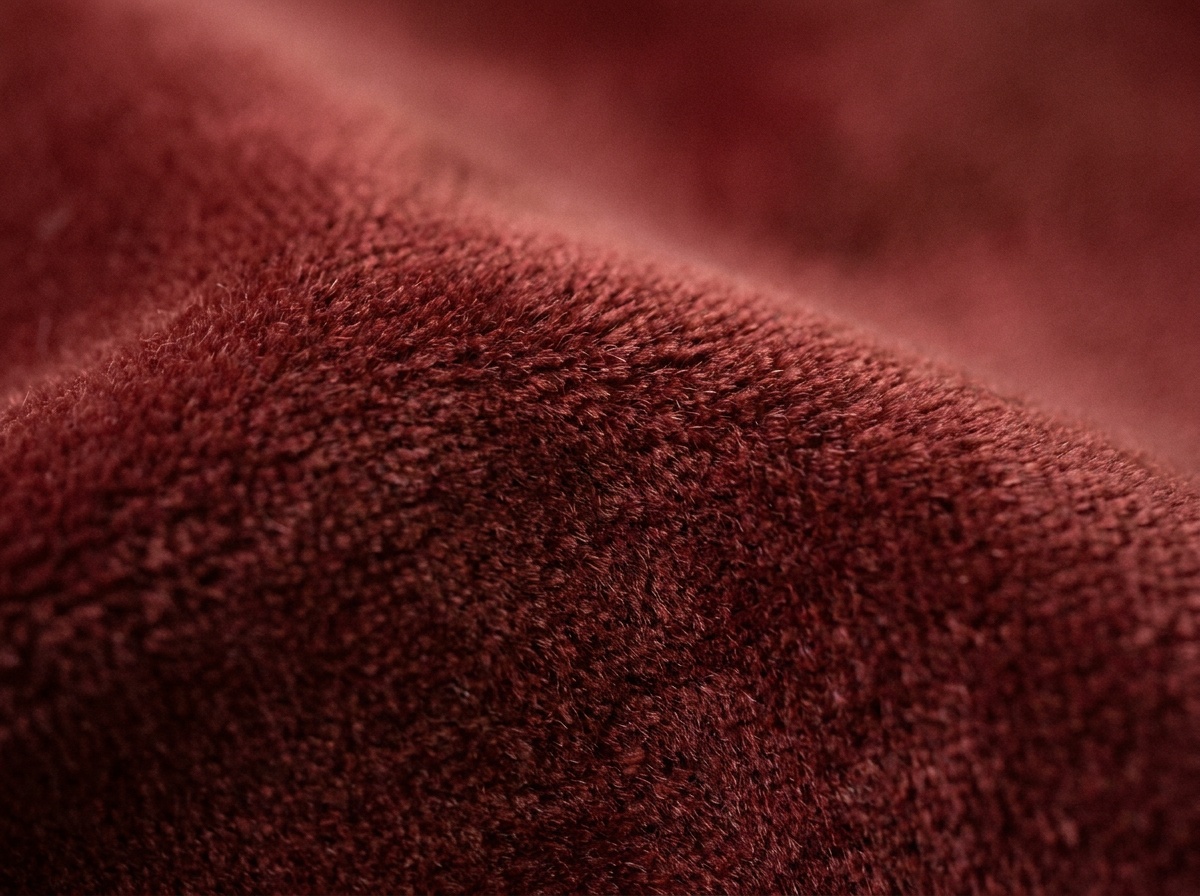
Velvet is a pile fabric: two layers of cloth are woven face to face on the loom with connecting warp yarns between them, and those connecting yarns are then cut, splitting the cloth into two identical pieces, each with a dense upright pile on one side. That construction is what separates true velvet from a printed or flocked look-alike, and it's why good velvet has a nap direction that changes how light hits it depending on which way the pile lies.
The pile makes velvet warm, soft, and prone to crushing or shading if handled roughly, so pattern pieces have to be cut with the nap running one consistent direction. It doesn't press with a hot iron directly on the pile, since that flattens it permanently; steaming from the back over a needle board or a spare scrap of velvet is the standard fix. It has no engineered stretch, and it shifts and creeps under a presser foot, so pinning within the seam allowance and using a walking foot or tissue paper underneath helps.
Velvet is an eveningwear and occasion fabric first, used for gowns, blazers, and trim, and it also shows up as upholstery weight for furniture. Cotton velveteen is a shorter-pile, more washable, everyday version, better suited to a first velvet project than silk or rayon velvet.