Terry Cloth
towels, robes, beachwear
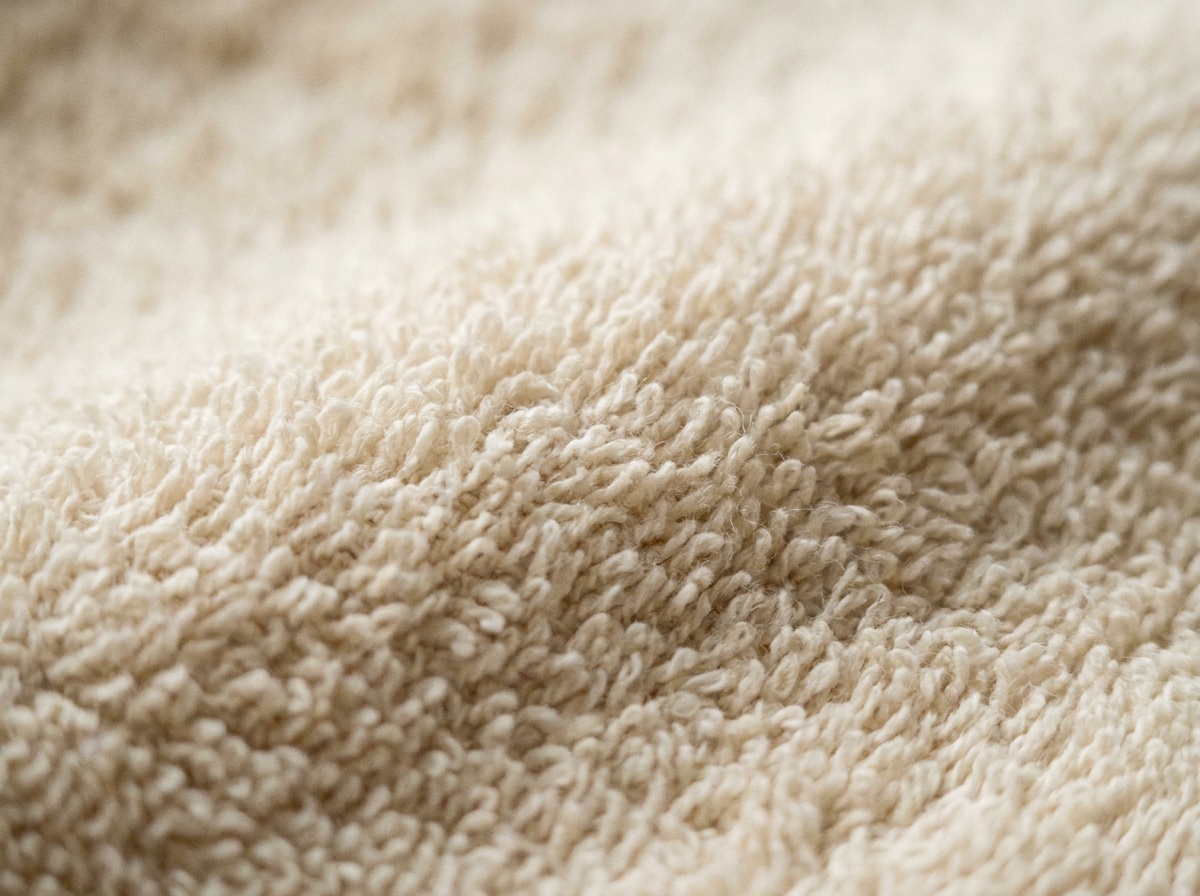
Terry cloth is a warp-pile weave in which extra warp yarns are held at slack tension and thrown up into uncut loops on the surface, either on one face or on both. Those loops are what make the cloth absorbent: they give water a large surface area to cling to and a spongy volume to hold it, so a heavier terry dries a body faster than a flat cotton of the same fiber. Weights run high, from about 300 g/m² to 450 g/m² for towel and robe stock, and the loop density matters as much as the raw weight for how thirsty the finished piece feels.
The pile makes terry bulky to sew and prone to trouble at the cut edge, where loops shed and the fabric curls. Overlock the raw edges as you go, or bind them, because a plain pressed seam will not hold in the loose loop structure. It has a little give from the loops and the ground weave, so treat it as a low-stretch knit-adjacent cloth rather than a stable woven, and use a walking foot to stop the layers creeping. Skip fabric softener in the wash, since it coats the loops and cuts absorbency over time.
The cloth goes into towels, bathrobes, beach cover-ups, and the linings of hooded garments, anywhere the job is to move water off skin. It sheds lint heavily when first cut and sewn, so expect to clean the machine after a project. A ballpoint or stretch needle and a longer stitch length ride over the pile better than a sharp set short and tight.