Muslin
toiles and mockups, backing, light garments
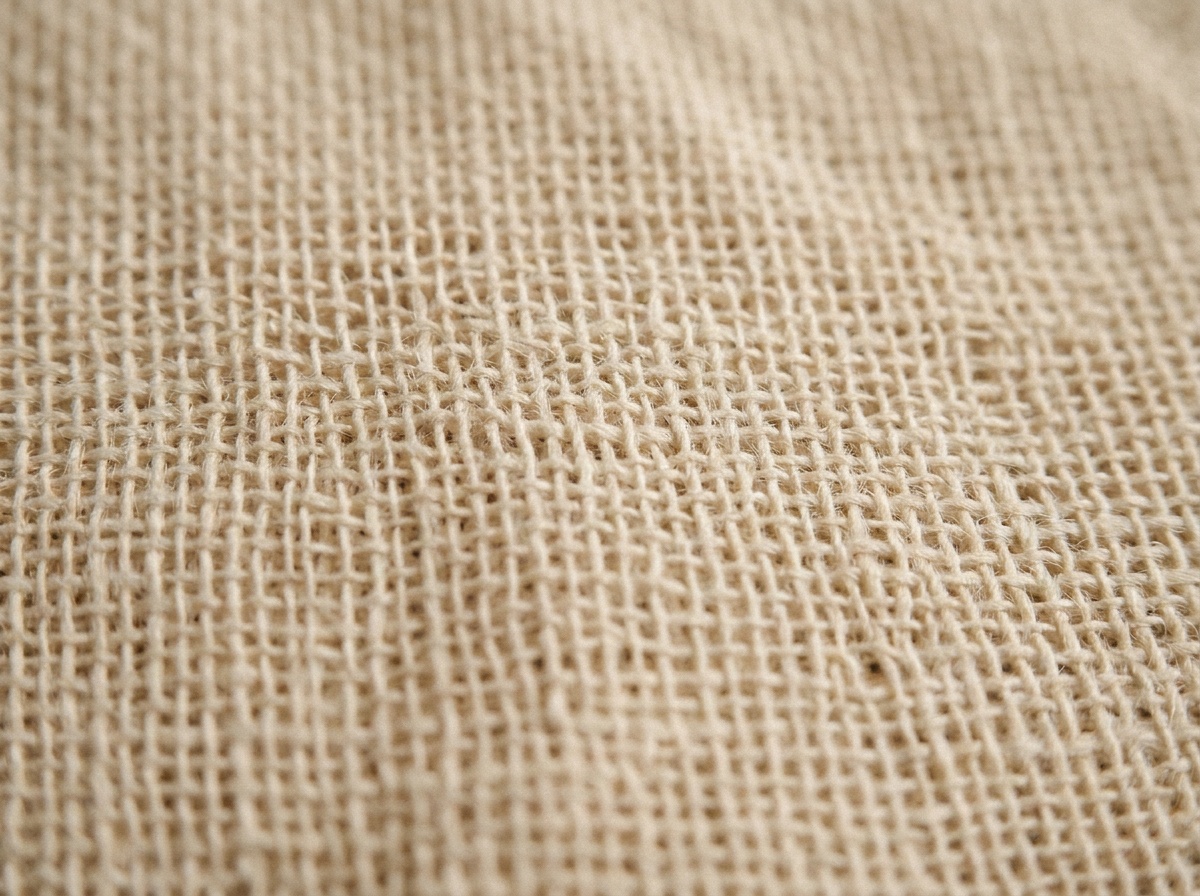
Muslin is a loose, open plain weave in cotton, usually sold undyed and unbleached in a natural cream color flecked with cotton husk. It runs from about 90 g/m² in the finer grades to 160 g/m² in the coarser sheeting weights, and the weave is open enough that you can hold it to a window and read the light through it. The yarn count and thread density vary widely between grades, so two bolts both labeled muslin can behave differently. Buy by feel and by weight, not by the name alone.
The cloth frays readily. The plain weave has no float to lock the yarns, and the low thread count means cut edges shed with handling, so finish seams with a zigzag or overlock if the piece will see wear. It presses flat and takes a hard crease under a hot iron, which is part of why it works as a fitting cloth. Drape is soft but structureless in the lighter grades, and the open weave breathes well, which makes fine muslin a reasonable choice for hot-weather linings and light summer garments.
Its main job is the toile. Sewers cut a first version of a pattern in muslin (the practice is called "making a muslin") to check fit and proportion before cutting the real fabric, marking adjustments straight onto the cloth in pencil. It also serves as a foundation and backing layer under quilting, embroidery, and tailored fronts, where a stable, cheap under-cloth carries the structure. It sews without trouble on a standard needle and is forgiving of unpicking, which is the point when you expect to redraw a seam three times.